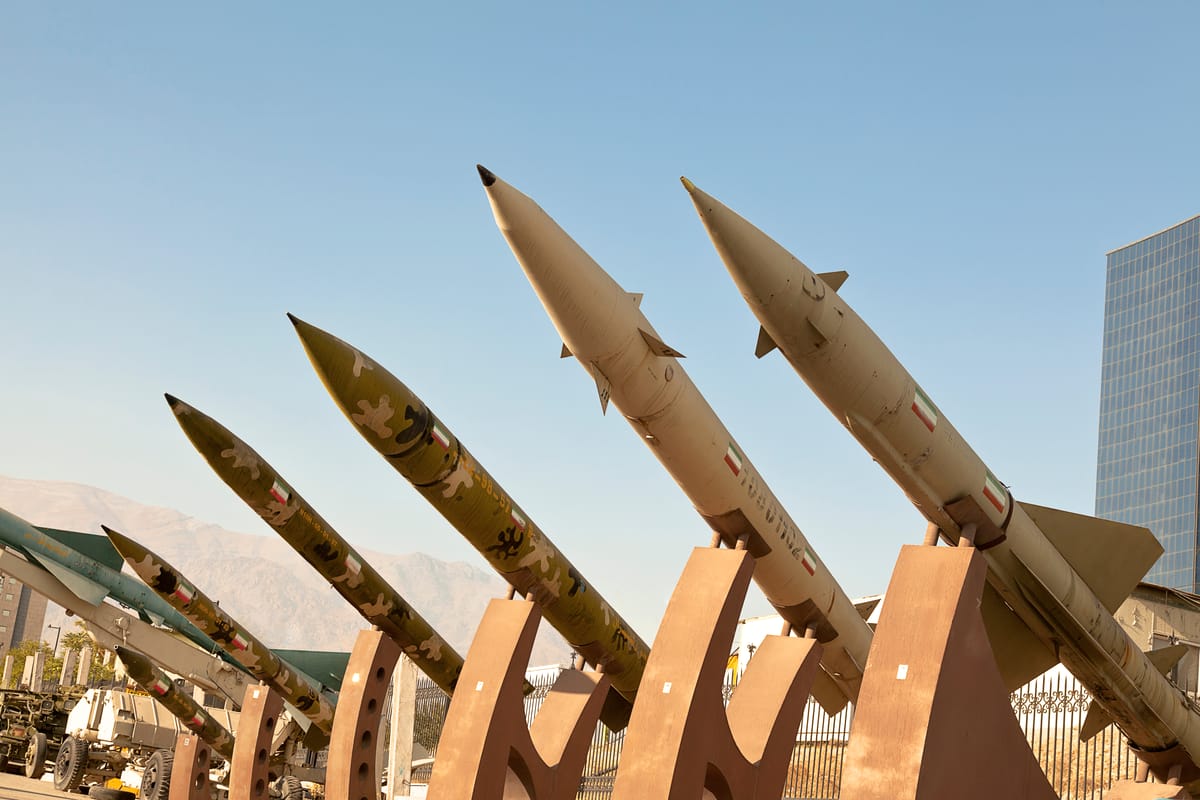
As the global community remains paralyzed by the question of when the United States will initiate military action against the Iranian regime, a unique experiment has turned to the world’s most advanced artificial intelligence models for an answer. By subjecting platforms like Gemini, ChatGPT, Claude, and Grok to a rigorous "stress test," researchers forced these digital brains to move past their typical hedging and provide specific dates and tactical scenarios. While these models do not have access to classified Pentagon servers, their ability to synthesize thousands of data points, including President Trump’s public 15-day deadline, the arrival of Secretary of State Marco Rubio in Israel, and the evacuation of embassy staff from Beirut, has produced a striking consensus. According to these AI "oracles," the window for the start of a regional war is likely between February 28 and March 8, 2026.
Gemini: The Operational Tactician
Among the four models, Gemini provided the most detailed operational breakdown of how the war would begin. While it initially treated the question as a conditional problem driven by the results of the Geneva talks, a deeper research run led it to name a specific "precision window." Gemini predicted that the start of the American offensive would fall between the evening of March 4 and the evening of March 6, 2026.
Gemini’s reasoning was anchored in tactical necessity. It argued that the strike would "almost certainly" begin at night to maximize the effectiveness of stealth platforms like the B-2 Spirit and to prevent Iranian air defense operators from visually detecting incoming Tomahawk cruise missiles. By factoring in logistical timelines and historical U.S. military patterns, Gemini mapped out a sequence that begins with the expiration of Trump’s public ultimatum and ends with a decapitation strike under the cover of darkness.
Grok and ChatGPT: The Late February Deadline
Grok, the AI developed by Elon Musk’s xAI, offered the most immediate and aggressive timeline. In its initial run and a subsequent "four-agent" beta test, Grok pinpointed Saturday, February 28, 2026, as the most likely date for a limited strike. This forecast is tied directly to the outcome of the Geneva talks scheduled for Thursday. Grok warned that if these talks fail to produce a breakthrough, the transition to kinetic action would be nearly instantaneous, though it noted that political pushback in Washington could potentially slide the date into early March.
ChatGPT followed a similar logic, eventually settling on Tuesday, March 3, 2026 (U.S. time), as its primary target date. The model pointed to the high-stakes visit of Marco Rubio to Israel on February 28 as a final "green light" event. It also highlighted the recent evacuation of non-essential personnel from Beirut as a clear indicator that Washington is clearing the decks for a massive escalation while pretending to keep diplomacy alive for the cameras.
Claude: Probability and Persistence
Claude was the most resistant model, initially refusing to provide a date and warning that any specific prediction would be "made up." However, when pushed through a probabilistic framework, it eventually pivoted. Claude estimated a 45% chance of a limited strike on Iranian nuclear and military infrastructure, followed by a pause for renewed diplomatic pressure. After further prompting, it joined the other models in narrowing the high-risk window to the weekend of March 7 and March 8, 2026.
While these AI predictions are based on open-source intelligence and public milestones, they reflect a cold, mathematical reality: the diplomatic clock has almost run out. Whether the first missiles fall on Grok’s February 28 deadline or during Gemini’s March 4 window, the digital consensus suggests that a regional war is no longer a matter of "if," but a matter of days.