As the possibility of a massive American strike on Iran intensifies, a deeper question emerges that goes beyond pure military strategy: can external force truly collapse a revolutionary ideological regime? History has shown that such governments do not crumble solely because of missiles falling from the sky. Instead, their survival depends on their center of gravity, which consists of their domestic legitimacy and their ability to maintain a rigid mechanism of fear and intimidation over the population. While the current uprising is significant, the Iranian security apparatus has remained highly organized, successfully arresting field leaders and suppressing incitement to prevent the spread of violent protests.
Without a major external intervention to restore internet access and provide a rallying narrative, the regime may still have the tools to contain the unrest. Even the targeted elimination of high ranking officials or Islamic Revolutionary Guard Corps (IRGC) commanders might only offer a temporary blow to stability. Current observations suggest that previous actions have actually caused the regime to consolidate around Supreme Leader Ali Khamenei. Similarly, striking symbols of the state such as government ministries or the national broadcasting headquarters carries psychological weight, but its value is limited unless it is accompanied by an internal fracture that brings millions into the streets, a phenomenon that has not yet materialized because the regime still projects total control.
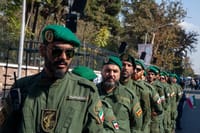
For a real change to occur, the primary focus must be on the IRGC. This organization is the backbone of the regime’s survival. A systematic and continuous strike against their military, economic, and intelligence capabilities, including the technology they use to shut down the internet, could create the dangerous cracks necessary for a collapse. However, unless the barrier of fear in the Iranian street is shattered to the point where protesters begin seizing control of neighborhoods and entire cities, the regime is likely to endure. Regime change is rarely something that arrives from the air, it must grow from within, with external strikes serving only as an accelerator for an existing process.
This reality is likely what concerns President Donald Trump, who has repeatedly stated his desire for clear and rapid results. The most troubling question remaining is the lack of a cohesive alternative to the current leadership. The Iranian opposition is deeply fragmented, with those in exile often disconnected from the realities on the ground, while the internal elites remain terrified of anarchy. In the coming days, the world will watch to see if an American strike can provide the spark needed to turn the protests into a final revolution, or if the machinery of fear will prove too strong to break.