Top security officials within the defense establishment have stated that United States President Donald Trump is currently making significant efforts to prevent a renewed outbreak of direct warfare with Iran, despite the persistent delays and calculated negotiation games being played by the Iranian regime. Intelligence assessments indicate that the leadership in Tehran is acting under the assumption that the American administration is highly motivated to avoid a major military confrontation prior to and during upcoming global events like the World Cup, using this window to artificially improve their bargaining position.
American decision-making is also heavily influenced by domestic milestones, as the United States is preparing for its historic 250th independence celebrations on July 4, 2026. The White House places immense strategic and symbolic importance on this upcoming date, which has led Trump to temporarily hold back on expanding military operations. Consequently, the likelihood of a joint, immediate military strike against the Islamic Republic appears to be growing more distant as Washington focuses heavily on diplomatic channels and economic leverage instead.
Meanwhile, Israeli intelligence agencies are tracking extreme internal friction within the highest echelons of the Iranian regime, which is currently split by two competing factions. The supreme leader, Mojtaba Khamenei, is reportedly finding it difficult to make definitive state decisions, a situation exacerbated by severe physical injuries including facial wounds and an amputated leg. His political authority is facing constant challenges due to the heavy interference of senior ayatollahs and powerful commanders within the Islamic Revolutionary Guard Corps.
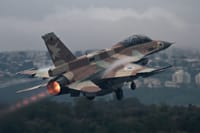
This internal rift has created a dangerous deadlock between government officials and military zealots. While Iranian President Masoud Pezeshkian and Foreign Minister Abbas Araghchi are pushing hard to secure a long-term ceasefire and accelerate national economic reconstruction, Mojtaba Khamenei and Revolutionary Guard Commander Ahmad Vahidi are actively seeking military revenge against Israel and its allies. This volatile domestic situation keeps the Israeli intelligence community on high alert, requiring the air force to maintain constant readiness for potential long-range strikes.
A primary concern for the defense establishment involves the future of Iran's nuclear project, specifically a massive stockpile of 460 kilograms of uranium enriched to a dangerous sixty percent level. Security experts worry that Tehran will attempt to keep this material buried deep underground during current talks, waiting for a convenient moment after the Trump presidency to unearth it and rapidly build a weapon. While the White House focuses negotiations on keeping the Strait of Hormuz open and securing the enriched uranium, Israel is left to independently manage the threats of ballistic missiles and regional terror funding.