

Did Katz Go too Far?
Security Scandal: Did the Red Cross Help Terrorists Communicate?
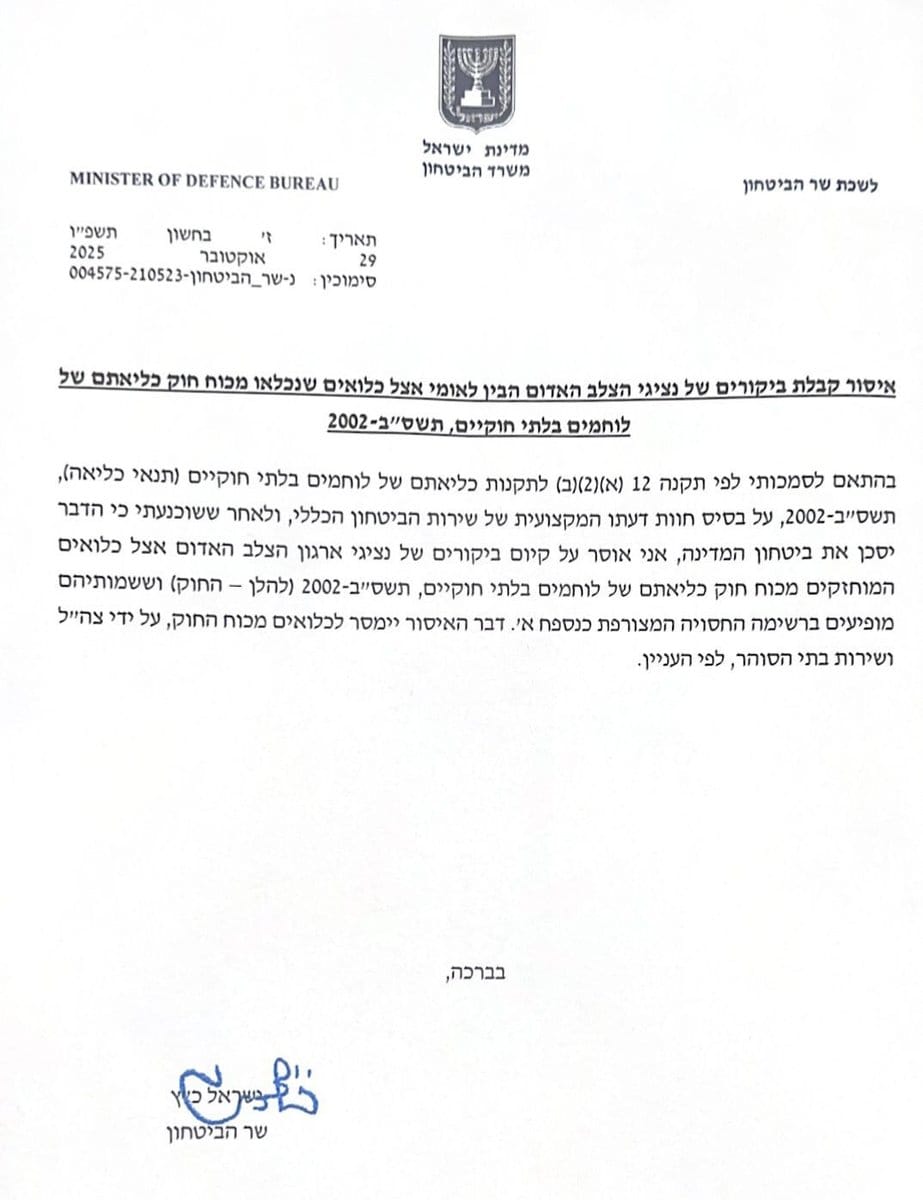
Israeli Defense Minister Israel Katz ban the Red Cross from Israeli prisions, establishing a prohibition for the Organization of visiting convicted terrorist and security prisioners.

Israeli Defense Minister Israel Katz just signed a controversial order immediately banning visits by the International Committee of the Red Cross (ICRC) to security prisoners and convicted terrorists held in Israeli prisons.
The order, a significant escalation of Israel's security posture and a direct challenge to internationally recognized humanitarian protocols, cites paramount concerns over national security.
In a statement accompanying the directive, Minister Katz asserted that the decision was based on concrete intelligence and security assessments:
"Based on the information presented to me, it is clear without a doubt that Red Cross visits to terrorists will seriously harm national security."
Rationale Behind the Ban
The Israeli Defense Ministry has long viewed the regular visits by ICRC delegates as a potential security liability, often arguing that the communication facilitated, even under supervision, could be exploited. While the Red Cross's mandate is strictly humanitarian, focusing on the conditions of detention and ensuring humane treatment, there was a proven relationship between the Organization and Hamas. Therefore, Israeli security officials reportedly fear that the visits inadvertently enable the transfer of messages, coded information, or instructions between imprisoned terror operatives and their external organizations.
The move comes amid heightened security sensitivities, particularly concerning attempts by terrorist groups to gain leverage for prisoner exchange deals. The ICRC, under its mandate, is typically the sole external body granted access to security prisoners, including high-profile members of groups such as Hamas and Palestinian Islamic Jihad.
The International Committee of the Red Cross (ICRC) Response
The ICRC, which has maintained a presence in the region and visited detainees since the 1967 Six-Day War, is expected to issue a strong condemnation of the ban. These visits are a core component of the Geneva Conventions, which stipulate that detainees must have the right to contact their families and be visited by a neutral humanitarian body. The ICRC has historically stressed that their primary aim is to ensure compliance with international humanitarian law and protect the dignity of all individuals deprived of their freedom, but past violations of this conditions had sparked controversy.
An ICRC spokesperson, who requested anonymity, indicated that the organization views the decision as an impediment to its ability to monitor conditions and potentially a violation of international obligations. The organization is expected to launch immediate diplomatic efforts to reverse the decision.
Legal and Political Ramifications
Legally, the ban is likely to be challenged in the Israeli High Court of Justice by human rights organizations and legal advocacy groups. Critics argue that isolating prisoners from external oversight will only increase the risk of rights abuses and erode trust in Israel's detention system.
Politically, the order signals a hardening line by the Israeli government against both internal and external pressure regarding its handling of security detainees.
The ban is expected to trigger a significant diplomatic row and will be closely watched by international human rights bodies and partner nations as it redefines the balance between Israel's national security imperatives and its adherence to international humanitarian law.