The structural secrecy surrounding the defensive infrastructure of the Iranian leadership has collapsed following a major intelligence exposure by dissident networks. Highly classified architectural blueprints have emerged in public spheres, proving the existence of a massive subterranean fortress designed to shield top regime officials from targeted airstrikes. This profound security breach reveals the immense scale of the military engineering projects undertaken in the heart of the capital city.
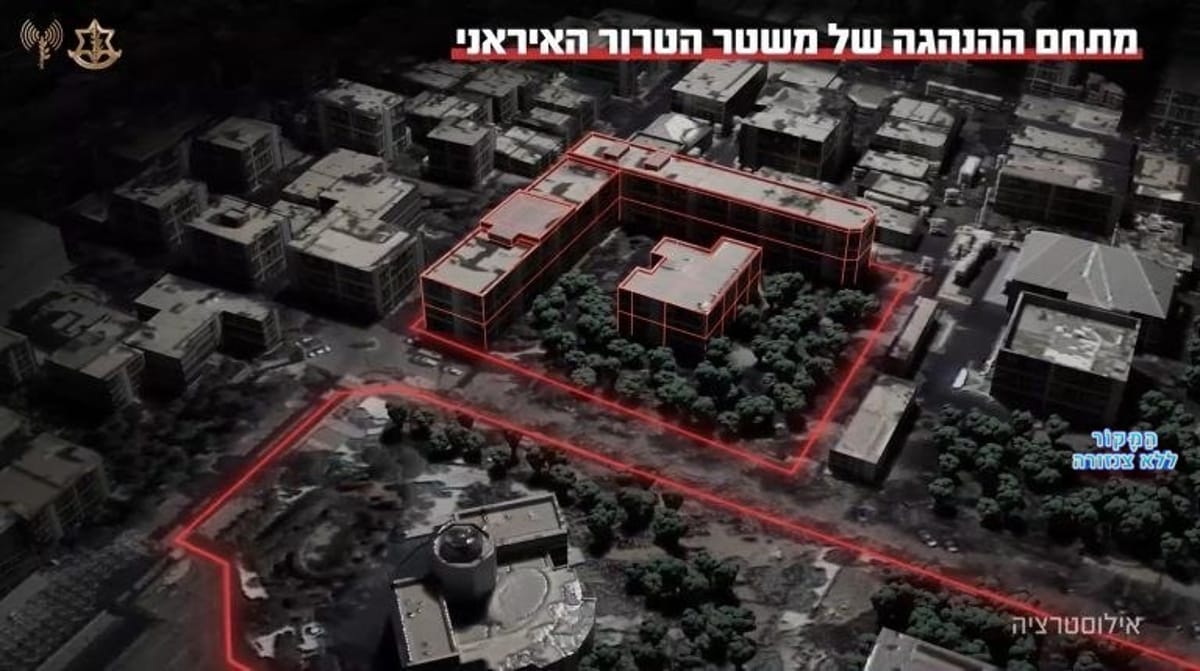
The opposition news network Iran International has officially exposed the architectural plans of a massive underground bunker complex built directly for the former supreme leader of Iran, Ali Khamenei. A senior security official recently validated the authenticity of the leaked blueprints, confirming a highly fortified network situated deep beneath central Tehran. This intelligence disclosure stands in absolute contradiction to years of official public denials issued by prominent state leaders.
The comprehensive documents reveal that the Islamic Revolutionary Guard Corps spent roughly a decade engineering the subterranean facility, which was officially designated as the Habib Ebrahimi complex. The construction site was strategically situated adjacent to the official residential compound of the supreme leader to ensure rapid access. Former Interior Minister Mostafa Pour-Mohammadi and former Tourism Minister Ezzatollah Zarghami had previously insisted that Khamenei possessed no such shelter and had actively opposed its creation.
The specialized engineering branch of the Revolutionary Guards, known as Khatam al-Anbiya, financed the secretive project under the direct supervision of the organization's engineering wing. The construction phase initiated in 2009 and concluded during the latter part of the previous decade, utilizing advanced reinforcement materials. Despite the immense protective capabilities of the facility, Khamenei was ultimately eliminated above ground on February 28, 2026, during a precise Israeli bombardment on his residence.
The successful targeted strike occurred during an active session of the Iranian Defense Council, bypassing the underground defenses entirely. Intelligence operatives executed the lethal operation by successfully hacking into local traffic camera networks and domestic communication arrays to verify the leader's exact physical coordinates. The underground bunker itself became the target of a subsequent Israeli aerial campaign in March 2026, though satellite imagery could not definitively confirm the total destruction of the subterranean infrastructure.
The architectural specifications show that the military complex was carefully camouflaged beneath the facade of a standard civilian sports center. Below the surface, engineers excavated a massive three story underground parking garage, multiple tactical firing ranges, and two heavily reinforced shelters at a depth of thirty five meters. The complex featured a specialized blast proof room designed to offer total defense against advanced missile bombardments.
The specialized plans also detail an intricate escape network, including a twenty seven meter rescue tunnel connecting the main bunker to multiple extraction points on neighboring streets. A separate vehicular tunnel extended from the secure zone directly to a major parking array located near Enqelab Square. Brigadier General Ali Masjedian managed the sensitive development project, while the physical execution was entrusted to an institute controlled by Hassan Akbari, a close personal bodyguard to the supreme leader. Akbari lost his life in April 2016 during what officials labeled a weapons accident, though security sources now reveal his death resulted from internal power struggles within the leadership bureau.