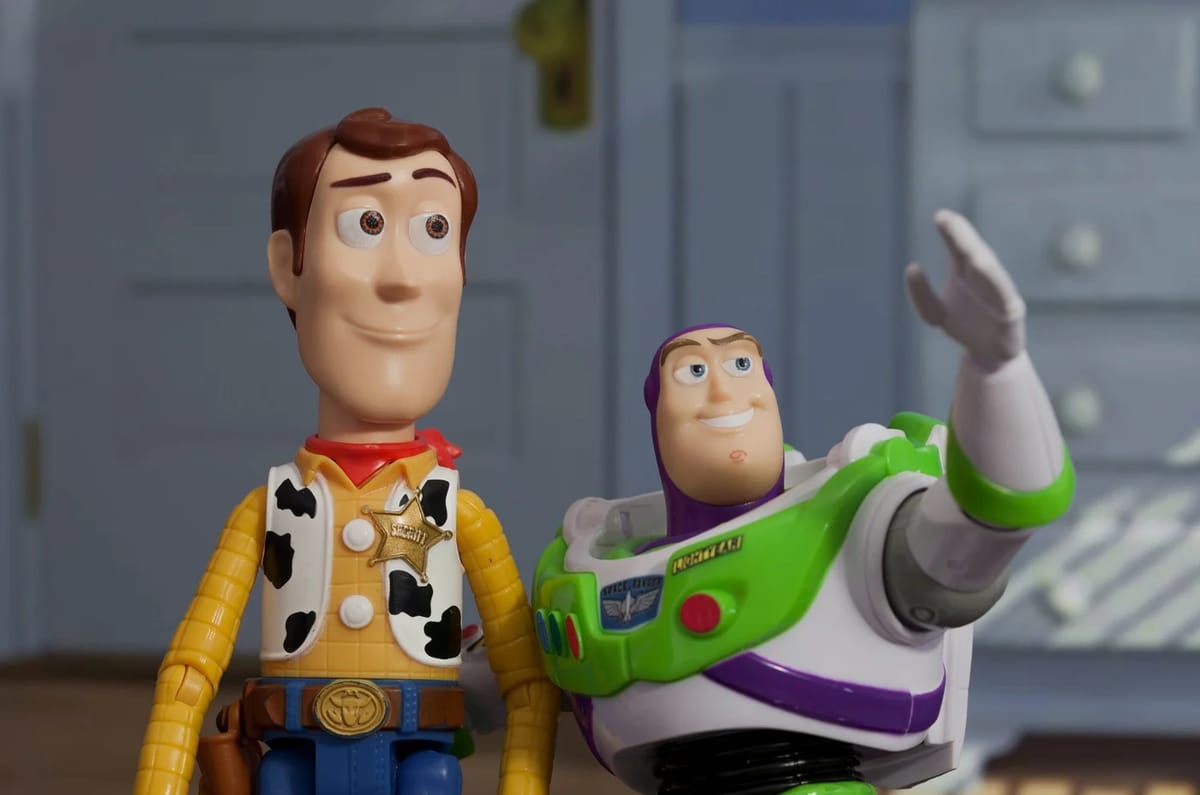
It's happening today. Toy Story 5 lands in Israeli cinemas, and while your kids sprint toward the theater to see Woody, Buzz Lightyear, and the gang one more time, the real story unfolding will be in the dark, among the adults clutching oversized popcorn and strategically positioned napkins.
Because here's what Pixar figured out three decades ago: nobody breaks your heart quite like an animated toy. Not superheroes. Not talking cars. Toys. Specifically, the ones that taught us about friendship, loyalty, and the terrifying possibility that the people we love will simply forget us exist.
As TS5 arrives, it feels right to look back at the four films that came before it, to identify and rank the moments that turned grown humans into blubbering disasters in public. Consider this your tissue roadmap. You have been warned.
Third Place: Jessie's Forgotten Life (Toy Story 2)
Tear index: Three tissues, heavy-duty.
The setup is deceptively simple. We meet Jessie, a cowgirl doll with a tragic past. She was once the favorite toy of a girl named Emily, loved fiercely, played with constantly, inseparable. But children grow. Their interests shift. And one day, Jessie found herself under the bed, abandoned in the dark, waiting for a rescue that would never come. Eventually, she ended up in a donation box on the street.
The killer is the song. As Sarah McLachlan's "When She Loved Me" plays in the background, we watch Jessie's entire story unfold in four minutes. The joy of being chosen. The security of being loved. The slow, creeping terror of becoming irrelevant. The finality of being discarded. And in that moment, anyone who has ever thrown out a childhood toy, buried it in the basement, or made the painful decision that they had outgrown something precious, felt like a monster.
Pixar had distilled one of our deepest fears into four minutes of animation: that someday, someone we loved will move on and forget us entirely. That we will be replaced. That our time with them will become just another memory they won't think about anymore.
It's the toy version of being dumped, and it's absolutely devastating.
Second Place: Walking Into the Fire (Toy Story 3)
Tear index: Four tissues. Bring backup.
The setup: The gang gets trapped in a garbage incinerator at a junkyard. They've tried everything to escape, and nothing has worked. The conveyor belt moves forward. The flames grow closer. And they realize, with the clarity of the damned, that there is no way out.
What happens next is pure cinema. Instead of screaming, instead of fighting, the toys simply turn to each other. They form a line, hold hands (or appendages, in Slinky's case), and face the end together. Woody and Buzz exchange a look of resignation. The potato head offers his hand to the others. And they wait.
For one impossible moment, we were genuinely convinced that Pixar had just decided to incinerate our entire childhood. That Disney was actually going to burn the toys to death on screen, and we would have to explain that to our children while weeping uncontrollably.
The relief when the aliens show up with the "the claaaaaaaw" is real, but the damage is already done. The brilliance of that scene wasn't the spectacle. It was the intimacy of it. These characters, facing annihilation, chose to face it together rather than alone. That's not just drama. That's philosophy.
First Place: The Final Goodbye (Toy Story 3)
Tear index: Five tissues, plus whatever tears make it onto your shirt collar.
Andy is leaving for college. He's grown up. The toys are still in the toy chest, but Andy's childhood has definitively ended. He decides to pass them on to Bonnie, a sweet younger girl, because he can't bear to throw them away, but he also can't take them with him into adulthood.
What follows is exquisite torture. Andy walks through his toys one more time, introducing each one to Bonnie. "This is Hamm," he says, handing over the pig. "That's Rex, he's a dinosaur." He narrates the life he shared with each of them, reminding us of everything they meant to him. To us.
And then he reaches the bottom of the box.
Woody is there, the toy that started it all, the one who was there from the beginning. Andy holds him for a moment, and you can see him wrestling with whether to let go. There's a flash of hesitation, a lifetime compressed into a single pause. He places Woody down and walks away, sits on the grass outside Bonnie's house, and plays with them one final time.
The line, delivered so quietly you almost miss it: "So long, partner."
Here's why this moment was the death blow for an entire generation: Toy Story came out in 1995. People who watched it as children watched Andy grow up alongside them for fifteen years. When Andy drove away to college in 2010, leaving Woody behind, those viewers weren't just watching a movie. They were watching their own childhood get left on the sidewalk. The toys were going to be played with by someone else now. Andy was moving on. We were all moving on.
Pixar had engineered something almost cruel in its precision: a perfect emotional mirror. You weren't crying about a toy saying goodbye to a kid. You were crying because the kid was you, fifteen years ago, and you would never get that version of yourself back.