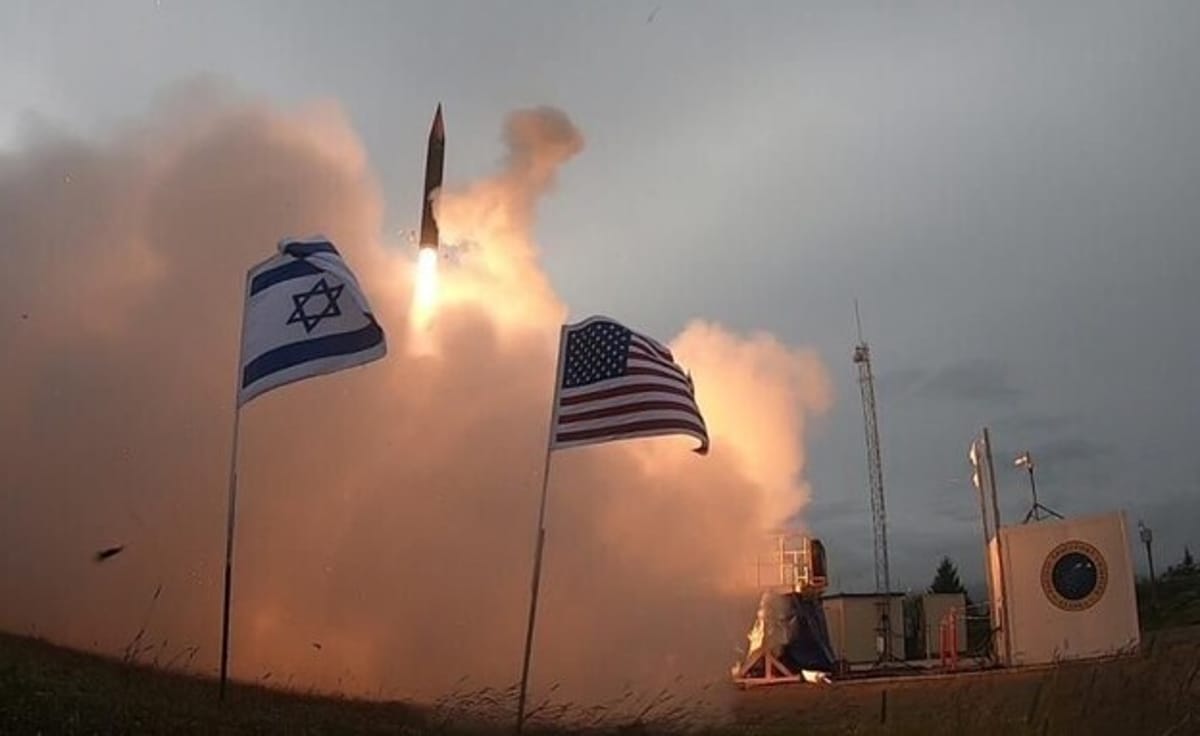
As Iranian ballistic missiles continue to rain down on Israeli territory, the defense establishment is facing a critical dilemma: which interceptors to use for which threats. Despite recent direct hits in Dimona and Arad, as well as cluster munitions falling in Rishon LeZion, Israeli officials insist there is no shortage of interceptors. The military is managing a "munitions economy," ensuring that even if Iran fires its entire arsenal, Israel will have the means to respond. At the heart of this strategy is the Arrow 3 system, the preferred choice for long-range defense, but the decision to launch these multi-million dollar missiles involves a complex matrix of real-time variables.
Science of the Sky
The Arrow 3 is favored because it intercepts targets outside the earth's atmosphere. When it successfully strikes a ballistic missile in space, the heat and vacuum of the environment cause most of the debris and shrapnel to burn up or evaporate, preventing dangerous fragments from falling on populated areas. If any pieces do survive the reentry, they typically land far outside Israeli borders. This system is also the primary defense against cluster missiles, as it aims to destroy the "mother" rocket before it can release its hundreds of smaller sub-munitions. However, the system is not hermetic, and the sheer volume of fire, more than 1,200 ballistic missiles since April 2024, means that some fragments inevitably make it through the defensive umbrella.
The cost of this protection is staggering. While Israel has significantly ramped up production of Arrow 3 missiles following the first Iranian attack, the process takes time. To bridge the gap, the United States has deployed its own interceptor batteries in Israel and Jordan. These American systems are highly effective but come with a price tag nine times higher than their Israeli counterparts. The IDF must constantly weigh the type of incoming missile, its projected impact point, and the availability of specific interceptor types to decide the best course of action. While the multi-layered defense system is not perfect, it remains the most sophisticated shield in the history of warfare, designed to ensure that the "Lion's Roar" operation can continue until the threat is neutralized.