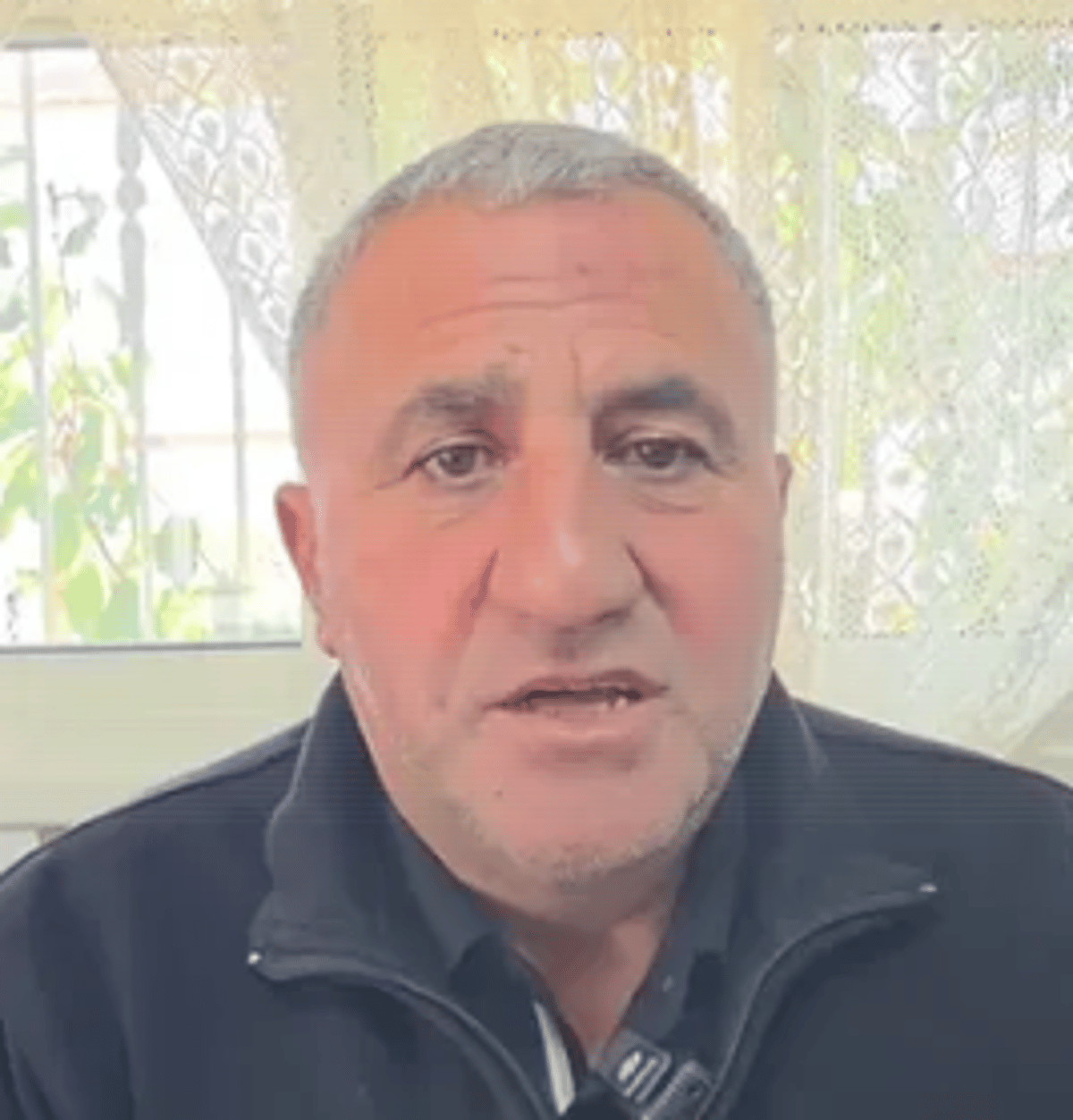
On a freezing autumn morning in the Golan Heights, cold winds blow in from the Bashan, heralding winter's approach. We traveled from central Israel, where it was warm and pleasant at 5 a.m., and even managed to dip in the Galilee streams before ascending to the Golan. My friend Shneir Menachem, a tour guide, and I walked toward the restaurant of Bassam Abu Awad in the village of Buq'ata and sat down with him for a fascinating conversation about the Druze in Israel, a conversation that revealed a completely different reality from what the media tells us.
Bassam, an enthusiastic host who runs a traditional restaurant in the village (hosting us with everything he can offer that meets kosher standards), didn't hold back when we talked about the future. "There are four Druze villages in the Golan Heights," he explains. "We've been here since '67 and we're under Israeli rule to this day." But what will happen if Sheikh Salman al-Hajri, the senior Druze leader in Syria who recently called for the establishment of a Druze state in Jabal Druze, actually succeeds?
"A Druze State to the Sea of Galilee"
"If they say that Jabal Druze is the government, I'm in," Bassam emphasizes. "The Druze of the Golan automatically belong to the rest of the Druze, and we will demand not just the four Druze villages in the Golan Heights to join the new Druze state, but all of the Golan up to Tiberias, up to the Sea of Galilee to be under Druze rule," he clarifies without hesitation.
Why to the Sea of Galilee? "We Druze need water," he explains simply.
What Will Happen to Jewish Settlements?
When asked what will happen to Jewish settlements like Nov and Hispin, Bassam doesn't dodge: "The Druze here in the Golan have been under Jewish rule for several decades, and living well. Nothing will happen, Jews will live under Druze rule," and he adds with a smile: "Lower taxes and income tax."
When asked if he envisions a Druze state as a kind of autonomy similar to the Palestinian Authority where Israel maintains security control and the Druze have civilian rule, Bassam firmly rejects the idea: "Absolutely not! We want a real state!"
Army, Taxes, Full Independence
"A real state," I emphasize, "means your sons and grandsons will have to go to the army and risk themselves, which they're not doing now in the IDF."
"True," he answers me, "that's part of the risk."
The discourse about a Druze state isn't new. Yigal Allon already in the 1960s talked about the "Druze madness" and proposed establishing a Druze buffer state between Israel and Syria. But the idea was then rejected by the Druze leaders themselves. Now, after the fall of Assad's regime and the terrible massacre in Sweida where over 4,000 Druze were killed, the demand for independence is rising again and this time from the Druze side itself.
Bassam's words raise difficult questions: Will Israel be able to agree to give up the Golan Heights to the Sea of Galilee? What will be the fate of the Jewish settlements established there? And is there even a practical possibility of establishing an independent Druze state alongside Syria and Israel?
Meanwhile, in small and picturesque Buq'ata, Bassam continues to welcome visitors to his restaurant, serving traditional Druze dishes, and dreaming of a completely different future.
"In Assad's Time It Was Good for All Communities"
"Assad gave our people, the Druze villages in the Golan Heights, many things," Bassam says nostalgically. He doesn't hide his position: "Assad didn't forget the Druze of the Golan Heights."
One of the main benefits of Syrian rule, according to him, was in the education system. "In Assad's time we had students studying in Damascus, every year students left us to study medicine and law in Damascus," he recounts. "Six years, free! He even gave them a salary, even student dormitories, everything free!"
And the result? Those who took advantage of the opportunity and completed their studies in Syria returned home and integrated into the Israeli system. "Today we have, thank God, Druze doctors in all the hospitals from north to south." The State of Israel recognized these academic degrees and the Druze doctors and lawyers who studied in Damascus now integrate into Israeli systems.
The Apples and Brides of the Golan
The Quneitra crossing was the only passage between Israel and Syria, through which not only apples passed but also Druze brides and grooms, students to universities, and families who wanted to meet after decades of separation. The crossing closed with the outbreak of the civil war in Syria in 2011.
Bassam explains that beyond studies, there were also economic and family ties. "Until the war we transferred our apples to Syria through the Quneitra crossing," Bassam recounts. "We married Syrian Druze, and we have families and relatives. Now everything is closed."
## "We're All One" - Religious Tolerance
One of the things Bassam particularly misses is the religious tolerance. "In Assad's time—it was forbidden to talk about religion, we're all one," he recounts. "He gave the Druze people, the Alawite people, the Christian people, the Sunnis—all the peoples living in Syria—their lives, their freedom, their religion."
Assad's Syria was officially a secular republic. The regime worked to curb the power of the Muslim Brotherhood and maintained freedom of religion from the central government. The different communities, Druze, Alawites, Christians, and Sunnis, could live side by side without the regime interfering in their religious affairs.
Bassam emphasizes that in Assad's period all the communities lived in relative peace, each with their own faith, without the regime interfering in religious matters.
After Sweida: Even Buq'ata Druze Are Starting to Enlist
For decades, the village of Buq'ata in the Golan Heights was a symbol of the conservative Druze position regarding service in the IDF. While Druze from the Carmel and Galilee enlisted at high rates, in Buq'ata, located a few hundred meters from the Syrian border, the enlistment rate didn't exist.
But something changed. And this change is directly related to the terrible massacre that Jolani's forces carried out on the Druze in Sweida, Syria.
"In Buq'ata there's enlistment of a few percent," Bassam Abu Awad tells me. "But I'm not willing for my son to go to the army."
"Like you, the ultra-Orthodox public in Jerusalem and Bnei Brak, don't do army service, so we people of the Golan Heights don't want to do army service."
4,000 Dead and 32 Villages Burned
And then what happened happened. "The Druze in Syria had 4,000 killed, and 32 villages burned," Bassam describes painfully. The massacre that Jolani's forces carried out on the Druze in the Druze Mountain (Jabal Druze) in Sweida was particularly brutal.
The response was immediate. "The Druze of the Galilee and the Carmel and Druze of the Golan held demonstrations and broke through the border to Hadr," he recounts. They demanded that Israel intervene, do something, save the Druze in Syria.
Bassam doesn't hide the criticism: "We waited 24 hours, 48 hours." Only after enormous pressure from the Druze in Israel did Israel enter into action. "After Syria, after what happened in Syria, the young people want to go to the army," Bassam recounts.
What changed? "The young people say: Assad's rule is over, Syria is over, I'm not for this Jolani. Where's my eye now? I'm looking through the window at the State of Israel." And the change isn't just in Buq'ata. "In all the villages, each has their own judgment. Today, after Syria, after what happened in Syria, the young people want to go to the army."
Is this a temporary or permanent change? Hard to know. But what's clear is that the Sweida massacre was a turning point. It proved to the Druze in the Golan Heights that they have nothing to look for in Jolani's Syria. And that Israeli sovereignty, with all its complexity, is the safest for them.