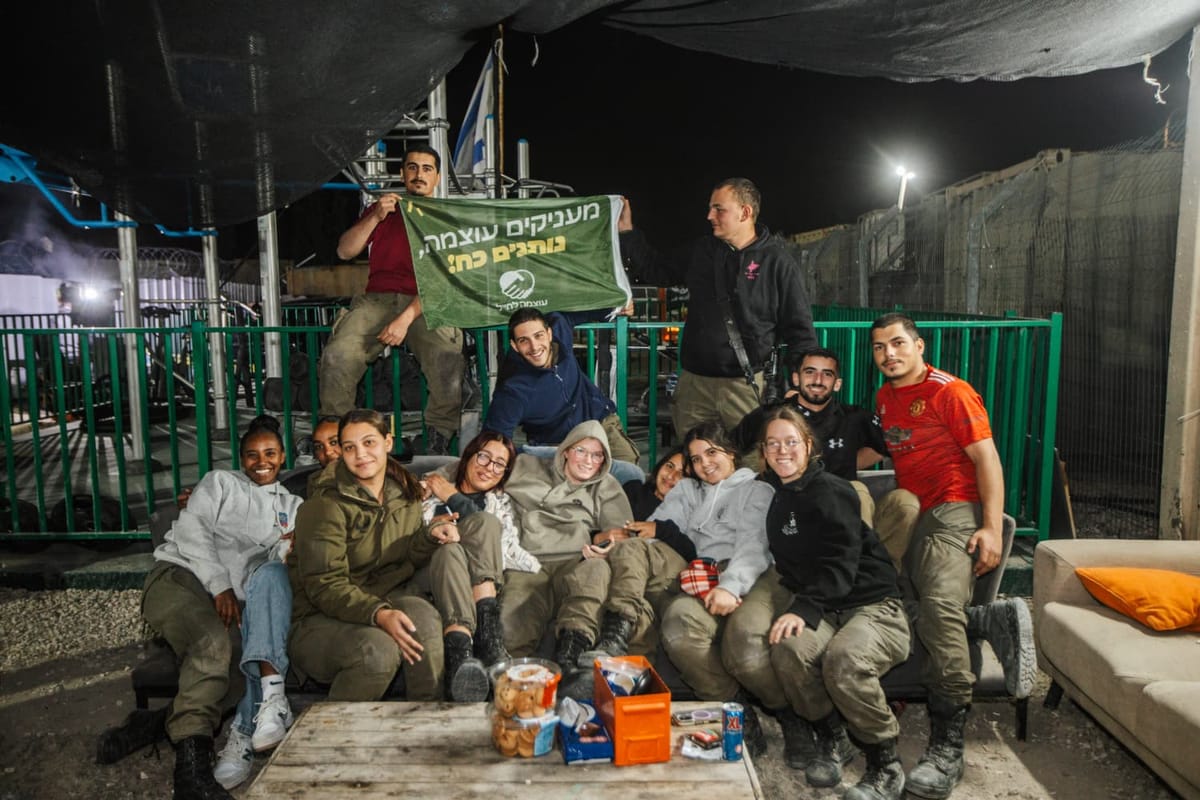
At the Shekef outpost in the Lachish region, a moving reinforcement and appreciation event was held this evening for approximately 200 female and male combat soldiers of the Search and Rescue Unit, Shavit Company, who were among the first to arrive at the disaster scenes in the Gaza envelope on October 7. The female fighters and commanders evacuated the wounded, recovered bodies, and operated under heavy fire in moments that have been etched deeply into the heart of the nation.
Today, the company is deployed along the Tarkumia line, under significant operational and emotional strain that accompanies its personnel on a daily basis.
Captain S., a Search and Rescue Company Commander, shared during the event the reality her unit faced in the days following October 7. The day after the attack, her battalion began preparing to enter the Gaza Strip. Alongside their routine operational missions in Judea and Samaria, they were immediately mobilized for complex rescue missions under fire and beneath collapsed structures.
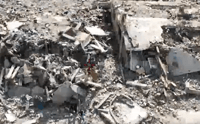
Her unit was assigned responsibility for Kfar Aza and Be’eri, where they faced one of the heaviest missions imaginable, bringing closure to families whose loved ones had disappeared. The fighters searched for the smallest remains, bones, teeth, or hair, any trace that could enable DNA identification. Thanks to their precise and relentless work, many civilians were brought to proper burial.
She shared one of many stories, of an elderly grandmother who was missing after the attack. Only a small remnant was found, yet it was enough to identify her and return her to her family for burial. Dozens of similar cases followed, both in the Gaza envelope and inside Gaza itself.
Alongside the operational burden, many of the fighters were coping with deep personal loss, fallen brothers, murdered relatives, and close friends killed in battle. Some briefly left for funerals and returned straight back to the fighting.
Captain S. explained:
The day after October 7, we began preparing to enter the Gaza Strip. As a Search and Rescue Battalion, our routine operations are mainly along the Judea and Samaria lines, but in emergencies we are also prepared for rescue missions under collapsed structures.
From the very first moment, we jumped into preparations, and between each entry into the Gaza Strip, we took a significant part in the operations in the Gaza envelope. We were assigned responsibility for Kfar Aza and Be’eri, where we faced the heaviest mission of all: to bring closure to families who did not know the fate of their loved ones.
They knew who had been murdered, they knew who had been kidnapped, they knew who was no longer with us, but there were people who had simply disappeared. Our fighters entered the area and were required to locate any sign that could provide an answer: two bones, a tooth, a strand of hair, any detail that could enable identification through DNA. Thanks to their precise and intensive work, we were able to bring many fallen civilians from those communities to proper burial.
This was a difficult and emotionally charged mission, filled with images that can never be forgotten.
I will share just one example out of many:
One family was searching for their grandmother. She had not been found among the hostages, and no body had been identified, but they knew she was elderly and that when the sirens sounded she had likely entered the safe room. We entered her home and began inspecting the safe room. Within moments, the fighters found her spinal column, a small remnant through which we were able to identify her and bring her to burial according to Jewish law. Thanks to the soldiers, the family finally received an answer.
And this is only one story. There were dozens more like it, both in the Gaza envelope and inside the Strip itself.
Beyond all this, there were also fighters who were dealing with personal crises in the midst of battle: some whose brothers had fallen, relatives who were murdered, and closest friends who were killed. There were times when we had to send them out to attend a funeral, and then they returned to the fighting, with heavy hearts but with a deep sense of mission.
It was a challenging period, emotionally and physically overwhelming. But throughout it all, the fighters understood that there was a purpose, a mission, and a profound reason for what they were doing. They carried out their duties in the best possible way, with responsibility, faith, and love for the people of Israel.
One of the commanders said at the event:
“Since October 7, we have been carrying moments that never leave us. Tonight reminded us that we are not alone. It is strength that continues with us forward.”
The event included a variety of food stands and a professional treatment complex led by massage therapists and additional care providers who arrived especially for the benefit of the fighters.
Avraham Yehezkel, Director of the “Strength for the Soldier” Project, said:
“The faces of the Search and Rescue fighters are the true face of Israel, boundless courage, a heart that never gives up, and a spirit that cannot be broken. They held the state together in moments when no one was prepared, and today it is our turn to hold them.”
Haim Ben Shalom, Chairman of the Association for the Wellbeing of Israel’s Soldiers, said:
“To adopt the Search and Rescue fighters is a great privilege for us. To see their strength in the field and to know that we, together with ‘Strength for the Soldier’, stand behind them, is a moment that fills us with pride. Our involvement here is a true commitment, from the heart.”
Lieutenant Colonel (res.) Farg’i Shemesh said:
“In the Search and Rescue unit, I saw a true connection between people from different sectors who operate as one family. This is the unity that sustains us as the IDF.”
The event was held in cooperation with Haim Ben Shalom, Chairman of the Association for the Wellbeing of Israel’s Soldiers in Tiberias and the surrounding area, and with Lieutenant Colonel (res.) Farg’i Shemesh, former CEO of Tiberias.