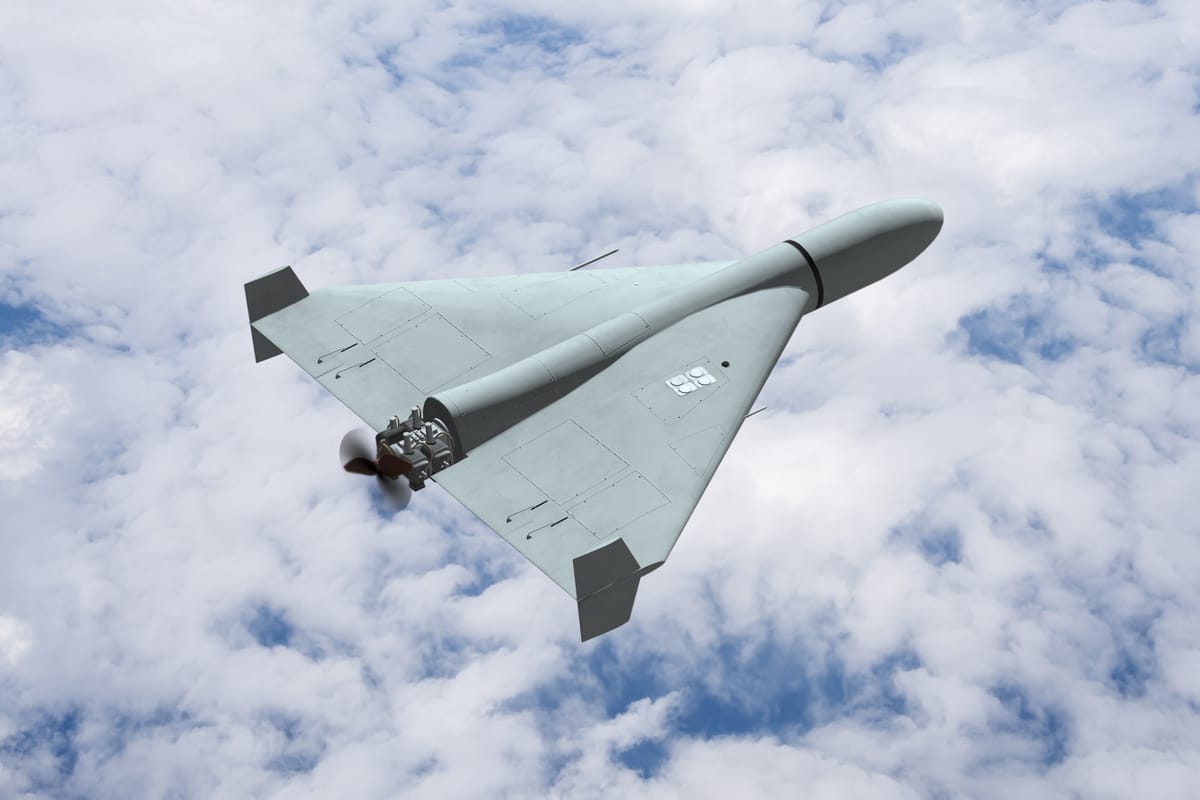
In a major shift in military strategy, President Donald Trump has approved the acquisition of a highly efficient and low-cost Ukrainian drone interception system to defend the Persian Gulf during the ongoing war with Iran. This decision marks a total reversal for the President, who had previously dismissed offers from Ukrainian President Volodymyr Zelensky to purchase the technology. With the threat of Iranian-made "Shahed" drones looming over global energy assets and US allies, Ukrainian expert teams have already been deployed to the Gulf to implement the system. The interceptor, known for its unique 3D-printed construction, has already proven its worth on the battlefields of Eastern Europe, where it has successfully neutralized thousands of Iranian-designed suicide drones launched by Russian forces.
The P1-SUN Interceptor
The heart of this new defense layer is the P1-SUN interceptor, manufactured by the Ukrainian company Skyfall. First revealed approximately four months ago, the system was designed specifically to counter the exact types of drones Iran is currently deploying in the Middle East. Initial combat data is staggering, indicating that the P1-SUN has already downed 1,500 Shahed drones and an additional 1,000 various other unmanned aerial vehicles. What makes this technology a game-changer is its cost-effectiveness; the main body of the interceptor is produced using 3D-printing technology, allowing for rapid mass production at a fraction of the cost of traditional missile defense systems like the Patriot or Iron Dome.
Technical Prowess and Rapid Deployment
Despite its humble manufacturing origins, the P1-SUN boasts impressive technical specifications. It can reach speeds of up to 420 kilometers per hour and operate at altitudes of up to 5 kilometers, making it the perfect predator for slow-moving suicide drones. Training local crews to operate the system takes only a few weeks, though the United States has insisted that veteran Ukrainian operators be present in the Gulf countries to oversee the initial phase of the deployment. These teams are currently testing the interceptor’s effectiveness against the specific climate and flight patterns found in the Middle East, ensuring that the Gulf’s "missile umbrella" is reinforced with this cheap yet lethal addition.
Correcting a Tactical Error
The road to this deal was paved with internal friction within the Trump administration. Ukrainian officials had attempted to sell the system to the US seven months ago, even preparing a detailed marketing presentation showing how it could protect American forces and regional partners. At the time, Trump reacted with dismissiveness, ignoring the proposal. However, after a series of deadly drone strikes last week caused significant damage, the President’s perspective shifted overnight. Two senior American officials admitted that the initial refusal was a massive oversight, with one stating, "If there was a tactical mistake we made leading up to the war, this was it." Now, as the war deepens, the 3D-printed interceptor is being viewed as the essential "reinforcement player" needed to keep Iranian swarms at bay.