A draft resolution on the future of Gaza, currently being advanced by the US administration at the UN Security Council (UNSC), offers rare international legitimacy for demilitarizing the Strip and establishing a moderate Arab stabilization force. However, significant ambiguities within the text present a critical loophole that could allow the Hamas terrorist organization to retain its military strength even in the aftermath of the current war.
The draft is intended to be a central pillar in implementing the "Trump Plan" for Gaza, published in September 2025. Its goals align with the plan: establishing a temporary Palestinian technocratic government, creating an International Stabilization Force (ISF), forming a "Board of Peace," and gradually transferring control to a reformed Palestinian Authority.
Yet, Israel’s explicit war aims, the disarming of Hamas, the complete demilitarization of the Strip, and the assurance that Gaza will never again pose a security threat, risk being significantly diluted by a final UNSC resolution.
Security and Demilitarization: A Conceptual Win, a Practical Ambiguity
The security provisions in the US draft largely align with the Trump Plan, reinforcing international support for Gaza's demilitarization and the formation of a coordinated ISF involving Israel and Egypt. This provides rare international validation for Israel's core demand.
However, the phrasing of the draft contains several problematic ambiguities:
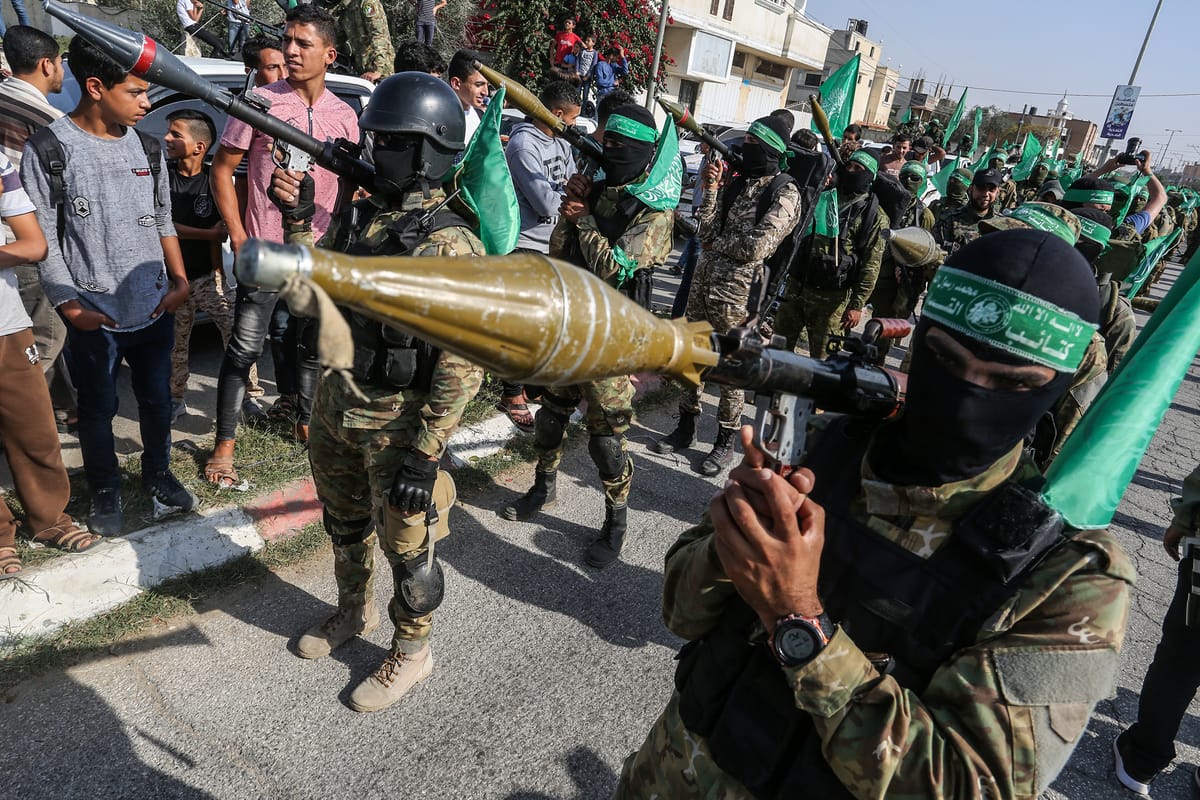
- Who Disarms Hamas? The ISF's mission is to ensure the demilitarization process, but the draft fails to specify who will physically disarm Hamas if the terrorist group refuses to voluntarily give up its weapons. The document mentions Palestinian police operating in the area, suggesting that the intention may be for Palestinian forces, not foreign troops, to handle direct confrontation with armed elements.
- Reconstruction Not Conditional: Crucially, the draft does not condition reconstruction and economic aid on the completion of demilitarization. This means humanitarian aid and potentially economic reconstruction could proceed even if Hamas retains its military capacity, raising the serious risk that Hamas could exploit civilian reconstruction efforts to rebuild terror infrastructure.
- Infrastructure Loopholes: Unlike the rigorous terms of the original Trump Plan, the current text focuses vaguely on "destroying and preventing the rebuilding of military, terror, and offensive infrastructure." It lacks clear reference to non-offensive tunnels and logistical infrastructure supporting the manufacture of weaponry, potentially allowing Hamas to preserve elements of its military industry.
The core weakness for Israel is that the draft permits the simultaneous implementation of demilitarization and reconstruction, potentially turning demilitarization into a mere aspiration rather than a binding precondition.
Israeli Presence: A Dangerous Lack of Clarity
The Trump Plan outlined a troop withdrawal map for the IDF but was unclear on the conditions for moving from the "Yellow Line" to the "Red Line" and eventually the perimeter. The current UNSC draft completely omits any reference to the legal status or presence of the IDF in the territory.
This omission creates a strategic and political vacuum: Israel wants to maintain independent security space and freedom of action against terror, but the resolution could be interpreted as curtailing its authority, especially if the UNSC assumes an oversight role. Without an explicit coordination mechanism guaranteeing Israel's freedom of action, the country could find itself bound by limitations dictated by international forces.
Furthermore, the draft is unclear on the ISF's geographical mandate. If the ISF is deployed into areas still riddled with Hamas operatives, a possibility given the current US constraints, it is highly unlikely that the contributing nations will be willing to assume the immense risk of actively disarming Hamas.
The Diplomatic Chessboard
The draft is considered a temporary achievement for the Israeli narrative by omitting any reference to a Palestinian state or broader political horizon, thus sidestepping the two-state issue. However, the delicate nature of a UNSC vote means this gain is fragile. Countries like Russia, China, Pakistan, and Algeria are expected to demand amendments that could severely restrict Israel, such as calling for a total IDF withdrawal or placing the ISF under full UN supervision.
Israel’s foreign policy is already pushing for a "side letter" from the US, guaranteeing Israeli freedom of action in two scenarios: if the ISF fails to adequately demilitarize Gaza and address evolving threats, or if the entire plan collapses, necessitating a return to fighting. This letter would need to define the terms under which Israel could demand the ISF's withdrawal and reoccupy the Strip.
Despite the serious concerns, this moment represents a rare opportunity for broad agreement on the need to dismantle Hamas's military power. Arab nations' willingness to deploy troops is a singular chance to introduce moderate, positive forces committed to de-radicalization and prosperity, potentially paving the way for wider regional integration.