
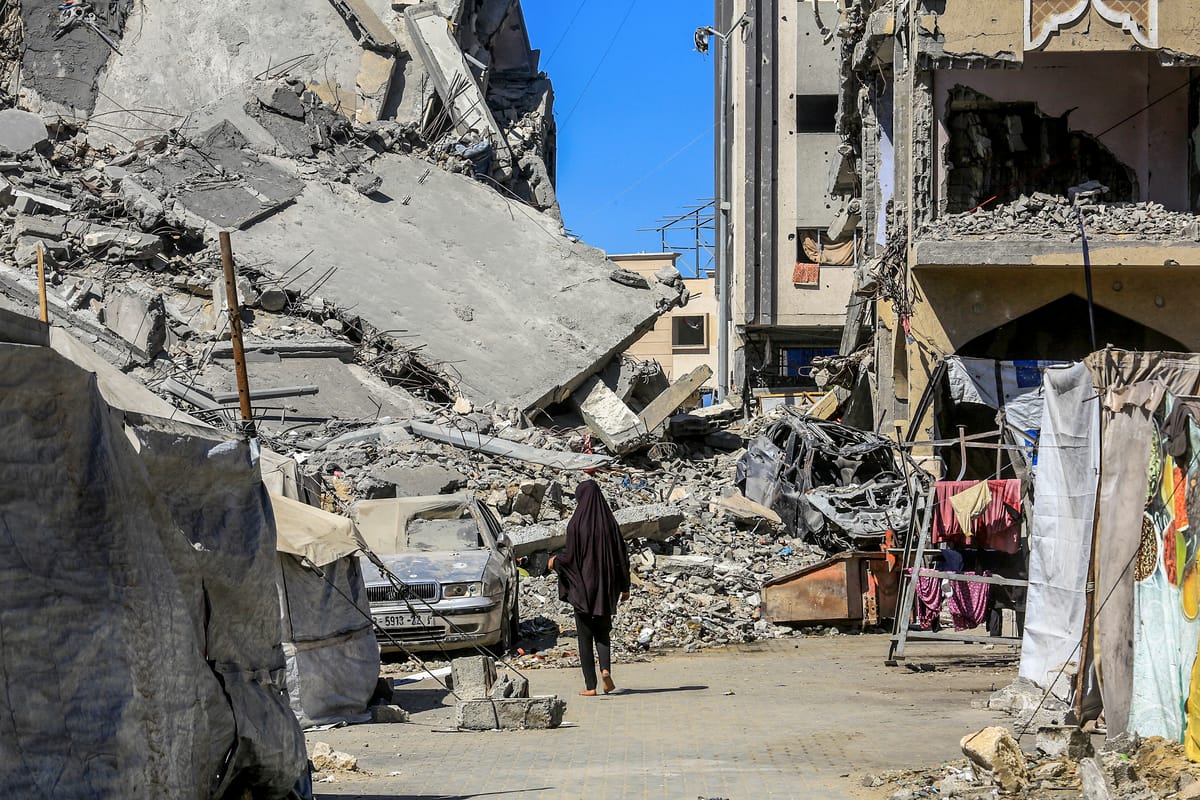
Rafael Hayun, a civilian intelligence observer who follows Arab press and social-media reports, told Channel 7 (Israel National News) that the hostage‑release deal and the ceasefire are being perceived in Gaza as a capitulation that has returned full control to Hamas.
Hayout said that beyond relief at the release of hostages, many in Gaza view the agreement as a “surrender,” because Hamas is refusing to give up weapons and is reasserting authority across the enclave. “They say it in every possible way, and they also enforce it on the small citizens,” Hayun said, describing a campaign of intimidation two days after the October commemorations in which locals were warned that any sign of wavering, assistance to Israel, or disobedience would be met with retribution.
Hayout said Hamas members visit families suspected, often without proof, of sympathy toward Israel or disobedience, carrying out brutal public punishments and executions “in a cruelty that is indescribable,” sometimes performing them openly with flags and armbands, he added.
Monitoring footage, Hayun said he has seen hundreds of aid trucks enter Gaza while armed Hamas prevents civilians from approaching the convoys. “It’s happening right now, in front of my eyes. It’s delirium. Hamas controls the Strip and is showing everyone how strong and immovable it is,” he said, and described children being sent to test Israeli troops’ tolerance for crossings of the yellow line.
Hayout warned that the tunnels from which terrorists aunched recent deadly attacks. such as those that killed Itay Yavetz and Yaniv Kula, were the same shafts Israeli forces had sought permission to destroy before the ceasefire but were blocked. “Bottom line: we are moving back, far before October 6,” he said, adding skeptically that attempts to portray the attackers as rogue groups inside Hamas are not convincing: “We all know that if Hamas wants, nobody will lift a finger.”
Expressing frustration with Israeli policy, Hayun said that after terrorists killed two soldiers and injured others, the response was to open crossings and increase aid. “I speak with senior defense officials who tell me, ‘You are one hundred percent right; they’re trying to keep the calm because the U.S. vice president is coming soon and they want quiet.’ They’re trying to preserve the ceasefire even though they know it will explode,” he said.
Hayun described the day the ceasefire took effect, when fuel, electricity, phone service and full aid resumed, as the moment the war effectively ended. He recounted Red Crescent personnel saying they had no medicines, food, water or fuel, only to be ordered by Hamas members to wait and then intimidated into silence with threats. “Now they kill us and receive the aid as a bonus. Is that normal?” he asked, saying many recent strikes hit low-level terrorists while large underground bases remain intact.
He warned that Hamas still maintains large subterranean bases, such as in Shati, making aerial strikes increasingly ineffective as civilians return and again shield tunnel complexes. Hayun noted that since the ceasefire began, roughly a quarter-million Palestinians have returned to Gaza City, now home to over half a million people.
On policy, Hayun urged hardline measures: “Anyone connected to October 7 should receive a single sentence, death, and then bring in an independent authority to run the Strip and change the schoolbooks.” He called on Israel’s prime minister and defense minister to act decisively, saying they were elected by the Israeli people, not by foreign capitals, and must secure the country “once and for all.”
The interview ended with Hayun again describing the scene he monitored: aid convoys entering while armed Hamas members decide who may approach and who may eat, reinforcing their control over the territory. He said the group is using food distribution to cement its rule.
Arutz Sheva contributed to this article.