A newly revealed internal Hamas intelligence document shows that the October 7 massacre was not a spontaneous escalation, but the product of a calculated strategic assessment that concluded Israel had lost both the will and the intention to decisively defeat Hamas.
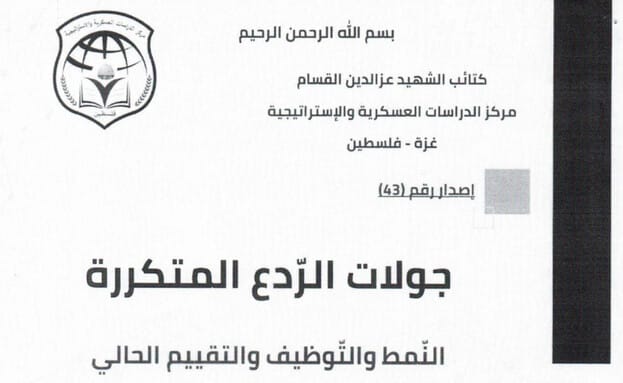
The document, written less than a month before the October 7, 2023 attack, was authored by Hamas’s intelligence wing and later discovered by Israeli forces during operations in Gaza. It has now been published in full and is being described by Israeli analysts as one of the clearest pieces of evidence yet that Hamas deliberately chose mass violence based on its reading of Israeli policy and behavior.
According to the assessment, Hamas leadership believed Israel had shifted away from a strategy of regime change in Gaza and instead adopted a doctrine focused on deterrence, limited engagements, and conflict management. The authors argued that since Israel failed to topple Hamas during Operation Cast Lead in 2008–2009, it had increasingly avoided setting clear war aims, opting instead for short, controlled rounds of fighting designed to weaken Hamas without paying the price of a full-scale war.
The document states that Israel’s leadership no longer sought to dismantle Hamas rule because of the anticipated costs in casualties, international pressure, and prolonged military entanglement. This, Hamas intelligence concluded, created a predictable pattern that could be exploited.
In particular, the authors pointed to Operation Guardian of the Walls in 2021 as a turning point. They argued that Hamas achieved a psychological and strategic success by linking the Gaza front with unrest in Jerusalem, Judea and Samaria, and inside Israel itself. This, they wrote, demonstrated that Israel was vulnerable to pressure across multiple arenas simultaneously, and that it preferred to deal with each front separately rather than confront a unified, multi-front campaign.
The assessment further claimed that Israel had failed to fully implement its “war between wars” doctrine and was increasingly focused on risk containment rather than decisive outcomes. While acknowledging Israel’s military superiority and its continued ability to carry out preemptive strikes, Hamas intelligence asserted that Israel lacked the political confidence to establish a new deterrence equation following perceived setbacks.
Based on this analysis, the document explicitly recommended preparing for a surprise opening strike that would shatter Israel’s expectations and disrupt its decision-making processes. The authors urged Hamas leadership to pursue an “unexpected confrontation” that would break the recurring cycle of limited clashes and place Israeli leaders in a state of strategic uncertainty.
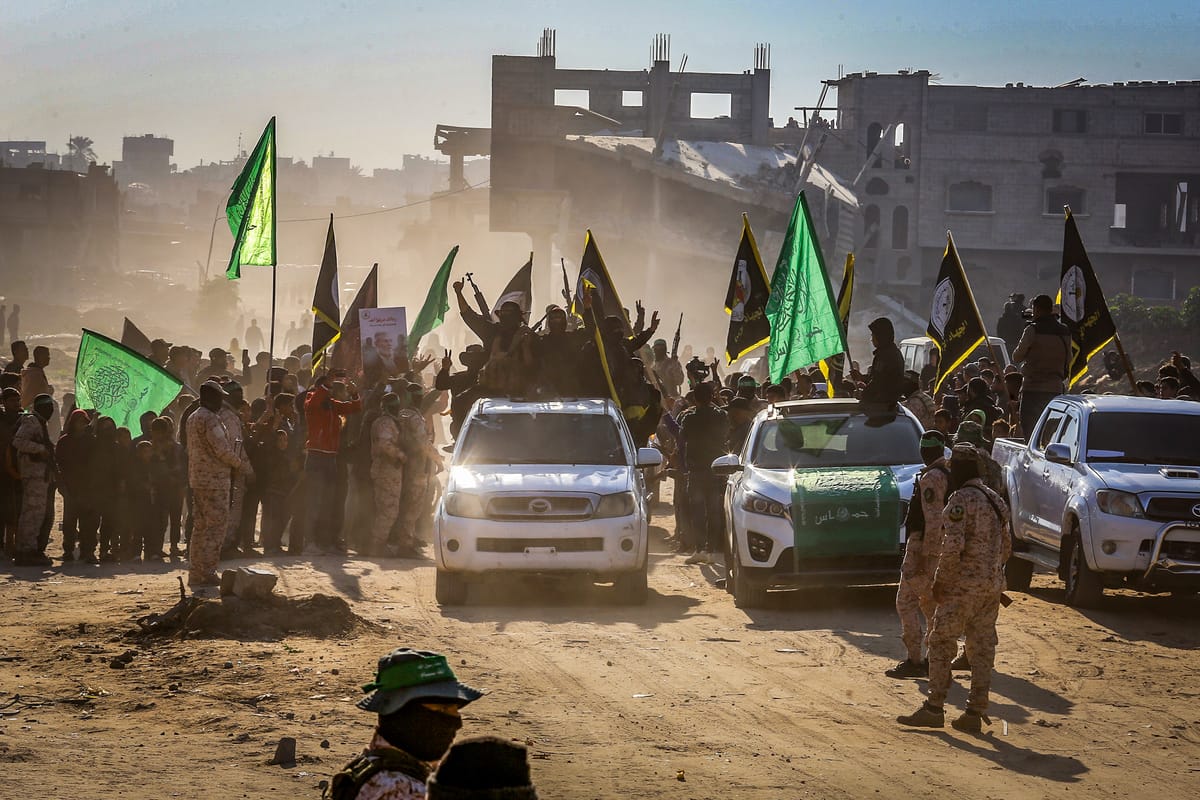
The document was presented to Hamas’s senior military leadership, including Yahya Sinwar and Mohammed Deif. Approximately one month later, Hamas and Palestinian Islamic Jihad carried out the October 7 attack, in which terrorists breached the Gaza border, overran military bases and civilian communities, murdered more than 1,200 people, and abducted 251 hostages.
Israeli security officials reviewing the document say it provides rare insight into how Hamas interpreted Israeli restraint not as deterrence, but as weakness. Rather than concluding that Israel’s avoidance of full-scale war reflected responsible risk management, Hamas intelligence framed it as proof that Israel would be unprepared for an all-out assault.