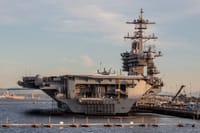
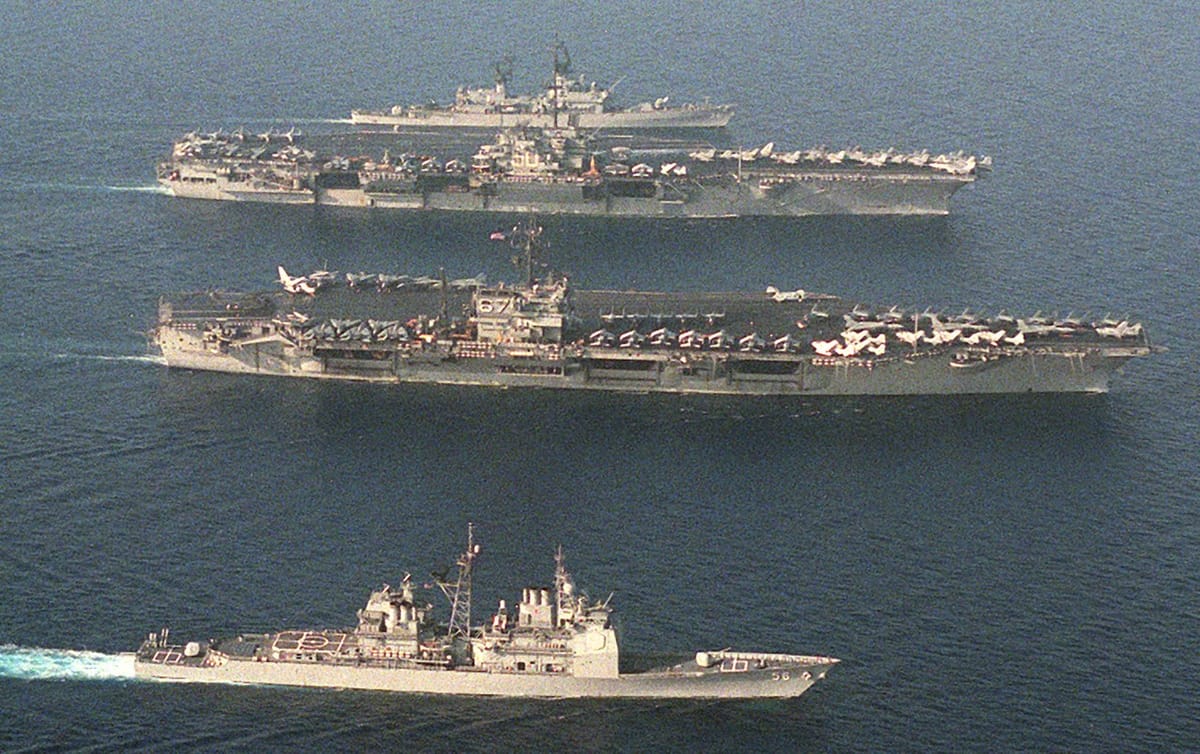
In a series of rapid military movements, the United States is recalibrating its physical presence around Iran, signaling a transition from ground based surveillance to overwhelming naval dominance. Following President Trump’s high-profile meeting with Prime Minister Netanyahu, the Pentagon has moved to send the USS George H.W. Bush to join the USS Abraham Lincoln in regional waters. Simultaneously, reports have confirmed that approximately 300 U.S. soldiers have withdrawn from the strategic Al-Tanf base in Syria, located at the critical junction of the Syrian, Iraqi, and Jordanian borders. This combination of a ground withdrawal and a massive naval buildup suggests the Trump administration is preparing for a potential air and sea war, moving forces out of vulnerable "tripwire" positions and replacing them with mobile, carrier-based strike power.
The Naval Surge and Tehran’s Response
President Trump has intensified his public pressure on the Iranian regime, utilizing social media to amplify reports that the Pentagon is readying a second carrier group. This follows his recent comments that he is "considering" such a move to ensure that if nuclear negotiations fail, the military "hammer" is ready to fall. In Tehran, the reaction has been one of defiance. Rear Admiral Shahram Irani, Commander of the Iranian Navy, addressed the maneuvers by stating, "We are monitoring the movements of the enemies around the clock."
Irani dismissed the deployment as part of a psychological war, claiming that what the U.S. truly fears is "the Iranian people." He emphasized that the Iranian Navy has evolved into an influential international player, focusing on the "economic security of Iranian ships" while offering training to other nations. Despite this rhetoric, the presence of two U.S. carrier strike groups represents a massive increase in the number of Tomahawk missiles and fighter jets within range of Iranian nuclear and missile sites, a reality that complicates Tehran's strategic calculations.
Tactical Withdrawal from Al-Tanf
While the sea lanes grow crowded, the landscape in Syria is changing. A senior American official confirmed that 300 troops have departed the Al-Tanf garrison, leaving roughly 1,000 soldiers remaining in various outposts across northeastern Syria. The official noted that the administration anticipates "withdrawing further forces from Syria in the near future, if conditions allow." This move appears to be a tactical consolidation, reducing the risk of ground troops being caught in a crossfire or targeted by Iranian backed militias during a wider war. By shifting the weight of the U.S. presence to the Mediterranean and the Persian Gulf, the administration is positioning itself to strike with impunity while minimizing the footprint of American boots on the ground.