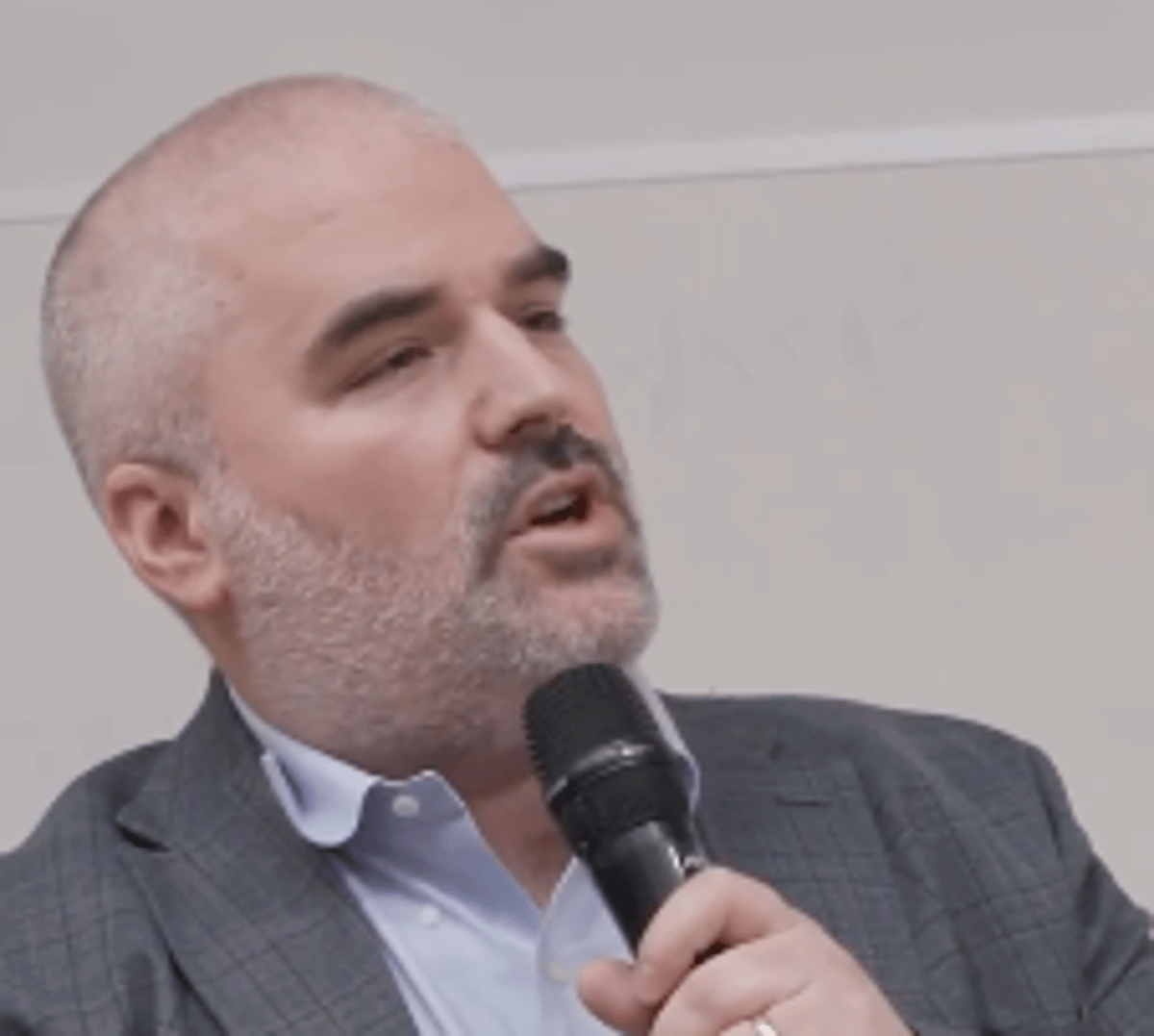
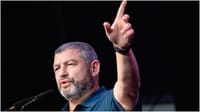
From the outset, Gur addressed them directly. “If you plan on disrupting, you will miss an opportunity to learn something that you cannot learn [in college],” he said, urging them either to get their protest over with or to unmask and stay. He challenged what he described as performative anger: “Get your screaming, emptiness, silliness that you picked up on some TikTok video over with, so the rest of us can learn.”
The protesters remained. When Gur began by referencing “massacres of Jews,” one masked individual interrupted, demanding he speak instead about the “genocide of Palestinians.” Gur took the challenge seriously and engaged for roughly 20 minutes, addressing Palestinian suffering, the 1948 displacement (which he has called a stain on Israel’s history), Jewish refugee experiences including Holocaust survivors for whom Israel served as refuge, and the complexities of the right of return.
Later in the evening, tensions escalated. A female protester with a megaphone began chanting pro-Hamas slogans, including “Free, free Palestine! Al-Qassam you make us proud, strike another soldier down. Death, death, death to the IOF,” and “Shame on every single one of you celebrating the slaughter of 700,000 Palestinians… When Gaza has burned, you will all burn, too.” An audience member physically intervened, leading to a scuffle. Campus Safety officers removed both the protester and the intervener. The protester attempted to re-enter through another door, banging on it while continuing to chant outside.thefp.com
In the aftermath, Haverford College launched an investigation. Campus Safety Director Jerry Fayette reported clear violations of the college’s Policy on Expressive Freedom and Responsibility, including a physical altercation. At least two non-students involved were permanently banned from campus as “persona non grata.” President Wendy Raymond condemned the shouting down of speakers: “Shouting down a speaker whom one does not agree with is never acceptable and stands outside of our shared community values.”
Gur chose not to have the protesters immediately removed. Instead, he engaged them, and remarkably, many stayed through the full lecture and Q&A. In a subsequent essay for The Free Press titled “Why I Let Anti-Israel Protesters Interrupt My Talk,” published yesterday, Gur explained his approach. He saw the disruption not as a powerful political movement but as an opportunity to expose its intellectual shallowness and perhaps plant seeds of doubt. He described the fiery outburst as “the howling cry of a lonely, uneducated human.”
On X, Gur reflected more pointedly: “At Haverford College, I didn’t encounter a great and powerful political movement. I met neglected children surrounded by adults who failed to challenge them, teach them or inculcate substance, grit and nuance.”
The incident, captured on video, spread rapidly online. Many viewers praised Gur’s calm, substantive engagement as a “masterclass” in handling disruption, choosing dialogue over cancellation amid the intense campus debates that have roiled American universities since October 7, 2023. College leaders and alumni groups, including Alums for Campus Fairness, commended Haverford’s decision to ban the non-student disruptors.
The Haverford event underscores a broader tension: the clash between the right to protest and the right to speak, the role of masking in activism, and the challenges of fostering genuine dialogue on emotionally charged issues like Jewish history and the Israeli-Palestinian conflict. Gur’s response, treating the interrupters with a mix of firmness and unexpected empathy, offered a rare model for navigating that divide.
As he wrote, the goal was not victory in debate but the possibility of real learning, even in the midst of chaos.