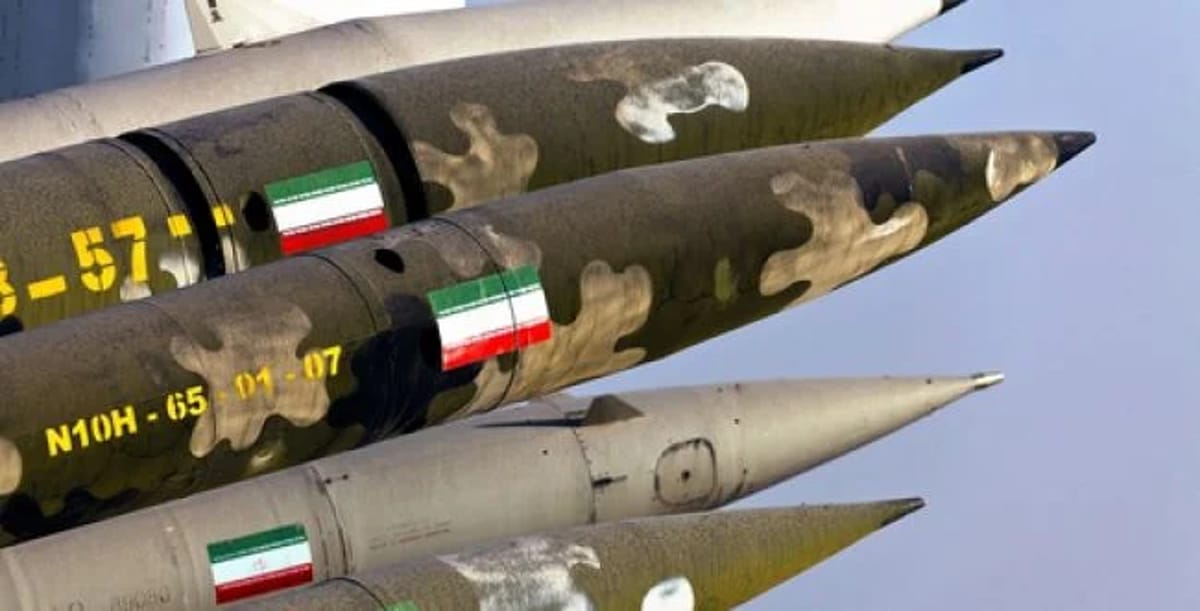
While the international community has spent decades focused on the Iranian nuclear program, a parallel and equally lethal threat has matured in the silos of the Islamic Republic. Following the 12-day war in June 2025, during which Iran launched 536 ballistic missiles at Israeli territory, the regime has entered a feverish state of reconstruction. Senior Israeli defense officials and intelligence veterans warn that Tehran is pouring every available resource into restoring its inventory to its pre-war levels of approximately 2,000 missiles. As Prime Minister Benjamin Netanyahu heads to Washington to meet with President Donald Trump, the core of his mission is clear: to ensure that any new diplomatic agreement with Iran includes strict, enforceable limits on the quantity and range of ballistic weapons, which Israel now views as a primary strategic threat.
The Race to Rebuild
General Tamir Hayman, the former head of Military Intelligence and current director of the INSS, explains that the Iranian regime viewed their missile performance during the June war as a strategic success. "The Iranians are trying with all their might to rehabilitate the ballistic missile project because, in their view, it was a success in the 12-day war, and because we, the State of Israel, are showing that we are sensitive to it," Hayman noted. While current assessments suggest Iran has not yet fully replaced the hundreds of missiles fired and the launchers destroyed by Israeli strikes, they are nearing their previous capacity.
The danger lies not just in the number of rockets, but in the sheer destructive power of each unit. Brig. Gen. (Res.) Zvika Haimovich, the former commander of Israel’s Aerial Defense, emphasized the scale of the risk. "A potential of thousands of missiles with a lethality of half a ton of explosives per missile is a threat that Israel cannot afford," Haimovich stated. He argues that the sheer volume of launchers determines the size of the barrages, which can challenge even the most advanced interceptor networks. "We are rightly trying to place the nuclear threat and the missile threat on the same level," he added.
Strategic Threat or Manageable Risk?
Not all experts agree on the classification of the missile program as an "existential" danger. Professor Isaac Ben-Israel, former head of the Israel Space Agency, suggests that a fundamental shift in the balance of power cannot happen overnight. "In half a year, it is impossible to make a fundamental change," Ben-Israel remarked, adding that it takes years to develop technology that could bypass Israeli defenses. He argues that unless the missiles carry nuclear warheads, they do not pose a danger to the state's existence, comparing the casualty rates of past barrages to traffic accidents.
Despite this perspective, the Israeli political echelon remains firm. Netanyahu’s upcoming meeting with Trump is expected to focus on the "missile file" as a deal-breaker for any regional stabilization. Israel is currently in an arms race with Tehran, replenishing its stockpiles of interceptors while Iran attempts to fill its silos. Hayman warns that a diplomatic breakthrough on this front is unlikely, as Tehran views its missile program as its primary deterrent. "It is highly doubtful if Iran will be willing to compromise on the nuclear issue, the missiles, and the proxies. For Iran, this is surrender, humiliation, and the dismantling of all its ability to deter Israel or others," Hayman concluded.