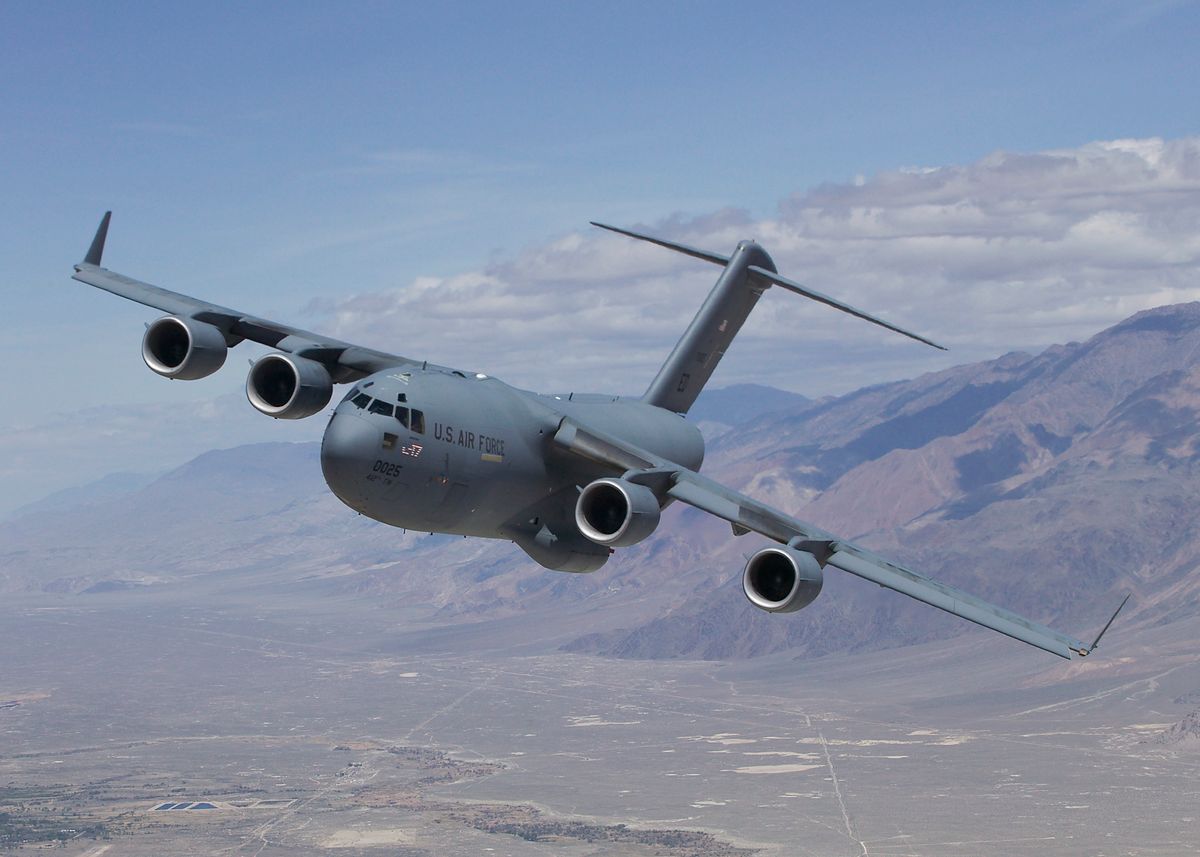
The United States Air Force is in the midst of an extraordinary strategic airlift operation, with at least 112 C-17 Globemaster III heavy transport aircraft reported to be in or en route to the Middle East. This movement involves nearly half of the U.S. Air Force’s total C-17 fleet, which stands at approximately 222–223 aircraft.
Open-source intelligence (OSINT) analysts and flight trackers have documented the surge through public ADS-B data, showing dozens of C-17s (using military “RCH” callsigns) heading to key regional bases including Al Udeid Air Base in Qatar, Muwaffaq Salti Air Base in Jordan, Prince Sultan Air Base in Saudi Arabia, and others. Additional C-5M Super Galaxy heavy transports have also been observed in the flow. Reports indicate sustained activity, with earlier waves in January and February logging over 80 C-17 missions in a multi-week period, alongside supporting tanker and fighter movements.
Retired U.S. Air Force Lieutenant Colonel Buzz Patterson, a former F-15 and F-16 fighter pilot who served as a White House Military Aide to President Bill Clinton (including carrying the nuclear “football”), highlighted the scale in a post on X that quickly gained widespread attention:“112 C-17s are in or on their way to the Middle East. Guys, that’s a lot. Like Desert Storm a lot. Stay tuned.”
Patterson’s observation draws a direct parallel to the massive 1990–1991 airlift that prepositioned U.S. forces in Saudi Arabia ahead of Operation Desert Storm. Each C-17 can carry up to 170,000 pounds of cargo, including troops, armored vehicles, munitions, and air defense systems such as Patriot or THAAD batteries.
The current movements come amid a broader pattern of U.S. force adjustments in the region. Recent weeks have seen additional F-15E Strike Eagle deployments, increased KC-135 and KC-46 tanker presence, and reports of air defense reinforcements being positioned at bases hosting U.S. personnel. These actions have been tracked through flight data originating from U.S. bases, European hubs like RAF Lakenheath and Spangdahlem, and domestic Army airfields.
No official Pentagon explanation has been provided for the precise purpose or timeline of the airlift. Analysts describe it as a significant logistical effort consistent with deterrence, resupply, force protection, or preparation for potential sustained operations. The volume of heavy transports involved is unusual for routine rotations and has drawn comparisons to major historical buildups.
Patterson, who flew combat missions in operations including the Persian Gulf and later became a military commentator and author, brings decades of operational and strategic insight to his assessment. His background includes direct experience with large-scale deployments and high-level military planning.