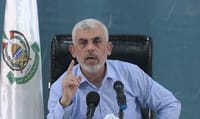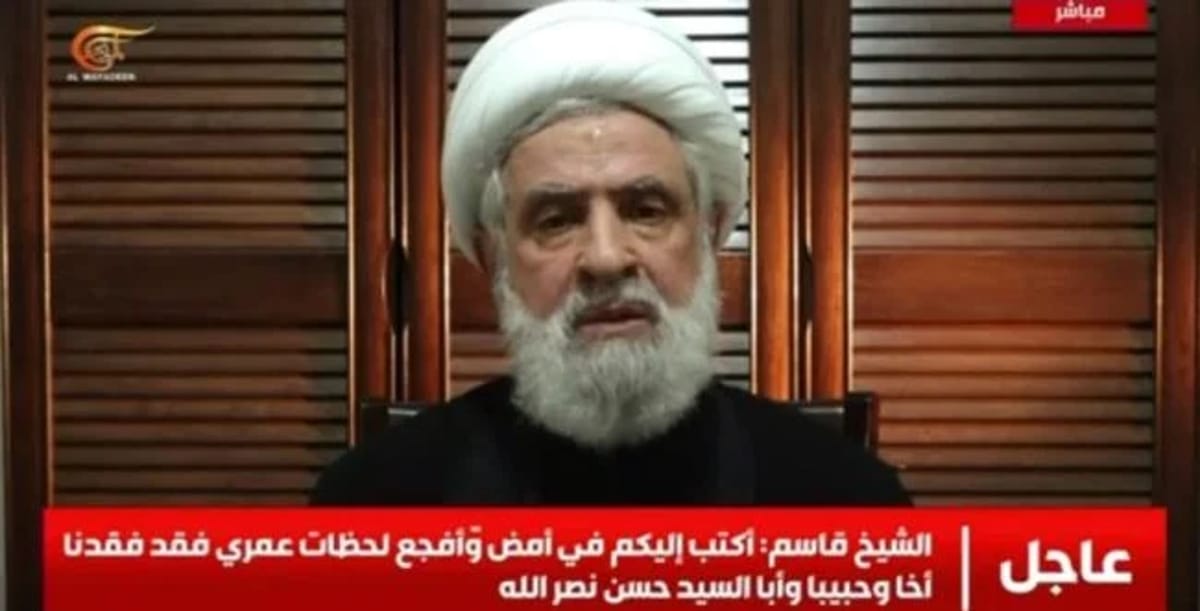
Hezbollah Secretary-General Naim Qassem has issued a strong threat against Israel, warning that "Israeli attacks cannot continue, everything has a limit." Speaking from his bunker, Qassem adamantly declared that the Lebanese terrorist organization will "not give up our weapons," despite escalating pressure from Israel and the US on the Lebanese government to disarm them.
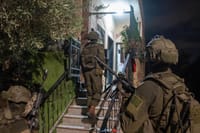
This direct warning comes as the Israel Defense Forces (IDF) intensify their activities in Southern Lebanon, targeting Hezbollah terrorist infrastructure and reconstruction efforts. While not a full ground maneuver, the IDF is conducting targeted raids and air strikes within the "security zone" the contact line close to the border fence, in accordance with existing understandings with Lebanon.
IDF Strikes and Reconstruction Efforts
The IDF confirmed recent operational activity that successfully destroyed several structures used as terrorist infrastructure by Hezbollah. During an operation last month, forces also located and neutralized old weapons caches and explosive devices stored in these buildings. The IDF emphasized that the presence of such infrastructure constitutes a violation of the agreement between Israel and Lebanon, vowing to "continue to act to remove any threat to the State of Israel."
However, Israel perceives that Lebanon is not doing enough to curb Hezbollah's power. Consequently, Israeli defense and security officials believe Hezbollah is actively working to rebuild its capabilities. This renewed build-up has led Israel to decide on an increase in the intensity of fire. The clear message being relayed to Hezbollah is that the strikes will continue as long as the current situation persists, even if it leads to further escalation.
Security officials have indicated that Israel is preparing "disproportionate" moves should the situation deteriorate into a full-scale war.
Hezbollah's Defiance and Justification
Speaking on the occasion of the organization’s "Martyrs' Day," Qassem reiterated his absolute opposition to disarming the organization, stating, "We will not give up our weapons, nor will we leave the future of our generations to the arrogant powers," in a direct reference to the US and Israel. He asserted Hezbollah’s right "to do whatever is necessary to defend our existence and protect our land and its people."
Qassem also claimed that the current ceasefire agreement only applies to the area south of the Litani River and claimed there is "no problem" concerning the security of Israeli communities. Despite his claims, Israel demands Hezbollah’s disarmament across all of Lebanon.
Qassem dedicated a significant part of his speech to justifying Hezbollah’s continued existence as an armed force, arguing that the organization is necessary to "protect and liberate lands." He attacked Lebanese commentators who suggest the group has lost its deterrence against Israel, arguing that without their "resistance," Israel would have reached Beirut as it reached Damascus, and that Hezbollah's presence is what prevents Israel from seizing more territory. He also claimed that any government decision to disarm the organization would be a mistake made "under the dictates of the United States and Israel."
Northern Residents Demand Decisive Action
Meanwhile, residents in Northern Israel, many of whom only recently returned home after months of evacuation, are deeply concerned about the rising tensions. While fearful of another war, they are demanding a decisive outcome and long-term security.
Moshe Davidovich, head of the Mateh Asher Regional Council and chairman of the Confrontation Line Authorities Forum, spoke last week, noting, "Winds of war are once again blowing here in the North." He stressed the resolve of the local communities: "We are determined not to allow another round of evacuation here in the North... The second round will not be a round of evacuation, it will only be a round of decision."
Naomi Bachar, community manager in the border community of Adamit, acknowledged the psychological toll: "The return here was not simple. The noises, the uncertainty, the feeling of not really knowing what is happening, it eats at you from the inside."