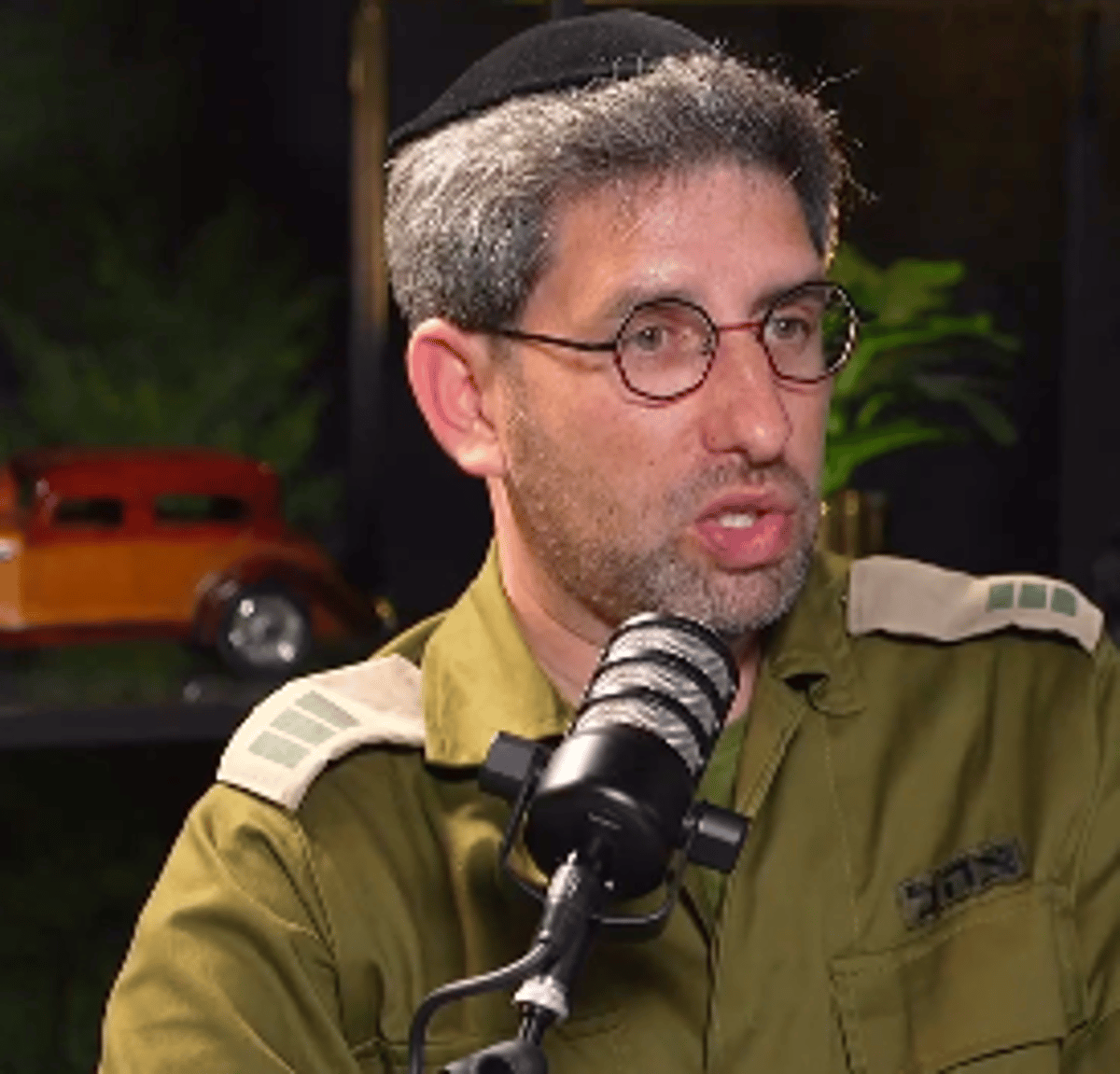
In a chilling and rare interview on Kikar FM, Capt. (Res.) Yair Freiman, an officer in the Search Unit of the Command Burial Unit (Yakap 156), took listeners into what he calls "the Holy of Holies of Israeli bereavement." His unit is unique, not because it is classified, but because those who know of it often prefer not to speak of its grim reality.
"There are those who remember to remember on Memorial Day," Freiman says. "And then there is a rare breed, the 'Rememberers.' They remember every day, every night. They are simply incapable of forgetting."
The Scream at the Collection Point
Freiman describes the impossible task of remaining professional while dealing with the rawest form of human tragedy. At the Casualty Collection Point (TACH), where fallen soldiers are brought for identification, the barrier between duty and emotion often shatters.
He recalls a specific moment when elite commandos arrived to identify two of their comrades. "A giant, muscular warrior came in. During the identification of the second fallen soldier, he let out a horrific scream: 'I can't anymore! I can't look at you! I don't have the strength to carry this pain!'"
"In that moment," Freiman says, "that warrior swallows you into his story. A man with a life, a wife, children... and it’s over. You can’t tell yourself any other story."
A Race Against WhatsApp Rumors
The unit's mission is not only to care for the deceased but to protect the families left behind. Freiman issued a sharp warning against the "keyboard heroes" who spread rumors and names on social media before official notification.
"It is a race against time," he explains. "Our goal is a certain identification so that the casualty notifiers reach the family before they see it on Telegram. It is a matter of life and death (Pikuach Nefesh) to the point that we are permitted to do everything on Shabbat just to ensure a family isn't hit with the news via a WhatsApp group."
October 7th and the Loss of Smell
A Haredi man who volunteered for "Phase B" service in late 2022, Freiman thought his service would consist of training with mannequins. Then came the morning of Simchat Torah.
He describes the journey down Route 232 in a semi-armored bus while under fire. When the bus stopped, he looked out the window and saw bodies. "I told myself - it’s now or never. I left a part of myself there on that bus. I disconnected and became purely analytical. I told myself I wasn't handling bodies; I was 'wrapping candies.'"
This mental defense mechanism manifested physically. "Since October 7th, I cannot smell," Freiman reveals. "I simply have no sense of smell. Unless I force my mind to focus and tell myself 'now I want to smell,' I smell nothing."
"The Radiance of the Firmament"
For weeks, Freiman and his team sieved through the dust of the Gaza envelope, searching for any remnant or bone to provide answers to the families of the missing. Amidst the darkness, he claims to have seen something "almost mystical."
"In the Kel Maleh Rachamim prayer, it says the fallen 'shine as the radiance of the firmament.' I have seen that radiance. There is a sacred awe and a purity on the faces of our brothers who were killed Al Kiddush Hashem (sanctifying God's name) that exists in no other dead in the world."
A Final Plea
As Israel marks Memorial Day, Freiman's request is simple: put aside the arguments over religion, state, and politics.
"Whoever was there - gave their soul for you. Just respect them. They sacrificed their spirits, and their families sacrificed no less. It is the simplest form of gratitude."
The Faceless Man
The interview concluded with a poem dedicated to the unit:
"And there is no one to stroke your forehead... to close your eyes opened in wonder... Then he arrives, the faceless man. The ordinary call him emotionless, the cynical call him cold. He passes a hand over your forehead with gentleness... closing your eyes... comforting the heart that has already gone still."