Following the return of the last hostage, the IDF has publicly released details of previously undisclosed operations that took place since the start of the war. On October 7th, the initial situation assessment estimated approximately 3,100 missing persons and hostages, partly due to the extensive scope of people cut off from communication. After in-depth analysis of the data and establishing a reliable situation assessment, it was determined that there were 255 hostages in the Gaza Strip, including four who had been held captive even before the war broke out.
On October 7th, a task force headquarters was established under the leadership of the Special Operations Division in Military Intelligence (Aman), with the goal of providing a comprehensive response to the issue of captives and missing persons. The headquarters was staffed by regular personnel reassigned from their positions in the Special Operations Division, alongside reservists and consultants, and in coordination with personnel from Military Intelligence units, IDF units, and security system bodies.
The mission of the hostage headquarters throughout all stages of the maneuver and war was to serve as the leading task force command, focusing on protecting the hostages, clarifying their fate, and returning them.
Since the beginning of the war, approximately 2,100 reservists have served in the headquarters, including about 1,300 from the Special Operations Division and about 800 additional personnel from over 50 different units, with a significant portion from the Research Division and Unit 8200. Approximately 60% of the headquarters' organizational structure consisted of reservists.
The Numbers
On October 7th, the initial situation assessment estimated approximately 3,100 missing persons and hostages, partly due to the extensive scope of people cut off from communication. After in-depth analysis of the data and establishing a reliable situation assessment, it was determined that there were 255 hostages in the Gaza Strip, including four who had been held captive even before the war broke out.
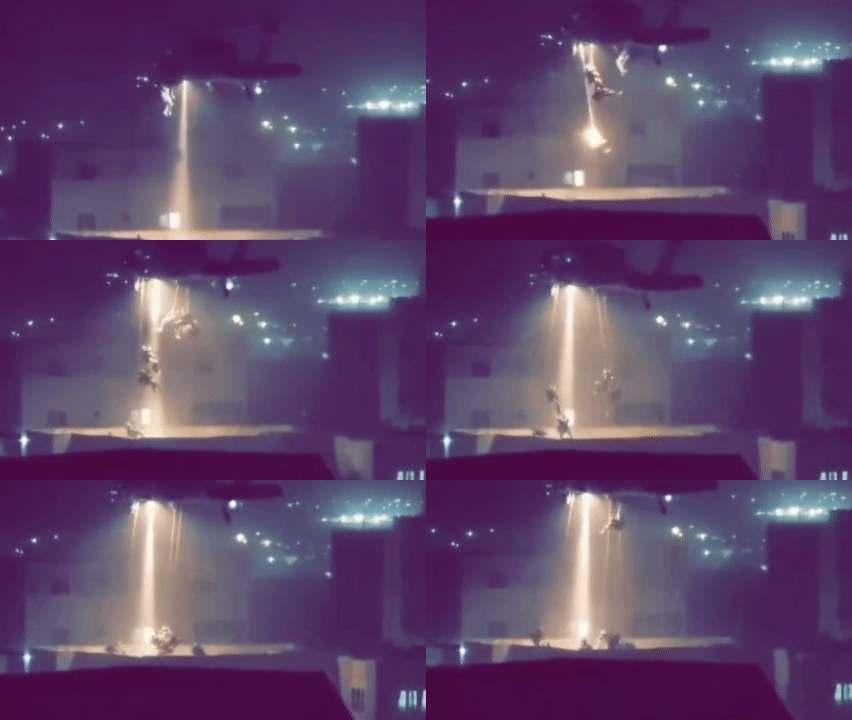
As part of the headquarters' activities, 168 living hostages and 87 deceased hostages were returned. During the war, 59 living and deceased hostages were extracted in special operations.
Each hostage family was assigned a dedicated senior hostage affairs officer who maintained continuous contact throughout the war, updated them with intelligence information, and attempted to create maximum certainty regarding the condition of their loved one in captivity. All information that could be transferred (subject to source security, hostage security, and privacy) was conveyed to the families, with the aim of enabling the best possible understanding of the situation.
The headquarters did not forget throughout the fighting to also work on returning the hostages who had been held captive even before October 7th (Oron Shaul and Hadar Goldin, may their memories be blessed, Avera Mengistu and Hisham al-Sayed). The activities of IDF forces in the Gaza Strip and the significant blow to Hamas throughout the war created conditions that enabled the return of all hostages, both through special operations and through deals. The headquarters made use of both intelligence produced during the war and early intelligence that existed before the outbreak of fighting, for the purpose of locating the hostages and advancing efforts to extract and release them.
**Main Headquarters Activities**
- Formulating an updated situation assessment regarding the dimensions of the event, including systematic and continuous mapping of the status of those cut off from communication, missing persons and hostages, with emphasis on the first weeks and months of fighting.
- Contact with families and mediating the situation assessment for them, clarifying the fate of hostages and death determination processes, research on locations of deceased hostages and directing extraction operations. Contact was coordinated between hostage headquarters and Aman personnel and the Casualties Division in the Manpower Directorate.
- Focused intelligence organization, concentrating on red side research, to formulate a reliable intelligence picture of both living and deceased hostages.
- Establishment of a dedicated negotiation team and defining its mission as part of the national effort to return the hostages, while integrating intelligence research, understanding enemy intentions, and supporting decision-making processes.
Timeline of Operations
October 7th until Operation "Gates of Heaven":
During this period, the headquarters focused on building an initial situation assessment and developing mechanisms, parallel to the start of the ground maneuver and the establishment of the headquarters as a regular and independent unit. During this period, five female hostages were extracted and released. One hostage was released in a special operation, and four hostages were released by Hamas in two different phases. Subsequently, as part of negotiations, Operation "Gates of Heaven" was carried out, in which 105 living hostages were released.
2023 until March 2025:
During this period, 47 hostages were extracted in special operations, parallel to operational activity in the Gaza Strip, including raids on Shifa and Nasser hospitals, the strike on Marwan Issa, and the start of the maneuver in Rafah, Khan Yunis, Jabaliya, and Tel Sultan. In parallel, the Special War Team for hostage affairs moved to operations from a separate base, given the growth in organizational structure and the need for independent and autonomous capabilities.
March 2025 - January 2026:
During this period, hostage Edan Alexander was released and ten additional deceased hostages were extracted in special operations. The headquarters operated to create protection and preservation mechanisms for the hostages throughout the entire period, parallel to the IDF's maneuver in the Strip as part of Operations Gideon's Chariots A and Gideon's Chariots B.
As part of Operation "Returning to Their Border," 47 of the 48 hostages remaining in captivity were released, including 20 alive and 27 deceased.
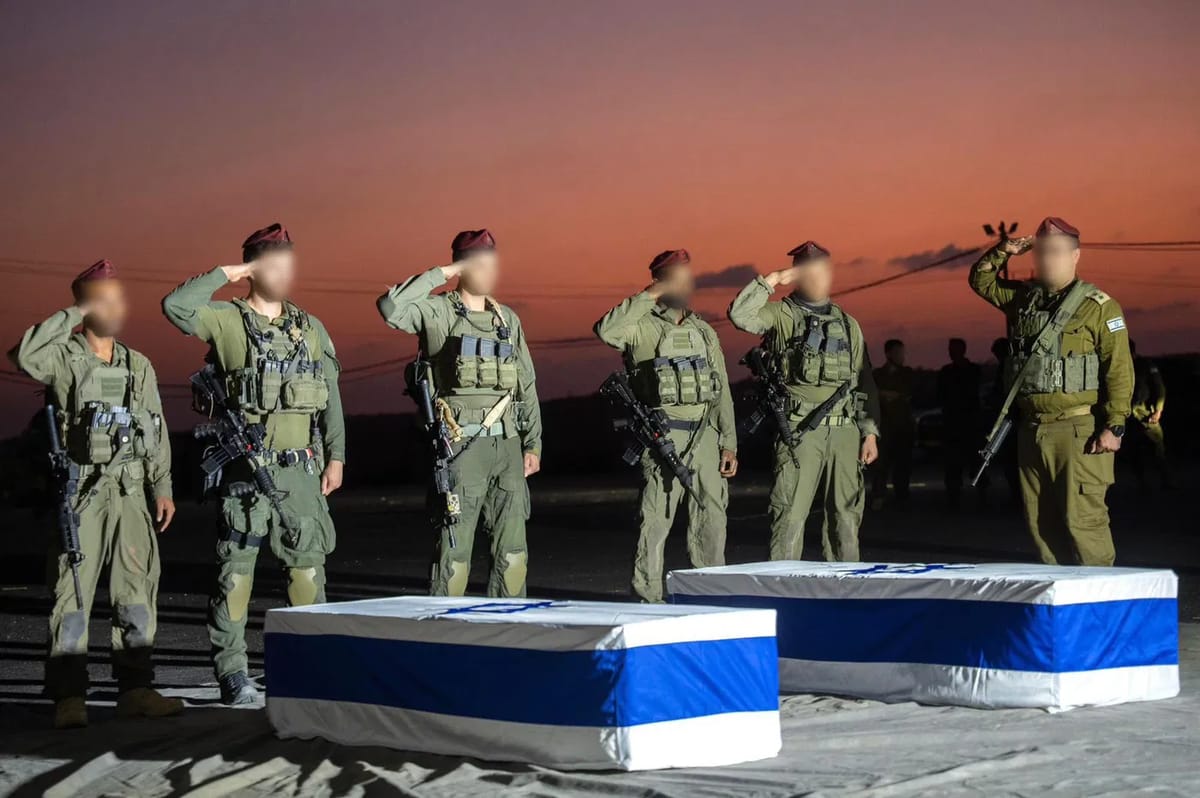
January 2026: Hostage Ran Gvili was recovered in a complex operation.
The effort to locate the burial place of fallen Police Major Ran Gvili continued for over two years and was one of Aman's central objectives. Planning the operation was made possible thanks to thorough and prolonged intelligence work based on collection, cross-referencing, and intelligence analysis from various sources.
The overall effort was complex and required constant validation of information, ongoing situation assessments, and close integration between all parties. Representatives of Aman and the hostage headquarters took a central part in the operation. The intelligence effort made it possible to point to the specific cemetery and reduce the scope of the search from thousands of graves to hundreds.
Important joint work was done between several bodies in the IDF, police, and Shin Bet. More than 20 dentists worked together for over 24 hours, scanning about 250 bodies until the identification of Ran Gvili, may his memory be blessed.