
Get our mobile app
Download on the App StoreGet it on Google Play

The Light He Left Behind

Soldier's Final Words Before Rosh Hashanah

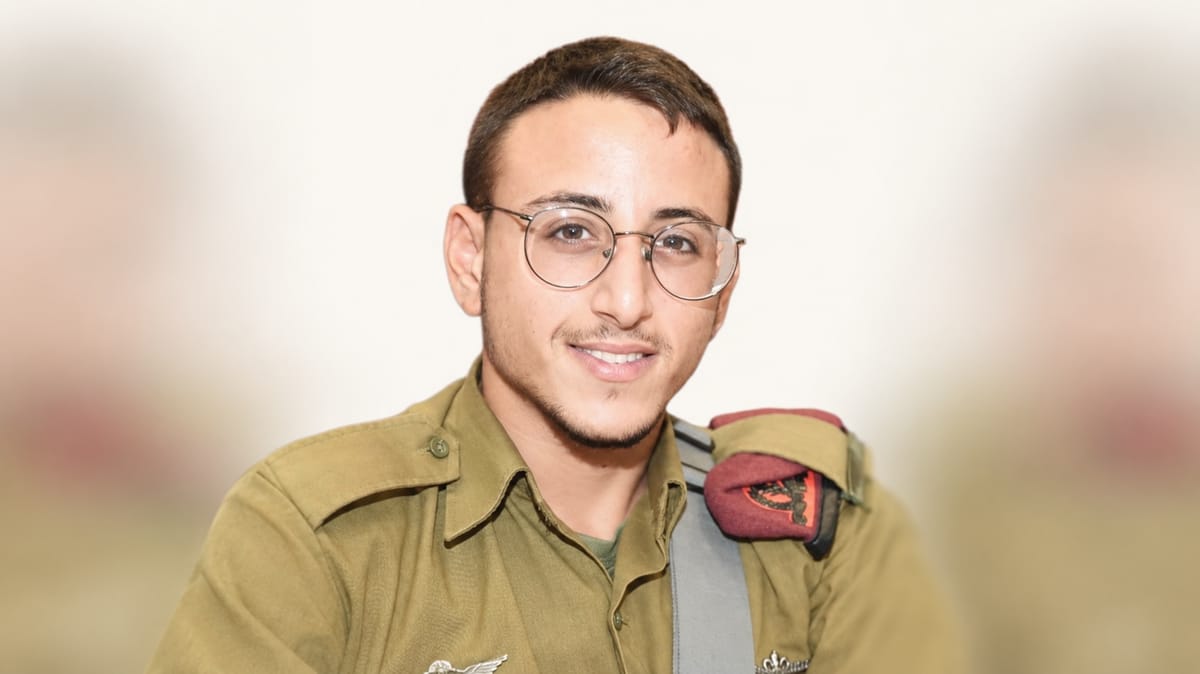
Staff Sergeant Or Mantzur fell in Lebanon on the eve of Rosh Hashanah, hours after writing in his journal about the shofar he might not hear. Now his journals and songs are being published, continuing to amplify his voice.

Or Mantzur

Staff Sergeant Or Mantzur, a fighter in the elite Egoz commando unit, was killed in combat in southern Lebanon on the eve of Rosh Hashanah, alongside seven of his comrades. A book based on his five journals and a song he composed during his service is now being released, with the music performed by his brother Yochai.

On the eve of Rosh Hashanah 5785, Yehudit Mantzur arrived at the synagogue in Beit Aryeh, a community in the West Bank, to clean and prepare it for the holiday. It was there that she received the devastating news: her son, 21-year-old Staff Sergeant Or Mantzur, a fighter in the Egoz Unit, had fallen in battle in southern Lebanon together with seven fellow soldiers.

Just hours earlier, before entering Lebanon, Or had sat down and written in his journal: "Rosh Hashanah eve, I don't know if we'll hear the shofar or how the holiday will be, but it's a great privilege to be on such an important mission on the eve of the holiday, so that the residents of the north can return to their homes."

The words he wrote became especially haunting after his death. Shortly afterward, as his unit prepared to cross the border into Lebanon, Or moved to the front of the column and declared: "I'm going first."

Or grew up in Beit Aryeh in Samaria, in a religious Zionist family. When he was only four years old, his father passed away, and his mother Yehudit raised him and his younger brother Yochai alone.

He studied at the Sha'alvim high school yeshiva, and Torah and faith were inseparable parts of his life. Alongside his spiritual world, he possessed a rich creative dimension: he played clarinet, piano, guitar, and drums, wrote and composed songs, and performed from a young age.

When he chose a combat track and reached the Egoz Unit—an elite commando force specializing in counter-terrorism operations—he didn't leave music or faith behind. Even during service and combat, he maintained three daily prayers and studied Torah, sometimes at the expense of sleep. His teammates remember his voice during Kiddush and Havdalah, and the family has preserved a recording of him conducting Havdalah for his comrades in Gaza, with radio communications audible in the background.

Or was there for his friends wherever they needed him. He was always ready to extend a hand, offer a listening ear, and embrace with an open heart the story and aspirations of each one of them.

Or Mantzur
Or Mantzur

Or filled five notebooks with his handwriting during his service. He wrote inside Gaza, during reconnaissance missions, between operational activities, and even while hiding in bushes. Everywhere, he found a moment to pause and document the thoughts, questions, struggles, and songs that arose within him.

In his journals, he didn't write only about service and combat. He grappled with questions of faith, the desire to work on his character traits, his relationship with Torah, and his love for the people and land of Israel. With rare honesty, he also described difficulties and fears, alongside the aspiration to become a better person and add light to his surroundings.

"A great light will be upon us. An enormous light will illuminate our lives. And the path will be new. A path of compassion," he wrote in one passage he left behind.

One of the songs Or wrote and composed is titled "Everywhere." The song deals with the internal search that accompanies a person even when far from home, within a complex and difficult reality.

"Everywhere a home hides, even when I'm far away and it's mentally hard," he wrote. He went on to describe how a sweet memory reminds him what he's fighting for and how it's possible to add light to the world.

The song expresses the inner world that accompanied him even during combat—the tangled thoughts, the heart that knows the way, and the desire to let goodness break through. "The good within you wants to come out into the world," he wrote in the chorus. Now the song receives new life in a performance by his brother, Yochai Mantzur.

On Rosh Hashanah eve, Or's force entered the village of al-Adaisseh in southern Lebanon and engaged in fierce combat with Hezbollah terrorists. Or, who had jumped to the front of the column, fought at the head of the force until he fell. Seven additional soldiers were killed alongside him in the battle, including his commander Captain Eitan Oster and Captain Harel Etinger.

Or was killed just three weeks before his scheduled discharge from the IDF. The dreams, plans, and songs he wanted to bring into the world were cut short, but the many notebooks he left behind allowed his family to discover additional dimensions of his world and continue amplifying his voice.

The five notebooks have become a book titled "Or Zorea Or" (Light Sows Light), on which his mother Yehudit and brother Yochai labored for nearly two years. The book combines pages in Or's handwriting, songs, reflections, and memories from his life's journey.

Alongside his words, quotations from the teachings of Rabbi Kook have been woven in, connecting to the ideas and themes that occupied him. Thus the notebooks became a personal and rare document, revealing not only the figure of an Egoz fighter who fell in battle, but also the soul of a young poet and thinker whose language was one of love, faith, and compassion.

An album titled "Or HaNeshama Mitnagen" (The Soul's Light Plays Music) is being released, based on songs Or wrote and composed. Yochai performs the songs, and the album incorporates original recordings of Or. This way, listeners can hear again the voice that was silenced, within the creation he left behind.

Or's commemoration also carries the things he loved and the values by which he lived. At Sha'alvim Yeshiva, a music room was established in his memory where students can study and play, an observation point bearing his name was built, and his name was inscribed in a Torah scroll in the community. An organization is currently being established to disseminate his legacy and creative work.

The five notebooks tell the story of a fighter who advanced first into battle, but also of a musician, yeshiva student, and person with a sensitive soul who sought everywhere to find the good and bring it out into the world. Or fell on Rosh Hashanah eve, but the words, melodies, and light he left behind continue to be heard.

Ready for more?

Join our newsletter to receive updates on new articles and exclusive content.

We respect your privacy and will never share your information.

Enjoyed this article?

Yes (28)
No (1)
Follow Us:

Unmissable content


Loading comments...

Also of Interest