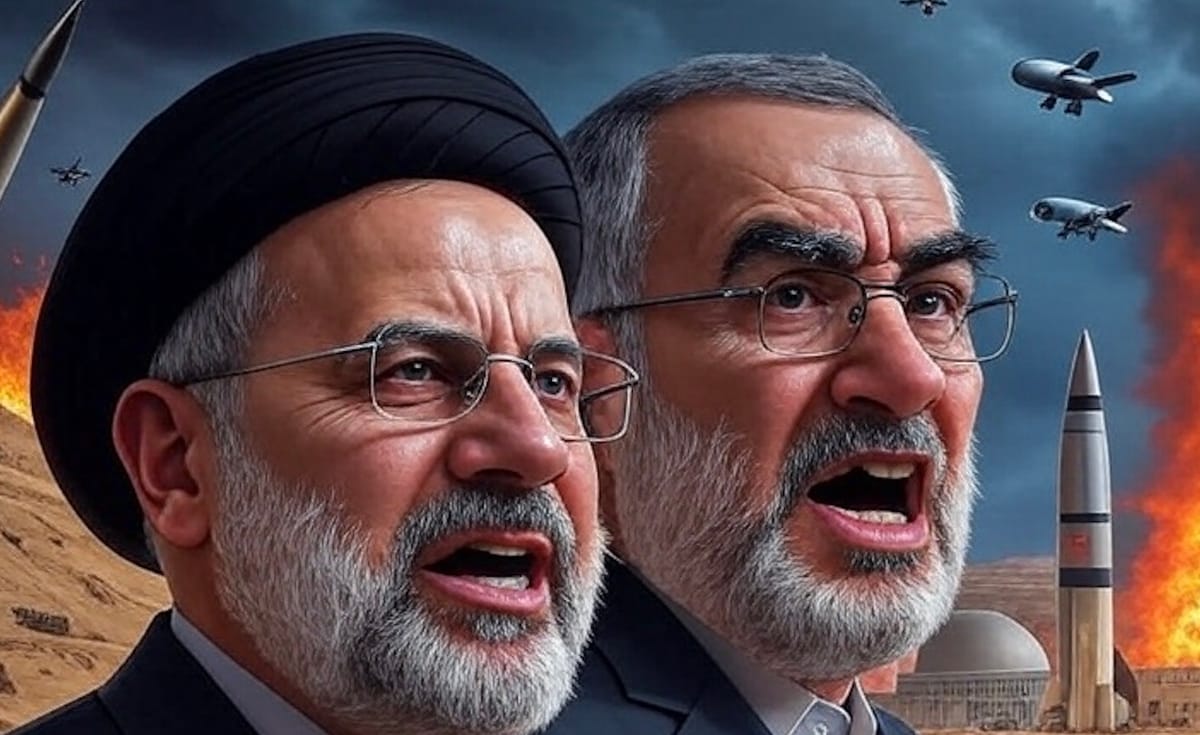
In the volatile arena of Middle Eastern geopolitics, Iran has long positioned itself as a formidable adversary to Israel, issuing fiery rhetoric and bold promises of retaliation. Recently, Iran’s leadership declared they would deliver Israel the worst night they have ever seen, a threat that implied a devastating strike meant to disrupt the lives of Israeli citizens and showcase Tehran’s military prowess.
Yet, as history and recent events demonstrate, Iran’s grandiose threats often outstrip its ability to follow through, leaving a trail of unfulfilled promises and exposing the limits of its power projection.
This article explores Iran’s pattern of bold rhetoric, its military actions, and why its threats against Israel frequently fall short of their intended impact.
A History of Bombast
Iran’s antagonistic stance toward Israel dates back to the 1979 Islamic Revolution, when the newly established theocratic regime adopted a policy of rejecting Israel’s legitimacy and vowing its destruction. Over the decades, Iranian leaders, from Supreme Leader Ayatollah Ali Khamenei to commanders of the Islamic Revolutionary Guard Corps (IRGC), have consistently issued threats designed to intimidate Israel and rally domestic and regional support. These pronouncements often paint a picture of an unstoppable Iran, capable of raining destruction on its enemies with impunity.
The latest threat emerged amid escalating tensions following Israel’s Operation Rising Lion, a series of airstrikes launched on June 13, 2025, targeting Iran’s nuclear facilities, military installations, and key commanders. Iran’s response, codenamed Operation True Promise III, involved launching ballistic missiles and drones at Israeli cities, including Tel Aviv and Jerusalem. Iranian state media and officials, including Khamenei, vowed that these attacks would deliver a “severe punishment” and leave Israel “helpless.” Yet, the reality on the ground tells a different story—one of limited impact and strategic overreach.
The Reality of Iran’s Retaliation
Iran’s retaliatory strikes, while significant in scale, have consistently failed to match the apocalyptic tone of its rhetoric. Since the onset of the current conflict, Iran has fired hundreds of ballistic missiles and drones at Israel, with estimates ranging from 200 to 400 projectiles. However, Israel’s sophisticated multilayered air defense systems, including the Iron Dome, have intercepted the vast majority of these attacks. For instance, the Israeli Defense Forces (IDF) reported that fewer than 100 missiles were launched in some waves, with most either intercepted or falling short of their targets. While some missiles penetrated defenses, causing civilian casualties and damage, such as the deaths of eight people in Tel Aviv and Haifa on June 16, the overall impact has been far less catastrophic than Iran’s threats suggested.
By June 17, Iran’s missile barrages had significantly scaled back, with reports indicating the lowest volume of attacks since the conflict began. This reduction suggests both a depletion of Iran’s missile stockpiles and a strategic shift toward lower-intensity operations, possibly to conserve resources or avoid further escalation. Despite claims from Iranian officials that their attacks would continue “until dawn” and open “the gates of hell,” the night of June 17 passed with no reported fatalities in Israel, a stark contrast to the promised night of disruption and fear. This discrepancy points to a recurring theme: Iran’s threats are often more about psychological warfare than deliverable outcomes.
Why Iran Struggles to Follow Through
Several factors explain why Iran’s threats against Israel consistently fall short of their lofty promises:
- Israel’s Air Defense Superiority: Israel’s air defense systems, including the Iron Dome, Arrow missile defense, and David’s Sling, are among the most advanced in the world. These systems have proven highly effective at neutralizing Iran’s missile and drone attacks, limiting their destructive potential. Even when missiles break through, as seen in strikes on residential areas in Bat Yam and Petah Tikva, the damage is contained compared to Iran’s stated goals of widespread devastation.
- Depleted Military Resources: Iran’s missile arsenal, while large—potentially thousands of ballistic missiles—faces logistical and production constraints. The intense pace of attacks since June 13 likely strained Iran’s stockpiles, as evidenced by the reduced volume of strikes by June 17.
- Furthermore, Israel’s targeted strikes on Iran’s air defenses, missile launchers, and nuclear facilities, such as Natanz and Fordow, have significantly degraded Tehran’s ability to sustain a prolonged campaign.
- Strategic Caution: Despite its aggressive rhetoric, Iran’s leadership, particularly Supreme Leader Khamenei, has historically been cautious about engaging in direct, all-out conflict with Israel or its ally, the United States. Iran’s threats to target U.S. bases or close the Strait of Hormuz, a critical oil chokepoint, have not materialized, likely due to fears of a devastating joint U.S.-Israeli response.
- Iran’s foreign minister, Abbas Araghchi, has signaled a willingness to return to nuclear talks if Israel halts its attacks, indicating a preference for diplomacy over escalation when faced with overwhelming odds.
- Domestic and Regional Pressures: Iran’s economy is already strained by sanctions, and the current conflict has exacerbated domestic unrest, with reports of long lines at gas stations and widespread internet outages in Tehran. The regime’s focus on external conflicts risks fueling internal dissent, forcing it to balance its aggressive posturing with the need to maintain stability at home. Additionally, Iran’s regional proxies, such as Hezbollah and the Houthis, have been weakened by Israel’s broader campaign, limiting Tehran’s ability to project power indirectly.
The Psychological Warfare Angle
Iran’s threats align with a broader strategy of psychological warfare, a tactic Tehran has employed in previous flare-ups. Posts on X from 2024 highlight Iran’s use of deceptive actions, such as announcing military drills or limiting flight zones, to create confusion and fear in Israel. However, as one X post noted, “Israelis don’t live in fear. They live in spite of it,” suggesting that Iran’s attempts to intimidate often fail to shake Israeli resolve. These psychological efforts aim to compensate for Iran’s military shortcomings, projecting strength to domestic and regional audiences even when tangible results are lacking.
The Broader Implications
Iran’s inability to follow through on its threats does not diminish the human cost of the conflict. Since June 13, Iranian state media reported 224 deaths in Iran, mostly civilians, while Israel has recorded at least 24 fatalities. The destruction of infrastructure, including Iran’s state broadcaster and oil facilities, and the displacement of thousands in both countries highlight the real consequences of this war, even if it falls short of Iran’s apocalyptic promises.
For Israel, the conflict has reinforced its strategic advantage, with Prime Minister Benjamin Netanyahu claiming that Operation Rising Lion has set Iran’s nuclear program back “a very long time.” Israel’s control of Iranian airspace, as reported by TIME, allows it to strike with impunity, further exposing Iran’s vulnerabilities. Meanwhile, U.S. President Donald Trump’s shifting rhetoric, from urging diplomacy to demanding Iran’s “unconditional surrender”, complicates the path to de-escalation, leaving Iran in a precarious position.
As the conflict continues, Iran faces a dilemma: escalate further and risk catastrophic retaliation or scale back and lose face. For now, Iran’s big threats remain just that, big talk with limited follow-through, a pattern that underscores the challenges of confronting a militarily superior adversary in a complex geopolitical landscape.
Sources: BBC, Reuters, CBS, NPR, The New York Times, NBC, TIME