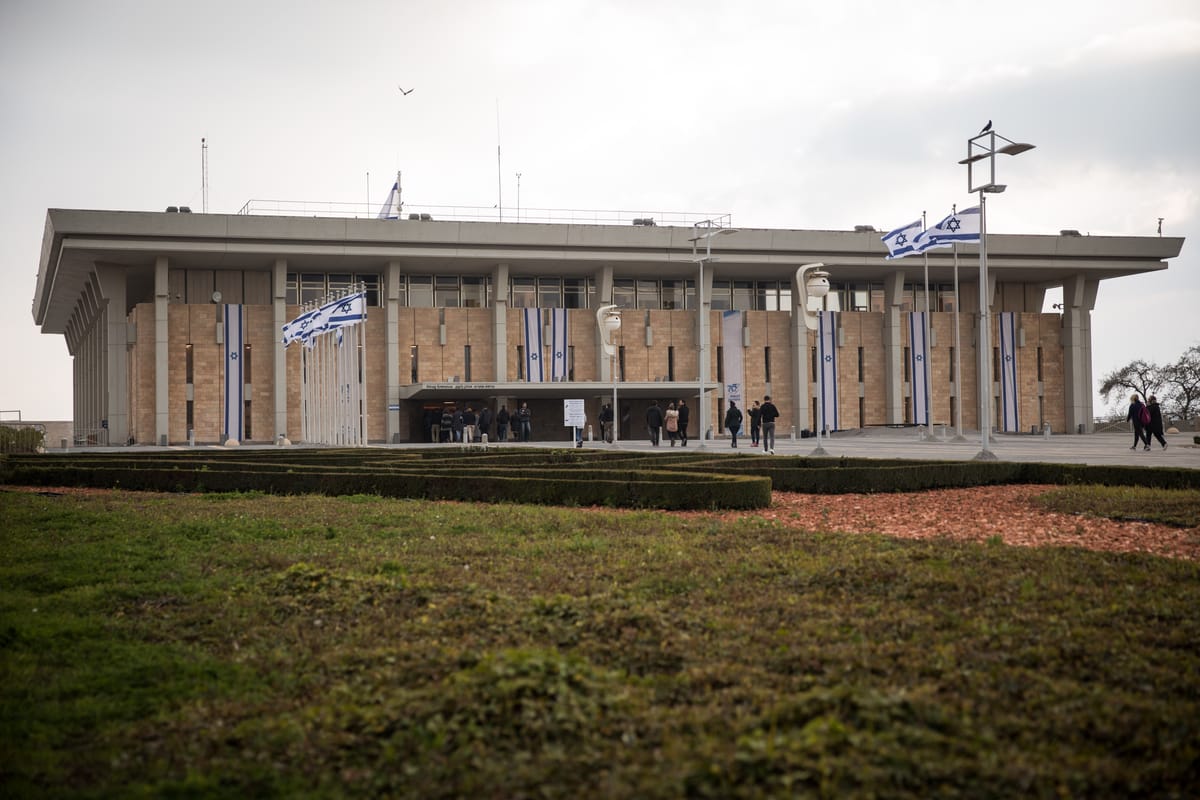
Israel’s Knesset Finance Committee approved the 2026 state budget on Monday, clearing a key hurdle ahead of a final vote in the Knesset plenum later this week.
The approval comes just days before the legal deadline to pass the budget, with failure to do so triggering the automatic dissolution of the Knesset and new elections.
The updated budget includes a significant increase in overall government spending, driven largely by the ongoing war. The government added approximately NIS 40 billion to the budget in a recent revision, bringing total authorized spending for 2026 to about NIS 850 billion.
Of that, roughly NIS 621 billion is allocated to the regular budget, with an additional NIS 228 billion designated for development and capital expenditures. The effective spending cap, excluding debt repayments, is set at around NIS 699 billion.
A central feature of the revised budget is a substantial increase in defense spending. The Ministry of Defense budget has been expanded by more than NIS 30 billion and will now exceed NIS 142 billion, reflecting the costs of sustained military operations across multiple fronts.
Other major allocations include approximately NIS 97 billion for education, nearly NIS 64 billion for the National Insurance Institute, and about NIS 63 billion for the health system.
To accommodate the increased spending, the government approved a series of fiscal measures, including a 3 percent across-the-board cut to most ministries and a higher deficit target. The updated deficit is expected to reach 4.9 percent of GDP.
As part of efforts to manage the deficit, the government reached an agreement with Israel’s banks, which will transfer a one-time payment of around NIS 3 billion to state coffers this year. The arrangement replaces earlier plans to impose a more extensive tax on bank profits.
The budget also includes roughly NIS 5 to 6 billion in coalition funds, a portion of which is expected to go toward religious and educational institutions. At the same time, several planned economic reforms were scaled back or postponed during negotiations to secure political support for the budget.
Among the measures that were either reduced or removed are elements of proposed tax reforms and changes to the dairy sector. Some broader structural reforms in finance and infrastructure were also separated from the main budget legislation.
Politically, the approval marks a critical moment for the governing coalition. Ultra-Orthodox parties, which had previously threatened to withhold support over disputes related to military conscription legislation, agreed to back the budget after those discussions were postponed due to the war.
The budget must still pass its second and third readings in the Knesset plenum by the end of the month. Coalition leaders are expected to push for rapid approval in order to avoid a political crisis.
If the budget is approved as expected, it will stabilize the government in the short term while locking in a wartime economic framework centered on increased defense spending and higher fiscal deficits.
However, the scale of the budget and the concessions made to secure its passage are likely to remain a point of contention in Israeli politics, particularly as the economic impact of the war continues to unfold.