
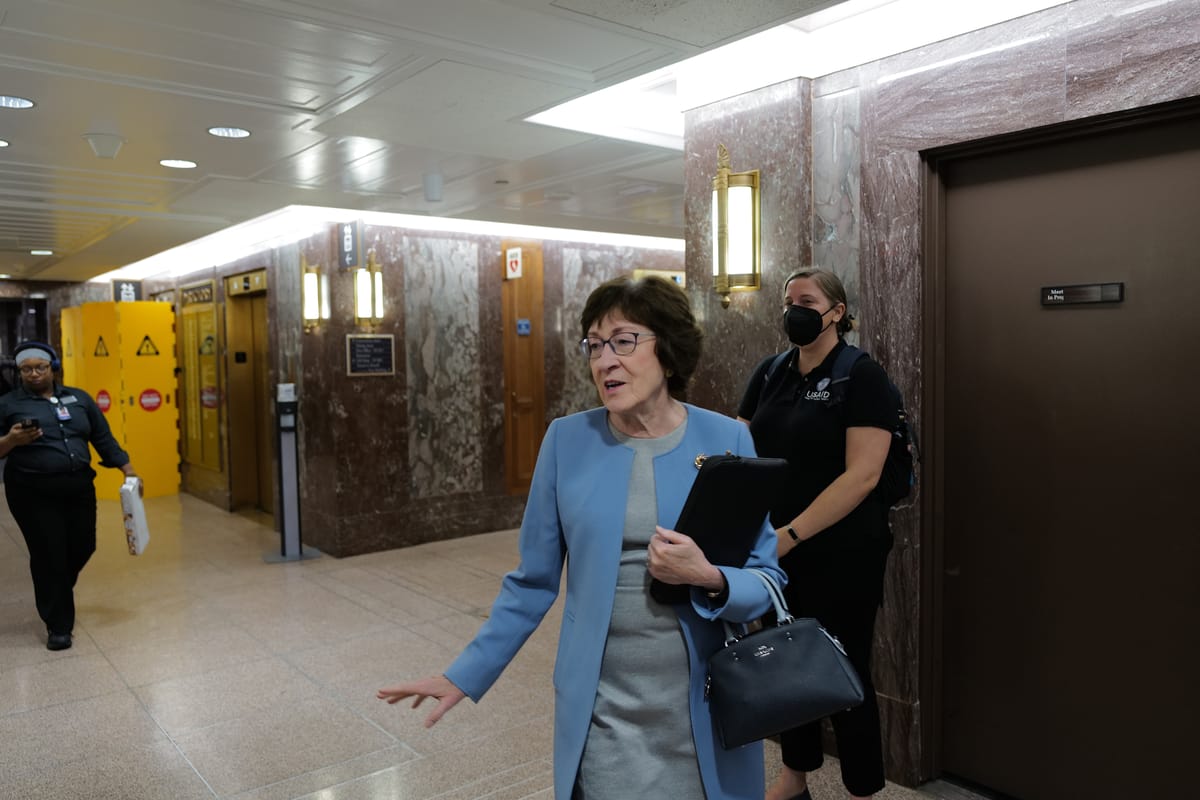
Sen. Susan Collins disclosed Wednesday that she has long lived with a benign essential tremor, as the Maine Republican launches her campaign for a sixth term in the US Senate.
Collins, 73, said the condition, which can cause visible shaking in the hands, head and voice, has been present throughout her nearly 30 years in the Senate and has not affected her ability to serve.
“I have had it for the entire time that I have served in the United States Senate,” Collins told News Center Maine. “It has absolutely no impact on my ability to do my job or on how I feel each day.”
Collins, first elected in 1996, pointed to her Senate record as evidence that she remains healthy enough to continue serving. She said she has never missed a Senate floor vote, a streak approaching 10,000 consecutive votes.
“If you talk to anybody in Washington, they will tell you that I am the hardest working person that they have ever worked with,” Collins said.
The disclosure comes as Collins enters what is expected to be one of the most closely watched Senate races of the 2026 midterms. Maine often votes Democratic in presidential elections, but Collins has repeatedly held her seat by presenting herself as an independent-minded Republican with deep local roots.
Democrats see the race as a major pickup opportunity, but their likely nominee, Graham Platner, brings his own complications. Platner, an oyster farmer, harbor master and military veteran, has emerged as the leading Democratic contender after Gov. Janet Mills suspended her campaign. He has drawn support from prominent progressives, including Bernie Sanders and Elizabeth Warren, and has campaigned as a populist outsider.
But Platner’s campaign has also been marked by controversy. He has faced scrutiny over past inflammatory online posts, including comments that critics said were crude, extreme or politically toxic. He has also been criticized over a controversial tattoo that drew national attention and forced his campaign to respond to questions about his judgment and past associations.
Those issues have fueled concern among some Democrats that Platner may be a risky general election nominee in a state where Collins has survived difficult races before. His supporters argue that his military service, working-class profile and anti-establishment message make him a stronger fit for the political moment than a conventional Democrat. Critics counter that his record gives Republicans clear lines of attack in a race likely to help determine control of the Senate.
Platner has also faced questions about his health, including a 100% disability rating from the Department of Veterans Affairs tied to physical injuries and PTSD. He has said the issues would not prevent him from serving effectively.
Collins’ decision to address her tremor early appears aimed at preventing the issue from becoming a campaign liability as both parties prepare for an expensive and highly contested race.