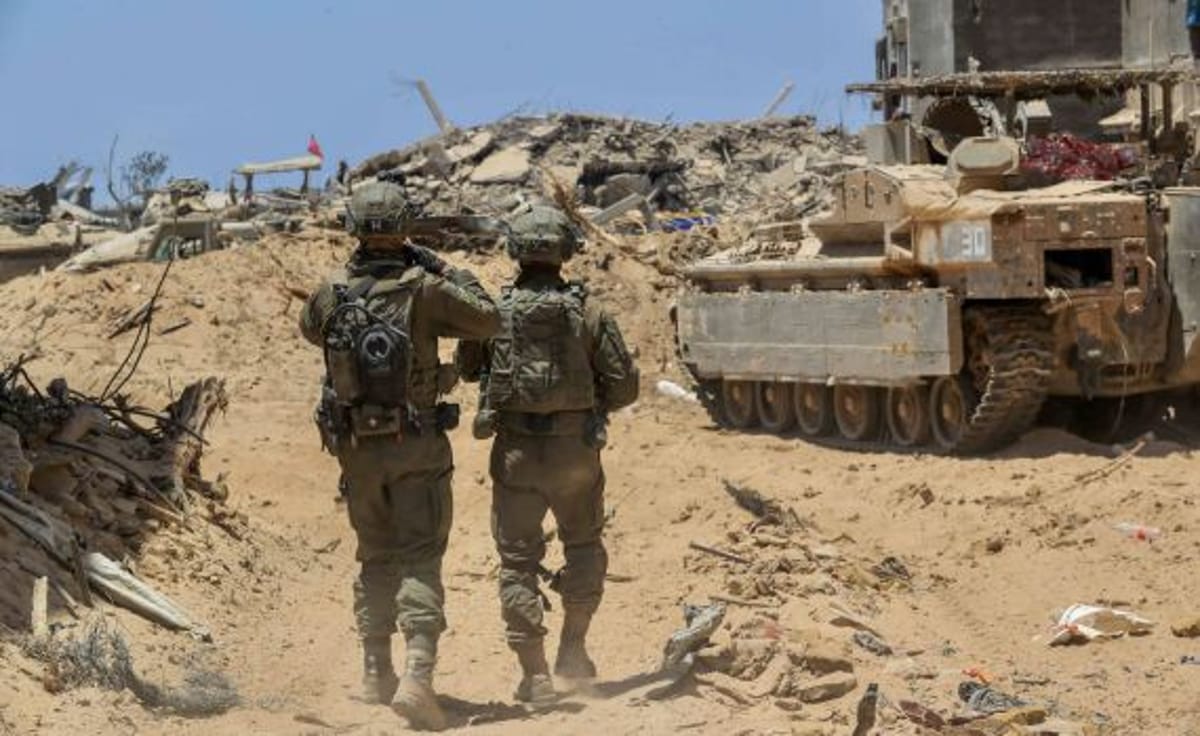
After more than two years since the October 7 massacres, Israel has fundamentally redrawn its security landscape, transitioning to direct and sustained military operations that have resulted in effective control over approximately 1,000 square kilometers of new territory outside its previous borders.
According to recent satellite imagery analysis and on-the-ground assessments compiled by international observers, the Israel Defense Forces (IDF) now maintain a substantial presence in both the northern and southern theaters.
This expanded footprint reflects a revised post-October 7 defense doctrine aimed at creating deep buffer zones to prevent future Surprise attacks .
Territorial Shifts in the North and South
In the northern theater, the shift in control is particularly evident along two borders. The IDF has established a deep, Israeli-controlled demilitarized zone extending into southern Syria. Furthermore, following the systematic evacuation of the civilian population from the area, Israel now maintains effective security control over nearly all of southern Lebanon up to the Litani River.
To the south, international analysts estimate that Israel retains control over approximately 60 percent of the Gaza Strip.
Combined, these newly secured buffer zones in Lebanon, Syria, and Gaza total at least 1,000 square kilometers of territory that Israel did not hold prior to the outbreak of hostilities.
Surgical Operations and High-Profile Eliminations
While the IDF has shifted to a lower-intensity posture across the Gaza Strip compared to the initial phases of the war, targeted intelligence-driven operations continue at a steady pace. This strategy focuses heavily on the precise elimination of senior Hamas leaders who orchestrated or survived the October 7 attacks.
A prominent example of this ongoing campaign occurred this week when a precision Israeli airstrike successfully targeted and eliminated senior Hamas commanders in Gaza. Israeli defense officials stated that these surgical strikes are part of a broader, unyielding policy to dismantle the remaining remnants of Hamas's command structure while maintaining long-term security across the newly established buffer zones.