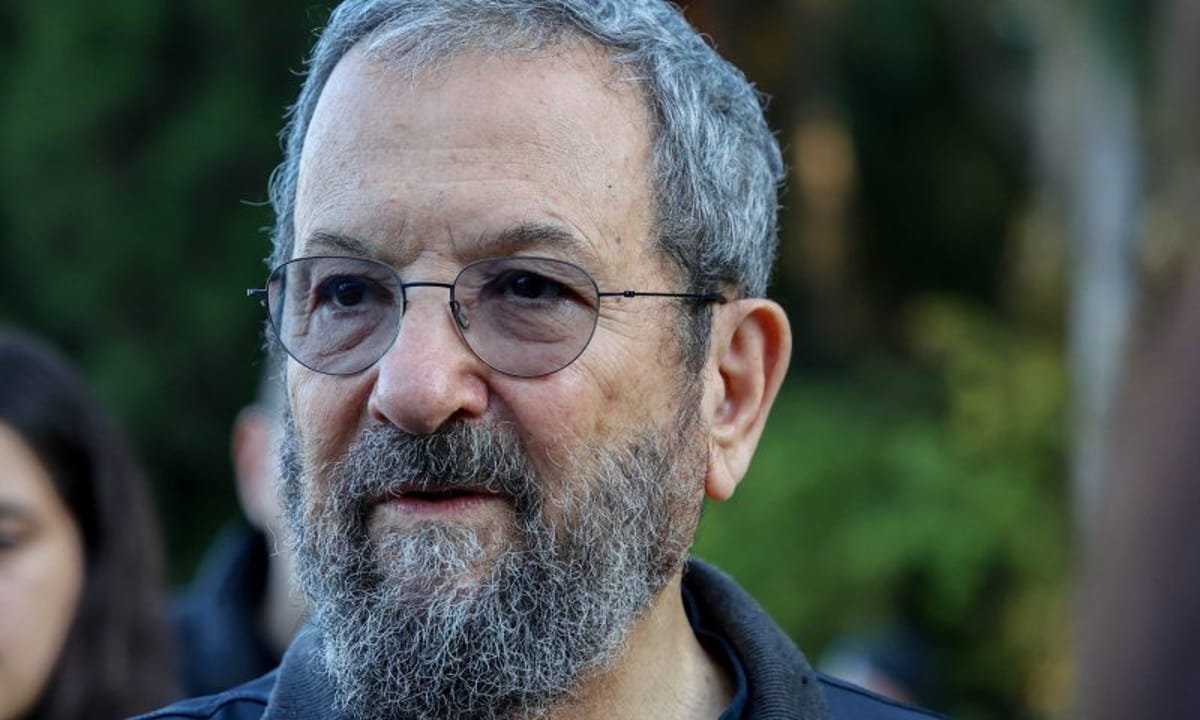
A bitter political confrontation intensified Sunday as Transportation Minister Miri Regev announced plans to introduce legislation preventing former Prime Minister Ehud Barak from being buried among Israel's national leaders at Mount Herzl.
In a combative interview with Radio Galey Israel hosts Yaakov Bardugo and Doron Cohen, Regev delivered a blistering critique of Barak, declaring his views represented a "distorted and sickening world."
The minister's most dramatic pledge came when she vowed to pursue a law barring Barak from burial in the "Helkat Gdolei HaUma," the Plot of the Nation's Great Leaders reserved for Israel's most distinguished figures.
"It is a disgrace and a shame that this sickening man is even invited [to speak]," Regev said. "I think he should be prevented from being buried in the Plot of the Nation's Great Leaders, and I will submit a bill to that effect."
The threat marks a sharp escalation in tensions between the current government and establishment critics from Israel's security and political elite.
Regev turned her criticism toward opposition lawmakers and women's advocacy groups, charging them with hypocrisy for failing to condemn Barak's recent controversial remarks.
"Where is Merav Michaeli? Where is Merav Ben-Ari? Where is Naama Lazimi?" she demanded, naming prominent left-wing female politicians. "All this hypocrisy of the Left, at the end of the day, he represents the 'enlightened' and hypocritical Left."
The minister characterized Barak as "the symbol of the frustrated and distorted Left," lamenting what she described as the opposition's failure to distance itself from the former prime minister and IDF chief of staff.
"It is a great pity that we do not hear anyone from the Left coming out against these shocking things," Regev concluded.
The confrontation reflects the widening chasm in Israeli political discourse, with government ministers increasingly targeting high-profile critics from the country's security establishment and political opposition.
Barak, who served as Israel's prime minister from 1999 to 2001 and as IDF chief of staff before entering politics, has emerged as one of the government's most vocal critics.
The controversy comes as political tensions in Israel remain at heightened levels, with sharp divisions over judicial reform, security policy, and democratic governance continuing to dominate public debate.