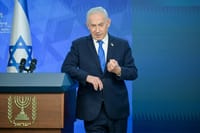
Oliver quipped that Netanyahu would "pour a bowl of cereal in a way that would meaningfully make conditions in Gaza worse," slamming his covert funding of Hamas to undermine the Palestinian Authority and his Abraham Accords as a "f*** you to the Palestinians."
The reference harks back to one of Israel's darkest chapters: the November 4, 1995, murder of Prime Minister Yitzhak Rabin by Yigal Amir, a far-right Jewish law student and ultranationalist who opposed Rabin's Oslo Accords, the landmark 1993 peace deal with the PLO that Rabin, Shimon Peres, and Yasser Arafat shared a Nobel Prize for. Rabin was gunned down at a Tel Aviv peace rally, just steps from his car, in front of 100,000 supporters waving olive branches.
In the preceding months, right-wing opposition, led by then-Likud head Netanyahu, intensified against the accords, which ceded West Bank land to Palestinian control in exchange for security guarantees. Netanyahu accused Rabin's government of betraying "Jewish values" and being "removed from Jewish tradition," while Likud allies branded Rabin a "traitor" and "murderer."
The infamous October 5 rally in Jerusalem's Zion Square epitomized the vitriol: Protesters waved coffins, nooses, and photos of Rabin in an SS uniform, chanting "Death to Rabin." Netanyahu addressed the crowd from a balcony, flanked by a giant Rabin effigy in Nazi garb, later set ablaze, while reportedly saying, "We will get to his car, and we'll get to him too," echoing a young Itamar Ben-Gvir's earlier theft of Rabin's car emblem.
Amir, inspired by rabbinical "din rodef" (pursuit of a pursuer) edicts deeming Rabin a mortal threat to Jews, cited the rally's hatred as motivation. Leah Rabin, in raw grief, lashed out at Netanyahu during his funeral handshake (which she described as "cold as ice") and in interviews: "Surely I blame them... He was there and didn’t stop it." She accused Likud of fostering a "climate of hate," a charge echoed by Labor's Merav Michaeli in 2022 ("Rabin was assassinated with Netanyahu's cooperation") and former Shin Bet heads in 2023, who slammed Netanyahu's autobiography for promoting "conspiracy theories" absolving the right.
Netanyahu has long denied incitement, calling for "reconciliation" and accusing critics of "McCarthyism" or blaming "half the nation." In his 2022 book Bibi: My Story, he claimed Shin Bet agent provocateurs fueled the unrest, a narrative rejected by ex-security chiefs as "lies."
The assassination derailed Oslo, ushering in Netanyahu's first term in 1996 on a hardline anti-terror platform, and remains a scar: Annual memorials invoke it as a warning against extremism, while right-wing voices like Breitbart dismiss Oliver's take as "false blame."
Why Now?
Oliver's Broader Netanyahu RoastOliver's segment isn't just historical—it's a call for "regime change" in Israel, arguing Netanyahu's survival (via judicial overhauls and war prolongation) exacerbates Gaza's suffering.
Drawing from the doc The Bibi Files (which Netanyahu tried to ban), he highlights leaked interrogations and insider accounts painting Bibi as a self-righteous power-hoarder.
The Rabin bit underscores a pattern: From 1995 incitement to today's alliances with figures like Ben-Gvir (who once boasted of nearing Rabin's car pre-murder), Netanyahu allegedly prioritizes survival over peace.
As one Reddit user noted, Oliver frames Bibi as "isolated corruption" but skips wider Palestinian liberation, yet the Rabin nod lands like a gut punch, reviving a 30-year wound in Israel's fractured soul.
In a nation marking Rabin's legacy amid war, it's a reminder: Words can kill, and history doesn't forget.