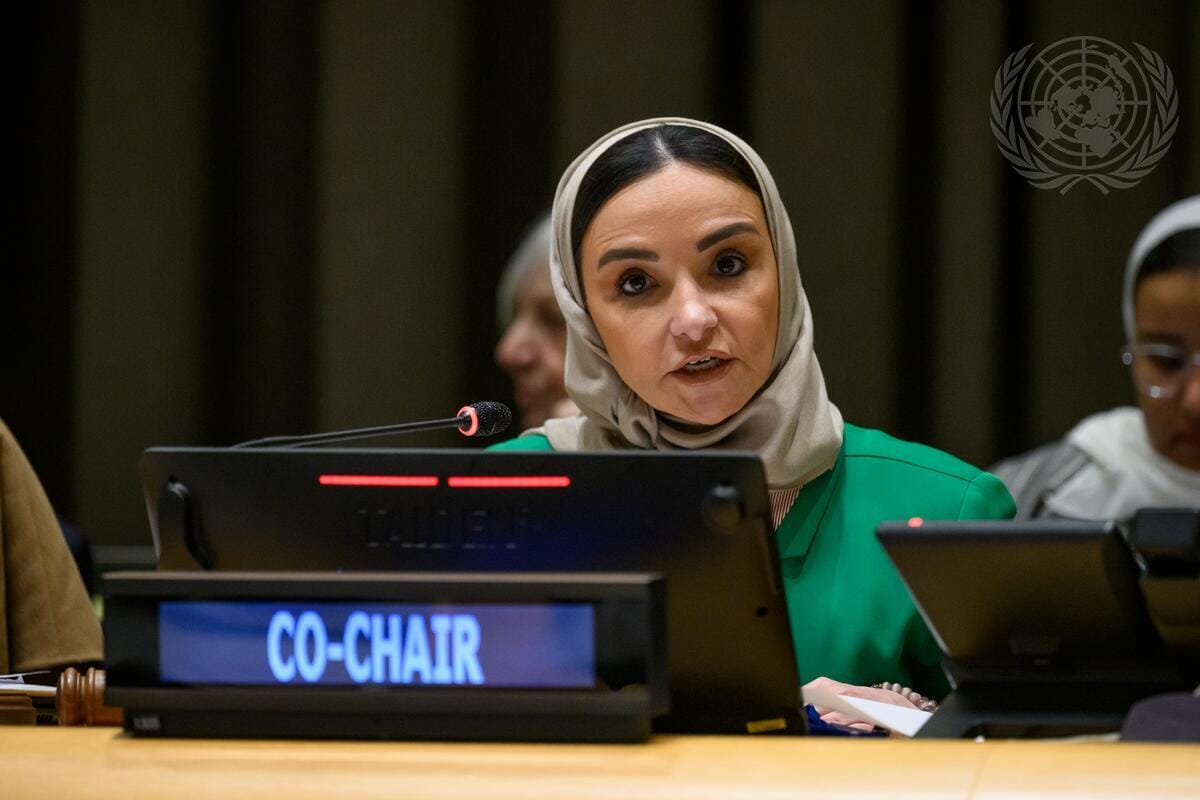
A senior Saudi diplomat used a panel appearance at the Doha Forum on Saturday to argue that the international community has been looking for reforms in the wrong place. Manal Radwan, a minister in Saudi Arabia’s foreign ministry, said that while outside pressure regularly targets the Palestinian Authority to overhaul its institutions, the real obstacle to regional peace is the current Israeli government.
Radwan maintained that the Palestinian Authority has carried out reform efforts for three decades, adding that President Mahmoud Abbas recently advanced a significant plan that Riyadh supports and helps implement. These steps, she said, are driven by what is best for Palestinians. But achieving lasting peace, establishing security and carrying out President Trump’s 20-point peace initiative, she argued, requires an Israeli government willing to take part. “We have an Israeli government that opposes the two-state solution,” she said, pointing to repeated inflammatory comments by Israeli officials. “We don’t see that we have a partner for peace, not even a partner for a sustainable ceasefire.”
Her remarks came on the heels of an earlier broadside from Prince Turki al-Faisal, the former Saudi intelligence chief and a senior member of the royal family, who said Israel has become the region’s most destabilizing force. Speaking at a summit in Abu Dhabi, Turki argued that Israel’s ongoing strikes in Gaza, the West Bank, Syria and Lebanon have made it a greater threat to stability than Iran. He said Iran’s influence has diminished amid recent blows to Hezbollah and changes in Syria, while Israel “is feeling its oats” by carrying out regular attacks despite ceasefire understandings.
These comments demonstrate the continued distance between Riyadh and Jerusalem at a time when the United States is preparing the second phase of the ceasefire plan that paused the Gaza war. The next stage involves setting up new governance and security structures for postwar Gaza, replacing Hamas. According to US officials, President Trump plans to soon announce the lineup of countries and individuals who will participate, part of a broader vision meant to stabilize the region and unlock long-sought normalization agreements, including with Saudi Arabia.