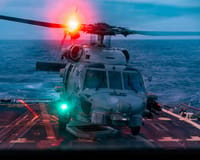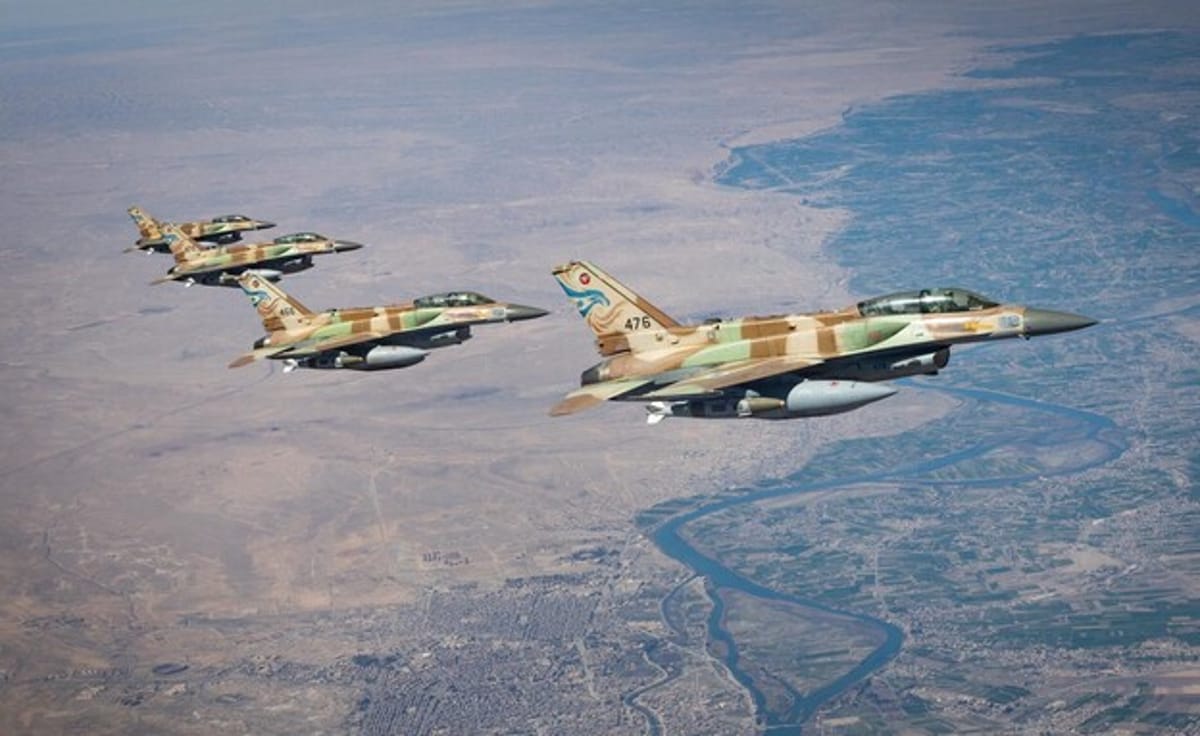
As the high intensity war against the Iranian regime continues, Israeli Air Force pilots are encountering an ancient and unpredictable obstacle: the peak of the spring bird migration season. During the months of March and April, Israel serves as one of the world's most critical aerial corridors, with hundreds of millions of birds traveling from Africa toward Europe and Western Asia. While this is a recurring natural phenomenon, professional observers and military officials warn that the sheer volume of avian traffic is creating significant hazards for combat operations. Large flocks of storks, pelicans, and cranes are currently sharing the same airspace as fighter jets and attack helicopters, leading to fears of high speed mid-air collisions that could prove fatal for pilots and devastating for expensive military hardware.
The Danger of High Speed Impact
The primary concern for the Israeli Air Force is the physical threat posed by large birds like white storks and great white pelicans. A collision at combat speeds with a bird of this size can cause catastrophic damage to an aircraft’s engine or cockpit canopy. To mitigate this risk, the Air Force has utilized specialized procedures for decades to avoid busy migration routes during transitional seasons. Yaron Charka, the chief birdwatcher for the Keren Kayemeth LeIsrael-Jewish National Fund, explained that the coming days will be particularly intense. "In the next two months, hundreds of millions of birds are expected to pass over Israel," Charka said, noting that these flocks often move at altitudes frequently used by military aircraft.
Radar Confusion and False Alarms
Beyond the physical danger to aircraft, the migration is wreaking havoc on air defense sensors. Large birds often appear on radar screens as suspicious objects, and in the heightened tension of the current war, they can be mistaken for incoming terrorist drones or low flying missiles. In recent years, there have been several instances where anti-aircraft fire was mistakenly directed at bird flocks after they were incorrectly identified as hostile UAVs. This creates a double risk, it wastes expensive interceptor munitions and puts the birds themselves in the line of fire. Monitoring groups working with the Air Force are currently providing real time alerts on massive flock movements to help operators distinguish between natural migration and enemy threats.
Activity in the Hula Valley
The Hula Valley remains the heart of this activity, where cranes that spent the winter in Israel are beginning their journey north while new waves arrive from Africa for brief stopovers. This constant movement ensures that the northern skies remain crowded. For the pilots flying sorties into Lebanon and beyond, the migration adds a layer of complexity to an already dangerous mission. Balancing the need for rapid military response with the safety requirements of navigating around millions of tons of flying biomass is a task that requires constant coordination between the Air Force and civilian nature experts.