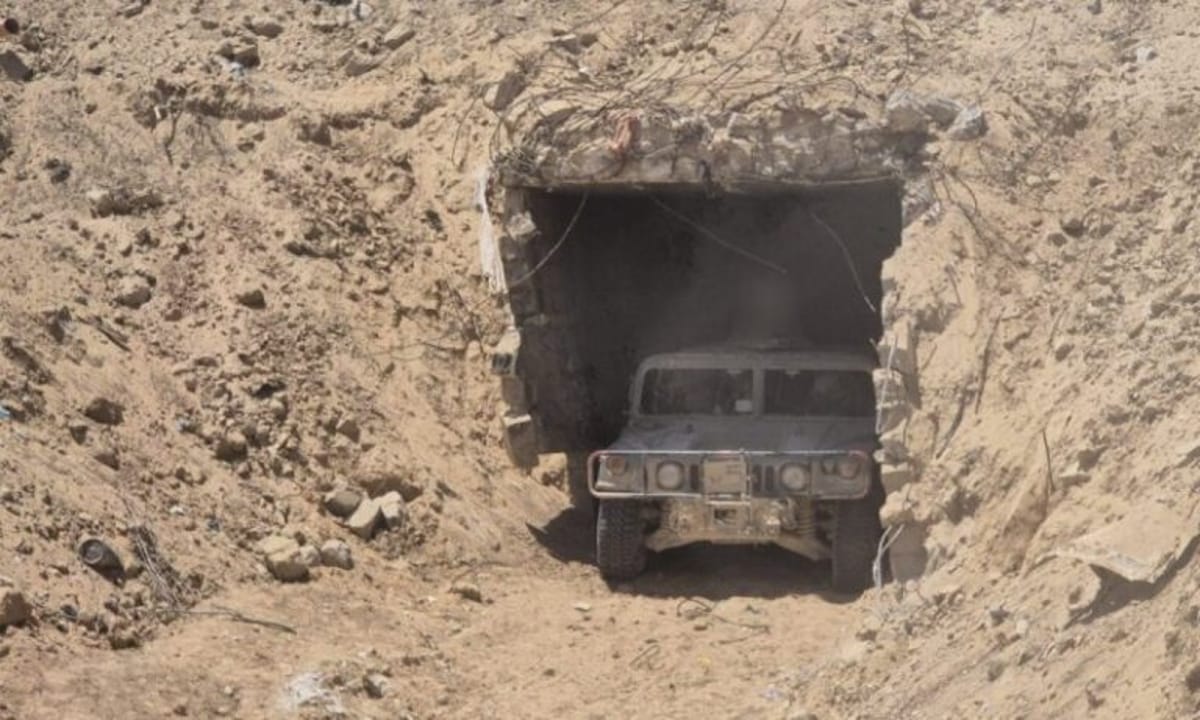
Engineering units have been hard at work uncovering these passages, which vary in type and purpose, yet military officials suspect more remain hidden. “Post-October 7, we assume we don’t have the full picture,” a security official revealed, hinting that intensified pressure—such as the halt of humanitarian aid—could drive Hamas to ramp up smuggling via tunnels, drones, or even sea vessels.
The IDF has taken decisive action against the tunnels: most have been sealed with specialized concrete, some demolished by controlled explosions, and others retained under Israeli oversight for intelligence and engineering analysis. While some cross-border tunnels persist from an engineering perspective, they are firmly under IDF control. A senior official warned that without this presence, Hamas would likely reactivate existing smuggling routes, refurbish old tunnels, or construct new ones to bolster its operations.
Intelligence presented to Defense Minister paints a grim picture of Hamas’ ambitions. The group is reportedly leveraging Iranian support to plot fresh infiltrations into Israel, while also forging smuggling pathways from Africa—particularly Sudan—to funnel weapons into Gaza. Hamas is simultaneously working to rebuild its trained forces within the Strip, aiming to launch new attacks. This multi-front strategy has solidified Katz’s stance: Israel will not relinquish the Philadelphi Corridor under any conditions.
The corridor’s strategic value cannot be overstated. Its tunnels have long facilitated the flow of arms and resources into Gaza, posing a persistent threat to Israeli security. With 90 uncovered and more potentially lurking, the IDF’s grip on the area is seen as a bulwark against Hamas’ resurgence. As the military continues its sweep, the specter of undiscovered passages keeps tensions high, reinforcing Katz’s resolve to maintain control at all costs.