Get our mobile app
Download on the App StoreGet it on Google Play

Israel Politics

Pressure on Zini could backfire on right

Panel on Srugim's 'Kippot Barzel' analyzes election results eight days on: Shas collapse, Arab surge to 19 seats, and the left's sudden courtship of haredim over draft law

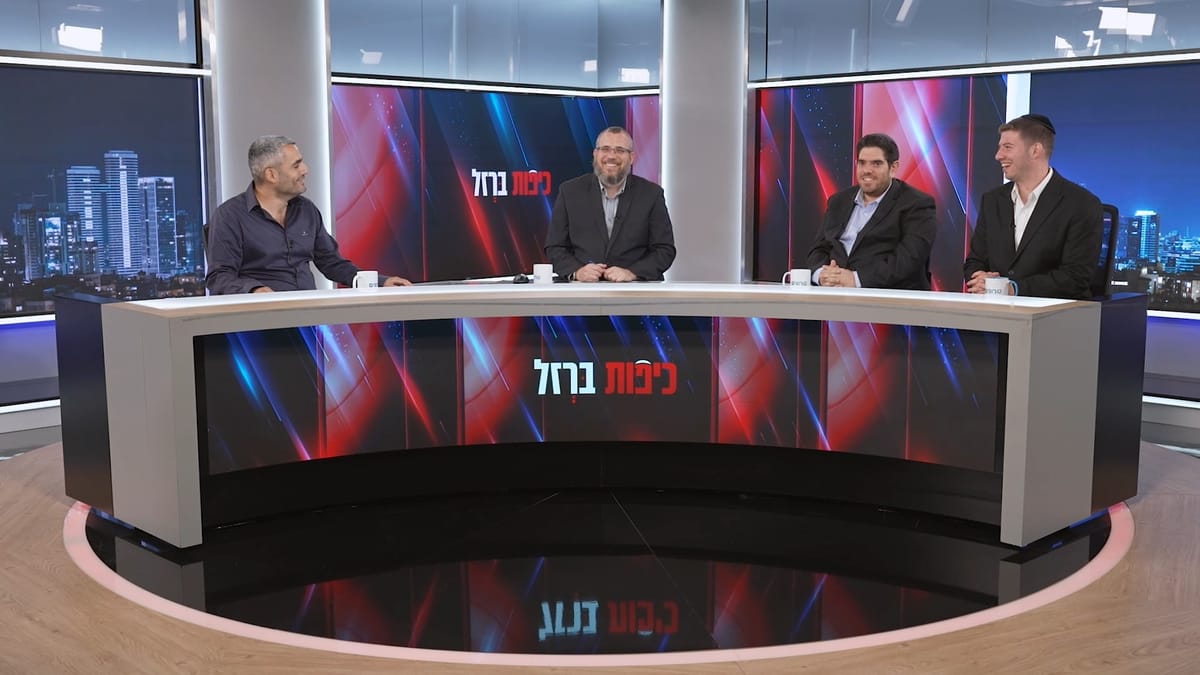
Kippot Barzel panel on election results
Kippot Barzel panel on election results (Srugim studio)

A special broadcast of the Srugim panel program "Kippot Barzel" convened eight days after the elections for an in-depth analysis of the political map, hosted this week by Srugim editor Aryeh Yoeli.

The panel included Srugim political analyst Yossi Ben Attar, Kikar Hashabat analyst Yossi Sargobsky, and Beit Shemesh deputy mayor for Likud Moshe Shtrit.

Likud pressure on Zini could backfire on the right

The discussion opened with reports that Shin Bet chief David Zini requested to interrogate Knesset members over suspicions of fund transfers from the Palestinian Authority and Qatar to the Ra'am and Balad lists, while Attorney General Gali Baharav-Miara is blocking the investigation.

Yossi Ben Attar presented the legal dilemma and warned against unfounded public pressure: "If you don't have enough evidence, you really can't summon someone for interrogation. In the end this thing could blow up; the election results haven't changed, but people on the right might take to the streets and we'll see a kind of Capitol event. The right's pressure on the attorney general and on Zini could turn back on them, tomorrow they'll decide to investigate yeshiva bochurim that Smotrich brought based on testimony alone."

Yossi Sargobsky pointed to the public and media polarization: "The people of Israel are splitting 53 versus 48. Gali Baharav-Miara's count is very questionable, and we saw her pushing to arrest deserters on the eve of the elections. On the other hand, right-wing journalists need to ask if it's right to challenge everything based on speculation alone. That said, if the Palestinian Authority and Qatar financed a party, why not investigate Knesset members who received the money?"

Moshe Shtrit attacked the attorney general's position and recalled the Beit Shemesh precedent: "Gali Baharav-Miara destroyed this institution. The moment you take down a mandate from Shas (4,000 votes), it's a completely different event in terms of the blocs and the possibility of forming a government. In the 2013 Beit Shemesh elections they canceled the elections over fewer than 400 votes because of irregularities. Election manipulation due to foreign funding is a criminal and national offense."


In the results themselves: the left has exhausted its capacity

With the final tally from the Central Elections Committee, the right-wing bloc achieved 53 mandates, the change bloc 48 mandates, and the Arab parties 19 mandates. Likud received 27 mandates, Shas was cut in half, and United Torah Judaism maintained its strength with 7 mandates.

Moshe Shtrit analyzed the data from Likud's and Beit Shemesh's perspective: "In Beit Shemesh, Likud and the Zionist parties passed 40%, which is a great achievement from our perspective. Likudniks are very satisfied because the other side came at peak strength. The left-wing parties will now have to decide whether they love Israel or hate Bibi. Yair Golan's obsession with Netanyahu is something incomprehensible."

Yossi Sargobsky addressed developments in the haredi street and the Religious Zionist parties: "United Torah Judaism rose by 30,000 votes and kept 7 mandates thanks to the leadership of Rav Dov Lando and the Lithuanian rabbanim. Regarding Ben Gvir and Smotrich (who achieved 13 mandates together), Netanyahu 'drank' them. Ben Gvir's campaign claiming Netanyahu would form a unity government actually hurt him, and drove voters back to Likud to strengthen Netanyahu."

Regarding Gadi Eisenkot and the left-wing bloc, Sargobsky added: "The left won't be able to replicate the success of this mobilization and these turnout percentages. All the left-wing leaders in the last 15 years who didn't succeed in bringing down Netanyahu, didn't remain. Eisenkot has a choice: either go to a unity government with Netanyahu, receive the defense portfolio and reach reform by consensus, or end up like Gantz, Lapid and Herzog."

The Arab surge: 19 mandates and the political dilemma

The rise of the Arab parties from 9 to 19 mandates stood at the center of the panel's third section.

Yossi Ben Attar assessed that the surge won't bring immediate change to the bloc map: "Eisenkot made clear even before the elections that he won't sit with Ra'am. The statements of Arab Knesset members, like Muhammad Jabarin on CNN, do the de-legitimization themselves. Sometimes it seems they're simply afraid to be part of the government and prefer to remain in eternal opposition without taking responsibility."

The participants noted that the real potential of the Arab public may be expressed specifically in local authorities, drawing comparisons to processes the haredi public underwent in cities like Beit Shemesh.

Tweet of the week: the left's courtship of haredim and draft law drama

In the "tweet of the week" segment, a tweet from United Torah Judaism spokesman Yitzhak Feldman was presented, dealing with contacts between the change bloc and haredim. Feldman noted that the gaps are large: haredim demand a draft law with soft targets, while in the change bloc they're suddenly willing to give a blanket exemption just to bring down Netanyahu.

Yossi Sargobsky described the dramatic shift in discourse: "The terminology changed from dodging law to draft law. In the haredi street there's real distress due to deserter arrests, like the shocking case this week where a groom was arrested the day after his wedding in the middle of sheva brachot. The average Lithuanian avreich will say the draft issue troubles him and he wants to solve it, maybe even at the price of going with the left. However, Aryeh Deri made clear that Shas is in Netanyahu's pocket."

Moshe Shtrit cast doubt on the feasibility of such an alliance: "The haredi public is on the right. A 61-mandate government with the change bloc won't survive more than a few months."

Praise for Liberman and criticism for Israeli hasbara

Criticism to Moshe Shtrit: awarded to the Israeli hasbara apparatus and Prime Minister Netanyahu due to the failure in hasbara during the US midterm elections and the strengthening of anti-Israel elements. Shtrit attacked: "We're not on the field at all, everything is reactive while our enemies invest hundreds of millions."

Praise to Yossi Ben Attar: awarded to Avigdor Liberman, for being the only one among party leaders who holds open press conferences and answers all questions with transparency and honesty.

Praise to Yossi Sargobsky: awarded to the Jerusalem faction, for their steadfastness and willingness to fight for every yeshiva bochur and deserter who is arrested.

Criticism to Aryeh Yoeli: awarded to Judge Noam Sohlberg, Attorney General Gali Baharav-Miara and Shin Bet chief David Zini, for throwing the state into legal chaos and leaving the public in the air without clear answers regarding election irregularities.

And what will be next week?

Looking toward the swearing-in of the 26th Knesset, the expert panel concluded that tense days are expected. Yossi Ben Attar estimates that Yair Lapid may fight for the position of Knesset speaker, Yossi Sargobsky predicts continued contacts and flirtations between haredim and the change bloc without a formal agreement, while Moshe Shtrit closed with mention of the rocket falls in Beit Shemesh and the great miracle in which residents were saved by staying in shelters.

Ready for more?

Join our newsletter to receive updates on new articles and exclusive content.

We respect your privacy and will never share your information.

Enjoyed this article?

Yes
No
Follow Us:

Unmissable content


Loading comments...

Also of Interest