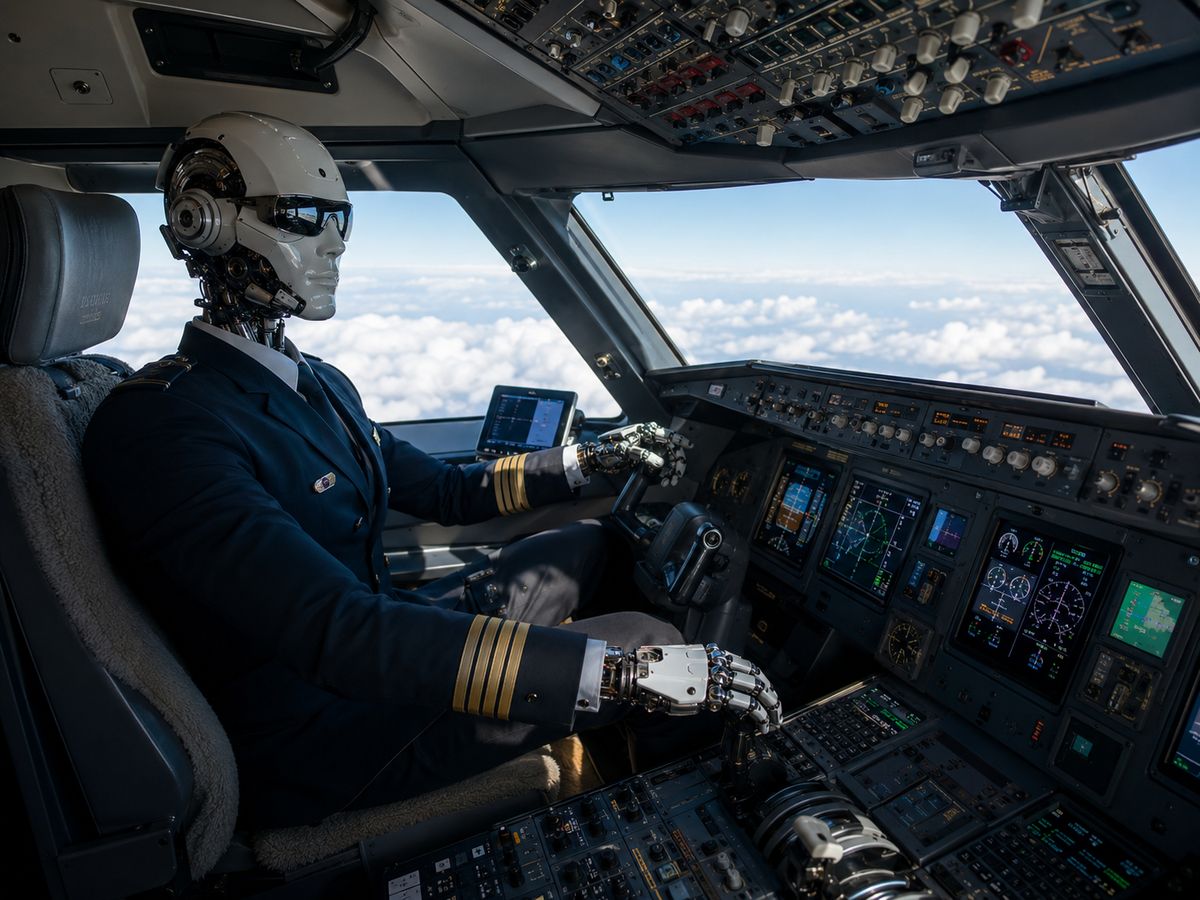
A Cessna Caravan equipped with an artificial intelligence flight system has completed a series of test flights in Rhode Island, controlling the aircraft from takeoff through navigation and landing without manual input from the test pilot.
The flights were conducted by Merlin Labs, a startup developing AI-assisted aviation technology. During one demonstration flight from Quonset State Airport, test pilot Matt Diamond kept his hands off the controls as the Merlin Pilot system accelerated the plane down the runway, climbed, followed air traffic instructions and later landed.
The system goes beyond standard autopilot. It uses a natural language processing model to listen to instructions from a mock air traffic controller and respond by radio using a computerized voice. During the test, Diamond verbally authorized commands, after which the aircraft turned to a new course and continued the flight.
Merlin says the goal is not pilotless passenger flights in the near term, but an AI system that can work alongside pilots, reduce workload and improve safety. CEO Matthew George told CNN that human error is still involved in most aviation accidents, and that reducing that risk is one of the company’s main goals.
The development comes as the aviation industry faces a global pilot shortage. Boeing estimates airlines will need more than 600,000 new pilots over the next two decades. In Washington, Transportation Secretary Sean Duffy has also promoted AI tools as part of efforts to modernize the US air traffic control system, while stressing that human controllers will remain in charge of national airspace.
The technology remains controversial, because apparently even airplanes are now being invited into the broader human project of replacing everyone while promising it is only “assistance.” Pilot unions say AI and automation should support crews, not replace them.
Capt. Jason Ambrosi, president of the Air Line Pilots Association, said technological advances can improve aviation safety, but “will never be a substitute for the pilots on an aircraft.” He said the most important safety feature remains two trained and rested pilots in the cockpit.
Merlin says it has completed hundreds of test flights while working toward certification from the Federal Aviation Administration, a process expected to require extensive testing and redundancy checks.
The company has also signed a contract worth more than $100 million with the US Air Force to eventually integrate the technology into C-130 cargo aircraft.