The astronauts of NASA’s Artemis II mission are on their way back to Earth after completing a historic journey around the Moon, with a splashdown expected off the coast of San Diego at around 20:00 Friday US Eastern Time.
Speaking from aboard the Orion spacecraft, the four-member crew said they are eager to share extensive images and insights from the mission, which saw them travel farther from Earth than any humans before.
“There’s so many more pictures, so many more stories,” pilot Victor Glover said during a live briefing. “All the good stuff is coming back with us.”
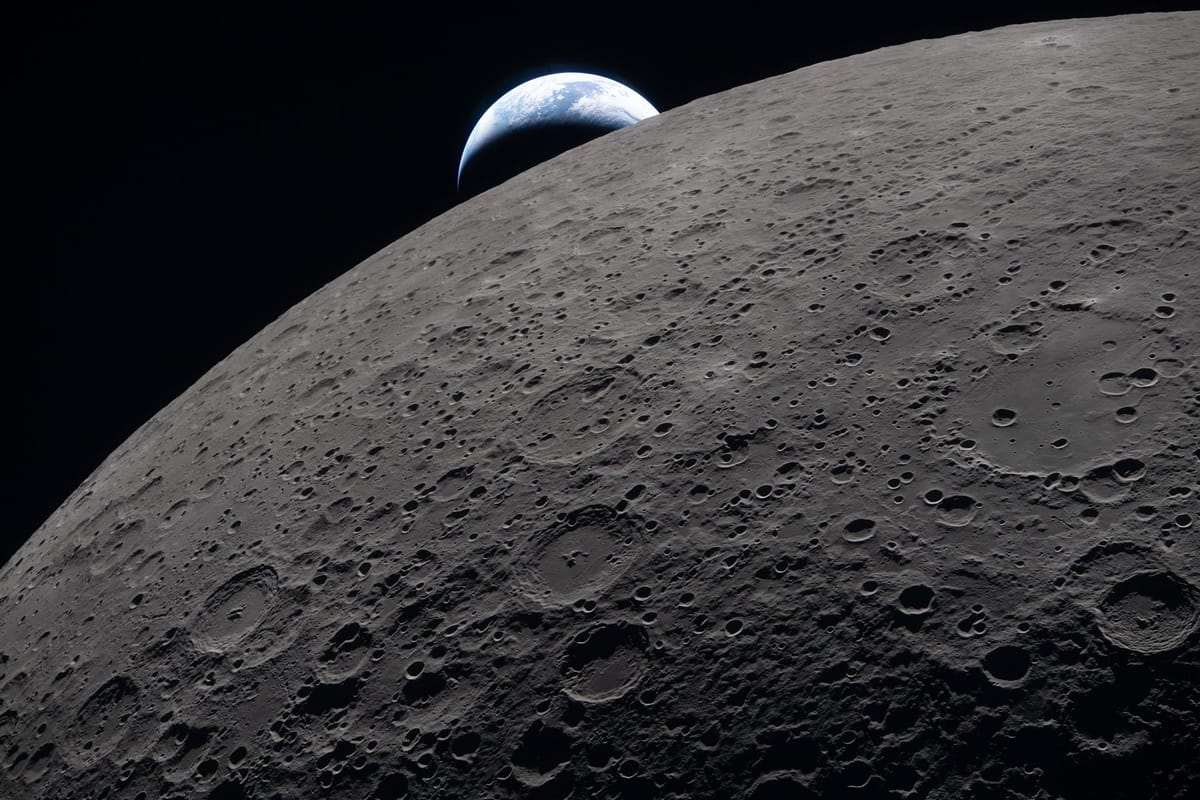
The mission marked the first crewed lunar flyby since 1972 and included several milestones. The Orion spacecraft broke the record for human distance from Earth, surpassing the mark set during the Apollo 13 mission. The crew also became the first humans to directly observe parts of the Moon’s far side with the naked eye.
During the flyby, the astronauts documented lunar features including vast craters and lava plains, while also conducting technical tests of Orion’s systems. One of the most notable moments came during a planned 40-minute communications blackout as the spacecraft passed behind the Moon, leaving the crew temporarily isolated from Earth.
Commander Reid Wiseman said the team used that period both for scientific observations and a brief personal moment of reflection.
Among the mission’s highlights was witnessing a solar eclipse from lunar orbit, as well as naming a lunar crater in memory of Wiseman’s late wife, a moment he described as deeply emotional.
The crew also tested key systems aboard Orion, including life-support functions and emergency equipment, gathering data that will be critical for future missions.
Although Artemis II did not include a lunar landing, it represents a major step in NASA’s broader plan to return humans to the Moon later this decade and eventually send astronauts to Mars.
The astronauts now face the final phase of the mission: re-entry into Earth’s atmosphere at speeds approaching 25,000 miles per hour, followed by a parachute-assisted splashdown in the Pacific Ocean. The maneuver will test Orion’s heat shield and recovery systems, key components for future deep-space missions.
As the spacecraft makes its return, the crew emphasized that the experience will stay with them long after landing.
“I’m going to be thinking about this for the rest of my life,” Glover said.