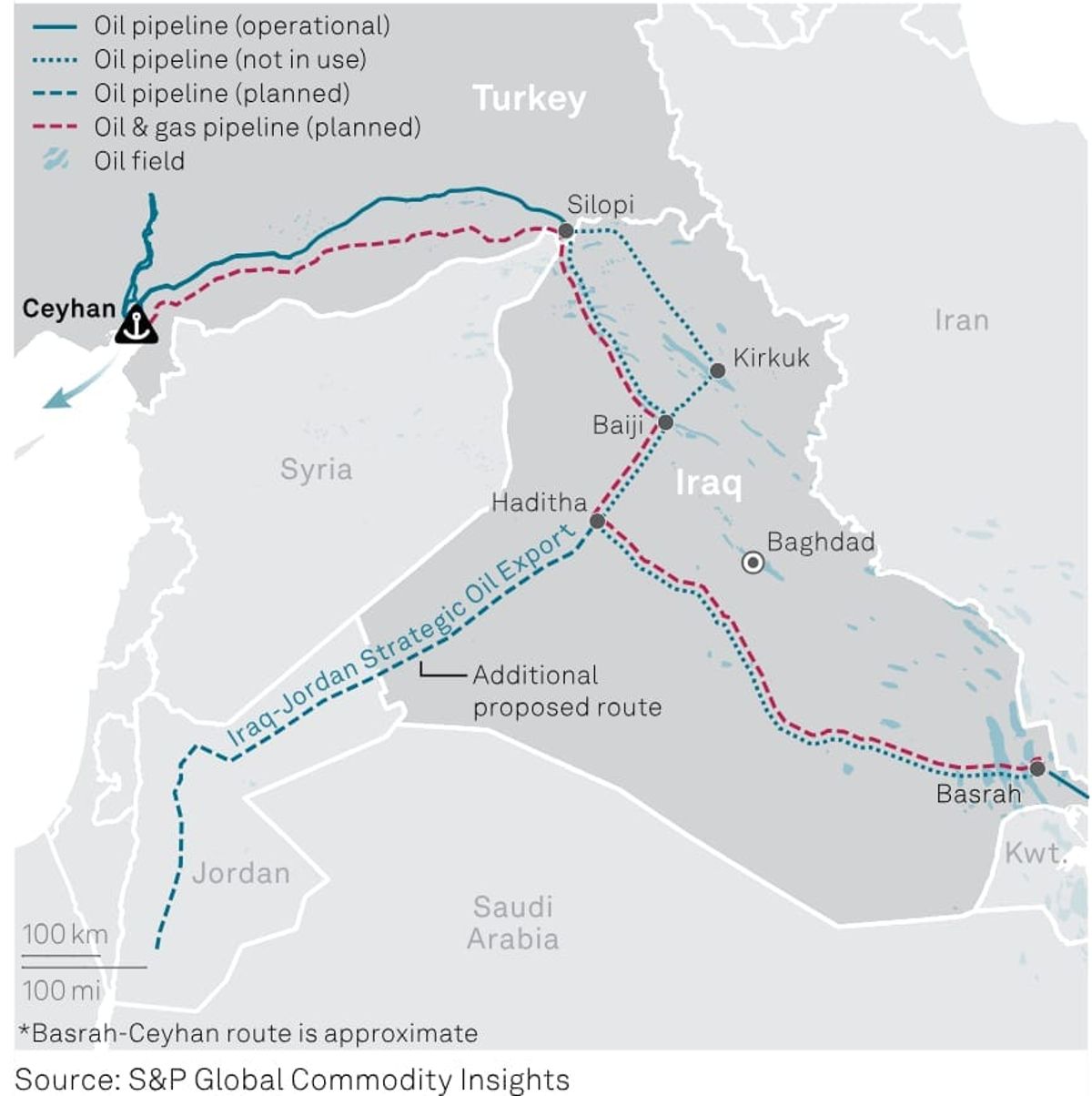
The head of the International Energy Agency (IEA) has urged the construction of a new strategic oil pipeline linking Iraq’s massive southern Basra oil fields directly to Turkey’s Mediterranean terminal in Ceyhan, aiming to reduce global reliance on the volatile Strait of Hormuz.
In an interview with Turkish daily Hürriyet published on Sunday, IEA Executive Director Fatih Birol described the project as “extremely attractive and a very important project for both Iraq and Türkiye, as well as for regional supply security, especially from Europe’s perspective.”
“Now is exactly the right time,” Birol added, stating that financing challenges could be overcome and that a political agreement between Baghdad and Ankara is achievable.
The proposal comes amid renewed instability in the Strait of Hormuz, the narrow chokepoint through which roughly 20% of global oil trade and about 90% of Iraq’s exports from Basra currently flows by tanker. Recent disruptions, including vessel traffic restrictions, have highlighted the waterway’s vulnerability, with Birol likening the damage to “a vase that, once broken, is very difficult to fix.”
A Basra-Ceyhan pipeline would provide a secure overland alternative, allowing Iraqi crude to reach the Mediterranean without navigating the Persian Gulf and the Hormuz Strait.
Strategic Benefits
- For Iraq: Diversifies export routes from its southern fields (home to some of the world’s largest reserves) and reduces exposure to maritime risks.
- For Türkiye: Strengthens its role as a key energy transit hub. Ceyhan is already connected to northern Iraqi fields via the existing (and often disrupted) Kirkuk-Ceyhan pipeline; the new southern route would significantly expand capacity and influence.
- For Europe and global markets: Enhances supply security by offering a more reliable source of crude outside Gulf chokepoints, helping stabilize energy flows after recent shocks.
Birol framed the pipeline not merely as an infrastructure project but as a strategic necessity for Iraq and a major opportunity for Türkiye and Europe.
Turkey has previously floated ideas to extend energy links southward from the existing northern pipeline network. The new Basra-focused route would be a far more ambitious undertaking, potentially stretching over 1,000 km with initial capacity in the hundreds of thousands of barrels per day.
While no formal agreements or detailed engineering plans have been announced, Birol’s endorsement as the IEA’s top official lends significant international weight to the idea. He noted that European financial and political support could help move the project forward.
The timing aligns with broader efforts to diversify energy corridors in the region, including Türkiye’s “Development Road” initiative.
The proposal remains at an early stage and would require high-level political commitment, substantial investment, and security assurances along the route.
For now, Birol’s comments signal growing momentum behind land-based alternatives to vulnerable maritime routes in the Middle East.