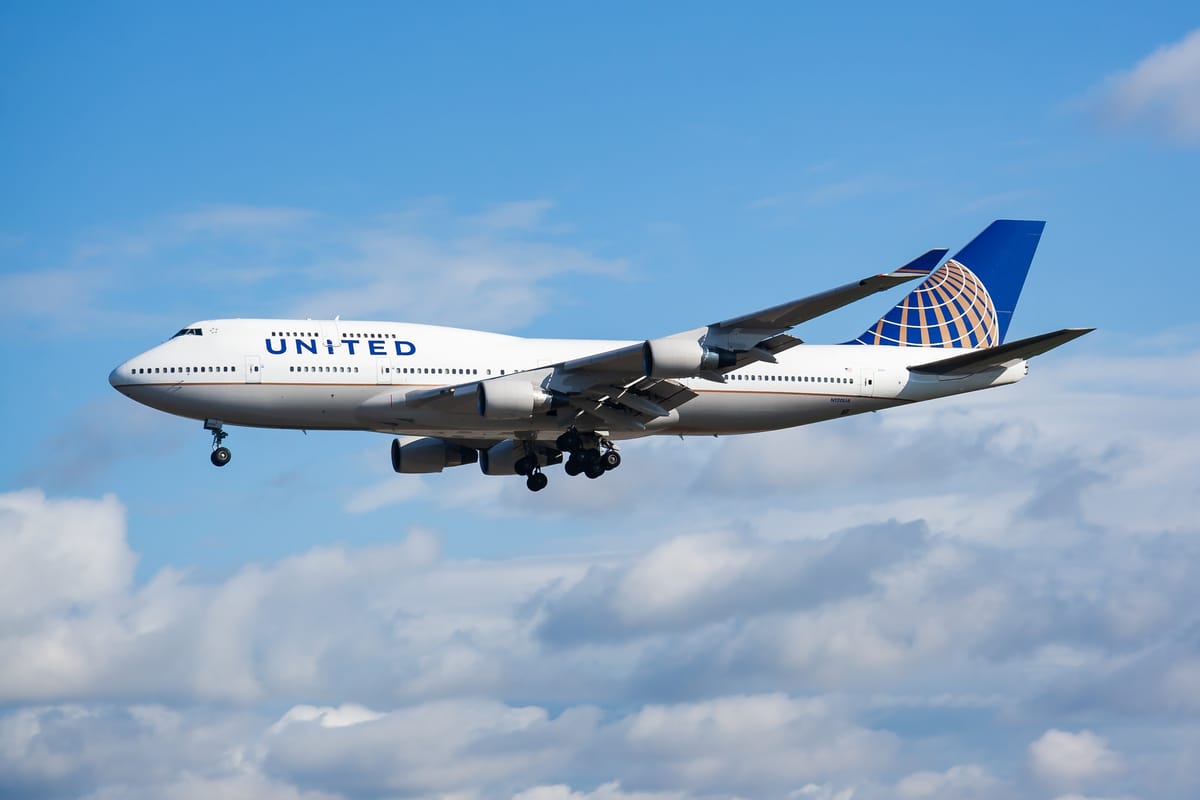
It took one teenager, one Bluetooth speaker, and four letters to send a fully loaded Boeing 767 into emergency protocol over the North Atlanticm turning a Saturday evening flight to the Mediterranean into a ten-hour ordeal that ended exactly where it began: Newark Liberty International Airport.
United Airlines Flight UA236 departed Newark at 5:58 PM on Saturday, May 30, bound for Palma de Mallorca, Spain, a 4,000-mile transatlantic crossing that should have delivered its passengers to the Balearic Islands by Sunday morning. Roughly ninety minutes into the flight, over international waters, the cabin atmosphere shifted abruptly.
A flight attendant came over the PA system with an urgent instruction: every passenger must immediately turn off their Bluetooth devices. The announcement was not made once. It was repeated, with escalating urgency, according to passengers, with crew stating the directive had come directly from United's corporate headquarters in Chicago. A final one-minute warning was issued. The signal did not disappear. The crew followed protocol.
The aircraft squawked 7700, the universal aviation emergency code, banked around over the Atlantic, and began the long return flight to Newark. The reason, confirmed by law enforcement after landing: a 16-year-old boy on board had renamed the discoverable network of his personal Bluetooth speaker to read "BOMB." Because Bluetooth broadcasts its device name to every nearby phone, laptop, and entertainment screen searching for a pairing signal, the word appeared on the devices of passengers and crew throughout the cabin, triggering an immediate bomb-threat response under strict FAA and airline security protocols.
"They repeated the instruction multiple times, eventually giving a final 'one-minute warning.' Then we turned around."
— Passenger account via AIRLIVE
The aircraft landed safely back at Newark, where it was met by a large law enforcement presence including airport police and federal agents. Passengers were deplaned with only their passports and phones, loaded onto buses, and driven around the tarmac for approximately an hour while security personnel swept the aircraft and screened the offending device. No explosive was found. No injuries were reported. There was no threat beyond the name itself.
United Airlines sent passengers a text message during the ordeal that offered no explanation: "We're sorry for returning to Newark. Our team needs to address an urgent customer situation on board, and we'll keep you updated as we receive more information. Thank you for your patience and understanding." Total disruption to passengers ran to more than ten hours. The flight eventually resumed.
The incident rapidly spread across social media after a Reddit post in the r/unitedairlines forum, by a user describing themselves as a passenger on the flight, drew nearly 2,000 upvotes within hours. LiveATC.net audio from Newark ramp and company frequencies later corroborated the accounts, confirming references to the Bluetooth device name in communications between the aircraft and ground. The incident acquired the informal nickname "Bluetooth Flight" in online aviation communities.
Why the crew had no choice
Under FAA and international aviation security regulations, any credible indication of a bomb threat on a transatlantic flight, regardless of the likelihood of it being a prank, mandates an immediate emergency response. Crew members are not authorized to make judgment calls about whether a threat is genuine. The protocols exist precisely because the consequences of being wrong over the mid-Atlantic are irreversible.
The 16-year-old was taken into custody by law enforcement upon landing. United Airlines has not issued a detailed public statement. Federal authorities have not announced charges as of Sunday morning, though naming a personal device in a way that simulates a bomb threat, even without intent, can carry serious legal consequences under US federal law.
Aviation security experts noted that regardless of intent, the crew's response was exactly correct: when a 767 full of passengers is an hour over the Atlantic and the word "BOMB" is appearing on every screen in the cabin, there is only one protocol, and it does not include waiting to find out if it is a joke.