The banners were friendly, the banquets lavish, and the handshakes warm. But behind the choreographed pageantry of President Trump's three-day state visit to Beijing, something deeply alarming was unfolding, at least according to some of the people closest to the president himself.
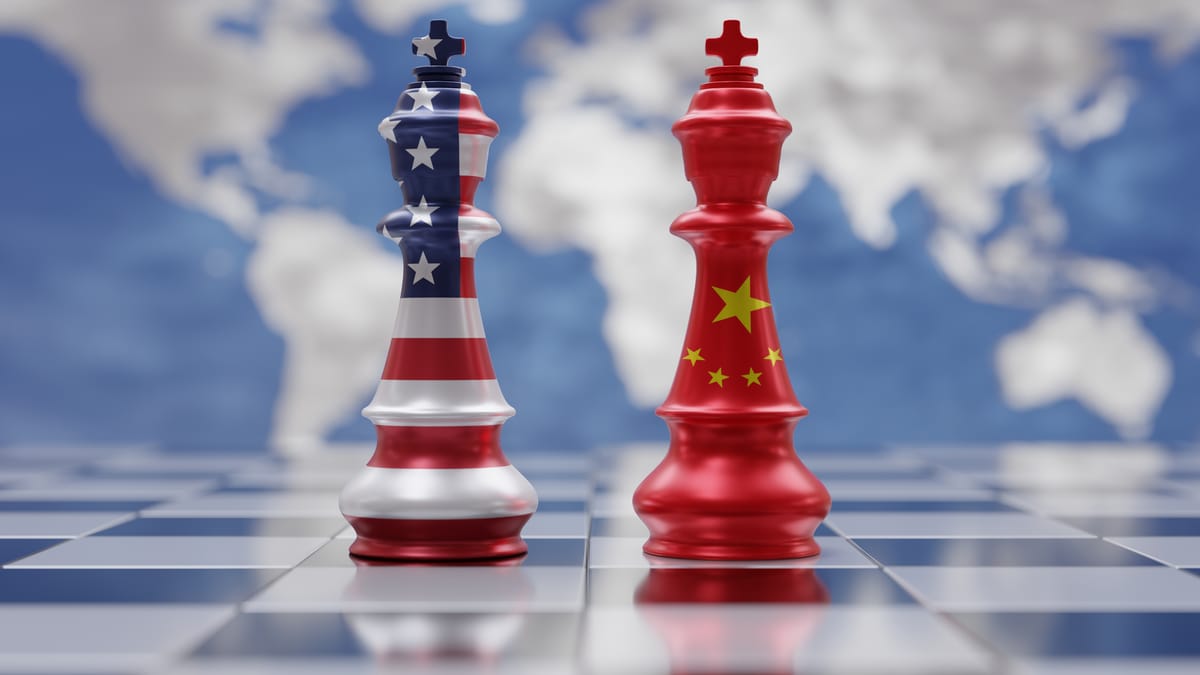
Close advisers to Trump now fear the biggest substantive result of the China summit is a heightened danger that President Xi Jinping will move on Taiwan within the next five years, potentially choking off the semiconductor supply chain that powers American AI and industry.
"This trip signalled a much higher likelihood that Taiwan will be on the table in the next five years," one Trump adviser told Axios. "There's no way we can be ready economically, the chips supply chain won't be anywhere close to self-sufficiency. For CEOs, and really the economy as a whole, there's no more pressing issue than the supply chain for chips."
Xi's Opening Shot
Xi placed Taiwan at the very centre of the summit from the outset, calling it "the most important issue" in US-China relations and warning that if it is mishandled, "the two countries will have clashes and even conflicts, putting the entire relationship in great jeopardy."
The White House, strikingly, did not mention Taiwan once in its own readout of the meeting and Trump notably did not respond to reporters' questions on the subject when greeted by Xi. The asymmetry did not go unnoticed. Former acting White House chief of staff Mick Mulvaney noted: "The Chinese statement used some fairly harsh language. It's noteworthy in that it's different."
Analysis from the Brookings Institution noted that "Beijing made clear, well before the summit, that Taiwan would be central to Xi Jinping's agenda, while the White House appeared much more focused on trade and economic issues."
One Trump adviser described Xi's posture in blunt terms: "Xi is trying to move China to a new position where he's saying: 'We're not a rising power. We're your equal. And Taiwan is mine.'"
Arms Sales Shelved, Warnings Softened
Trump's comments on the flight home from Beijing are now being scrutinised intensely inside his own administration. The president publicly expressed reluctance to approve a planned $14 billion arms package for Taiwan, telling reporters: "The last thing we need right now is a war that's 9,500 miles away."
Secretary of State Marco Rubio insisted that arms sales to Taiwan "did not feature prominently" in Trump's talks with Xi, a framing that did little to reassure those alarmed by the president's public hesitation. Rubio did warn against any Chinese attempt to take Taiwan by force, saying it would be "a terrible mistake."
Taiwan's own representative office in Washington said that "even as the leaders of the United States and China meet, the People's Liberation Army continues its military activities around Taiwan unabated, underscoring that Beijing remains the principal source of risk to regional peace and stability."
The Pageantry - and What Lay Beneath It
The summit itself was a spectacle of careful Chinese statecraft. Beijing rolled out the red carpet for Secretary of State Marco Rubio, who remains sanctioned by China for his past criticism of its human rights record. At the state banquet, Xi told Trump that China's goal of "great rejuvenation" and "Make America Great Again" could go "hand in hand," a line tailored with obvious precision for its audience.
Both leaders have short-term incentives to maintain the truce: Trump cannot afford more economic shocks, and Xi likely believes a period of "strategic stability" with the US will give China room to advance its military modernisation and high-tech dominance.
That, say Trump's own advisers, is precisely the problem. Xi is using the warmth to buy time and the clock, they fear, is now ticking faster than it was before Air Force One touched down in Beijing.