Drone Strikes UAE Nuclear Power Plant
A drone hit the Arab world's only nuclear power plant on Sunday, the latest in a string of attacks that have pushed the fragile US-Iran ceasefire to the edge of collapse.

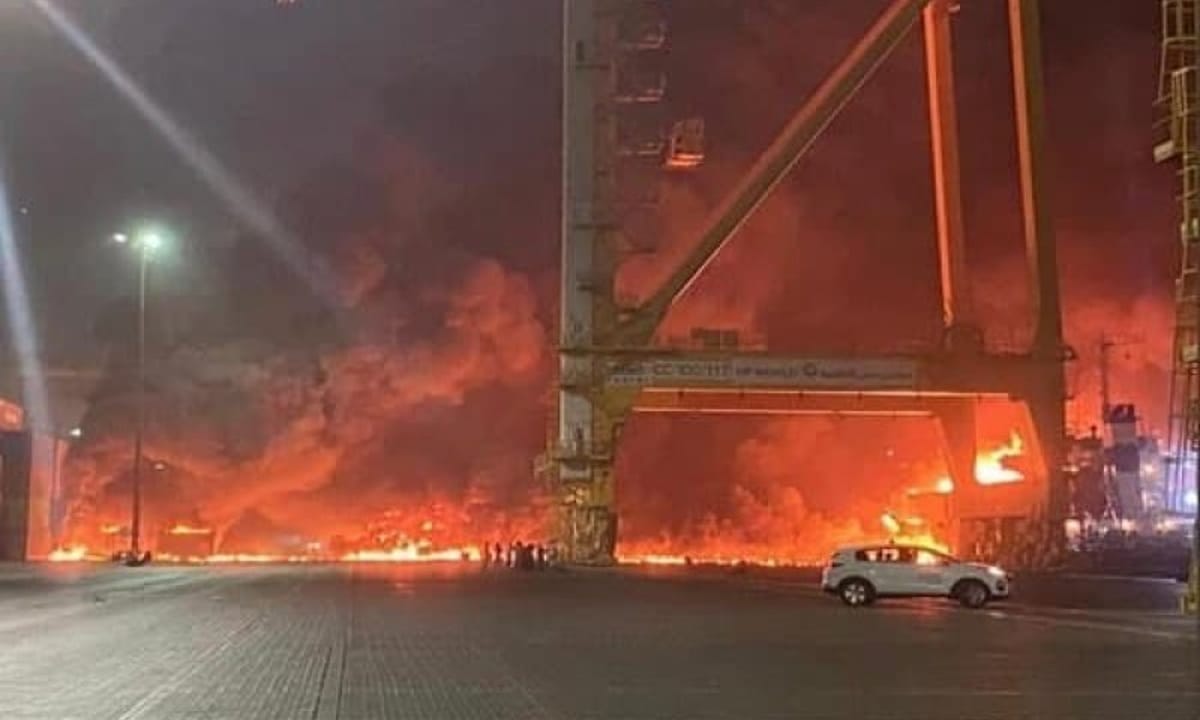
A drone strike targeted the United Arab Emirates' Barakah nuclear power plant on Sunday, setting an electrical generator ablaze on its perimeter and again straining the shaky ceasefire in the Iran war. No one immediately claimed responsibility for the attack, which caused no radiological release or injuries, authorities in the UAE's capital, Abu Dhabi, said.
The Federal Authority for Nuclear Regulation confirmed that the fire did not affect the safety of the power plant or the readiness of its essential systems, and that all units are operating normally. The public was urged to rely only on verified official sources.
Sunday's strike marked the first time the four-reactor Barakah plant has been targeted in the war. The Vienna-based International Atomic Energy Agency, the UN's nuclear watchdog, confirmed the strike caused a fire in an electrical generator and that one reactor was being powered by emergency diesel generators.
The Arab World's Only Nuclear Plant - Now a Target
The $20 billion Barakah plant was built with the help of South Korea and went online in 2020. It is the first and only nuclear power plant in the Arab world and can provide a quarter of all the energy needs of the UAE. It is located near the border with Saudi Arabia, some 225 kilometers west of Abu Dhabi.
Suspicion immediately fell on Iran, which has been increasingly threatening the UAE over recent days as the country hosted Israeli Iron Dome missile defenses and troops during the war.

A Ceasefire in Name Only
Sunday's attack did not occur in isolation. A conditional ceasefire agreed between the US and Iran on April 28 led to a halt in hostilities for several weeks, but Tehran resumed strikes on the Emirates earlier this month. On May 4–5, Iran launched a sustained two-day assault on the UAE: Emirati air defences engaged 12 ballistic missiles, three cruise missiles, and four drones, all launched from Iran. Three Indian nationals were wounded in a fire at the Fujairah Oil Industry Zone.
Iran still has a chokehold on the Strait of Hormuz, a vital waterway through which a fifth of the world's oil and natural gas passed before the war, while America continues to block Iranian ports in response. Negotiations to solidify the ceasefire have failed to advance.
Trump has suggested hostilities could resume. Iranian state television, meanwhile, has repeatedly aired segments showing anchors holding Kalashnikov-style rifles to prepare the public for war. In one program, a presenter received live firearms training from a masked Revolutionary Guard member before miming firing a shot at the flag of the UAE. On another channel, a female presenter declared: "From this platform, I declare that I am ready to sacrifice my life for this country."
Fighting has also heated up between Israel and Hezbollah in Lebanon despite a nominal ceasefire there, further straining the wider truce.
Both US Defense Secretary Pete Hegseth and the Chairman of the Joint Chiefs, General Dan Caine, had said after the early-May attacks that Iran's strikes had not yet crossed the threshold justifying a resumption of full-scale warfare, a threshold that, with each new attack, grows harder to define.