Israeli officials have warned that some of the missiles launched from Iran during the ongoing conflict may contain cluster munitions, a controversial type of weapon that disperses multiple smaller explosives over a wide area.
According to Israeli military sources, several of the missiles fired toward Israel may carry warheads designed to release dozens of smaller explosive submunitions once they reach high altitude. When the missile climbs to roughly 7 to 10 kilometers above the ground, the warhead can open mid-air and scatter these smaller explosives across a broad area below.
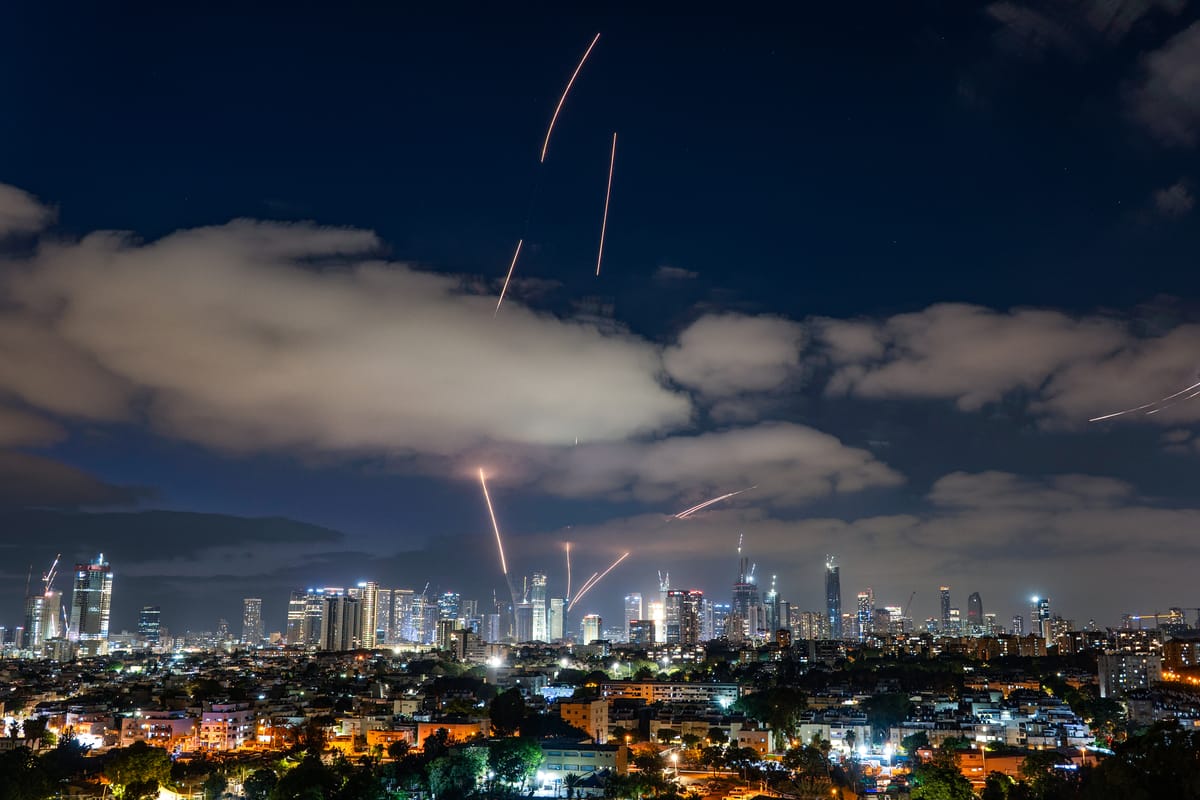
At night, the falling submunitions can sometimes appear as small balls of fire streaking downward through the sky, caused by friction as they pass through the atmosphere.
Cluster munitions pose a unique challenge for air defense systems. Israeli defenses such as the Arrow system are designed primarily to intercept large ballistic missiles before they reach their targets. However, once a missile’s warhead opens and disperses dozens of smaller explosives, those submunitions are already spread across the sky, making them extremely difficult to intercept individually.
Even systems like Iron Dome, which are designed to intercept short-range rockets, are not built to deal with dozens of small explosive devices falling simultaneously over a wide area.
Because of this, the damage caused by such weapons is often less about destroying large buildings and more about what happens to be underneath the spread of submunitions. People outdoors, vehicles, and open areas can all be at risk if the explosives fall nearby.
Experts note that cluster munitions are typically intended to strike multiple small targets dispersed across a battlefield rather than to demolish large structures. Israeli officials estimate that each Iranian missile equipped with such a warhead could carry roughly 20 to 24 submunitions, each weighing several kilograms.
Another major concern with cluster munitions is that some of the smaller explosives fail to detonate on impact. These unexploded devices can remain on the ground and pose a serious danger long after an attack ends, potentially detonating if touched or disturbed.
Because of this risk, Israeli authorities have warned the public not to approach missile debris or suspicious objects found in open areas and to report them immediately to security forces.
Cluster munitions have been the subject of international controversy for decades. More than 120 countries have signed a treaty banning their use due to the danger they pose to civilians, particularly when unexploded submunitions remain in populated areas after conflicts end. Israel, Iran, and the United States are not parties to the treaty, though the United States heavily limits their use.