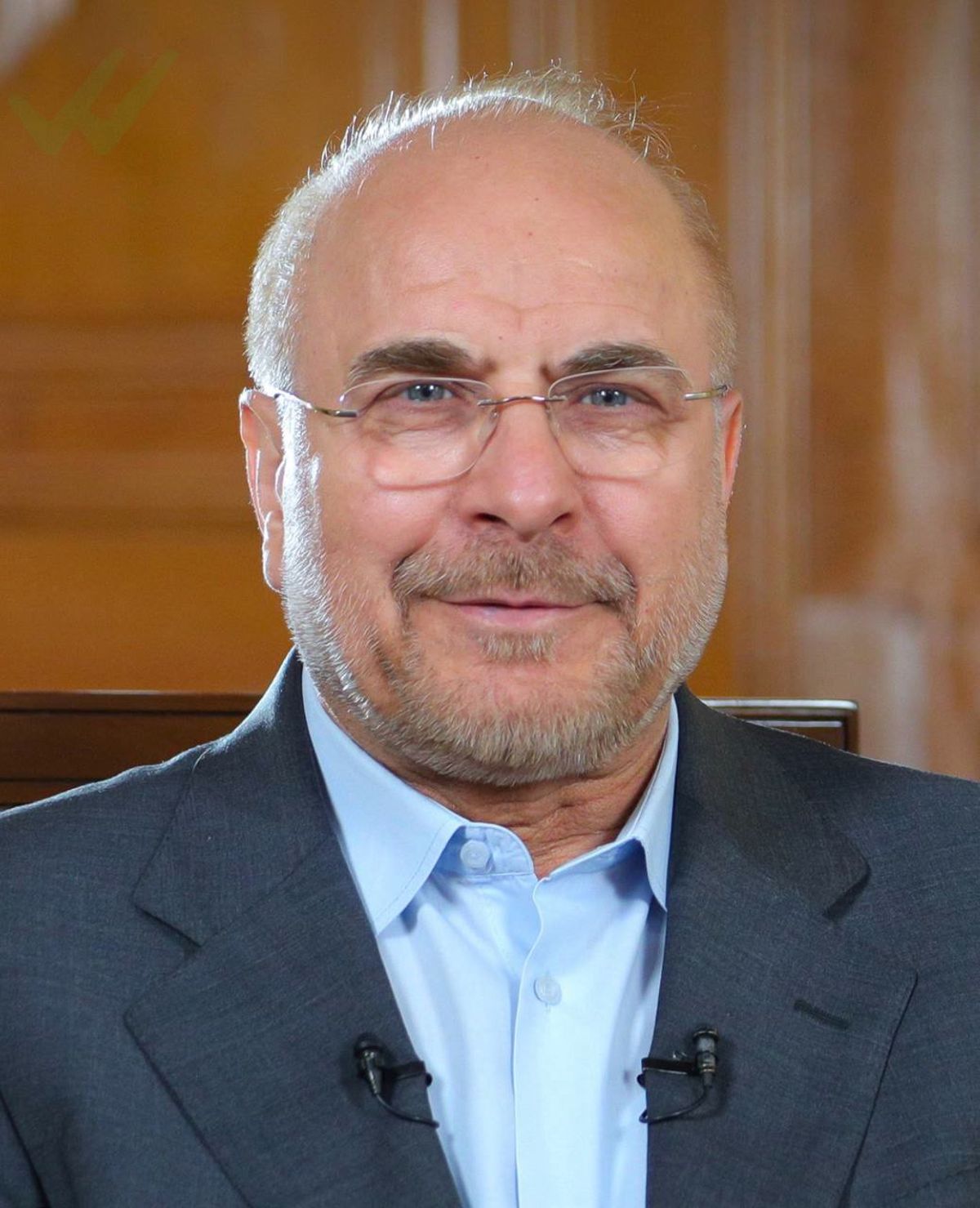
As President Trump’s five-day diplomatic window begins, a high-level Israeli source has identified the man sitting on the other side of the high-stakes table: Mohammad Bagher Ghalibaf, the Speaker of the Iranian Parliament (Majlis).
The revelation sheds new light on the "productive talks" Trump has touted, signaling a radical shift in how Washington is handling the collapsing Iranian regime.
Who is Ghalibaf?
Mohammad Bagher Ghalibaf is no career diplomat. A former commander of the IRGC Air Force and a one-time mayor of Tehran, he is a "pragmatic" hawk who understands both the military machine and the political levers of power.
In the wake of reports concerning the death of Supreme Leader Ali Khamenei earlier this month, Ghalibaf has emerged as a central pillar of the temporary leadership council currently managing Iran's chaotic affairs.
The "New Ayatollah" Connection
The identification of Ghalibaf aligns perfectly with President Trump's recent cryptic comments regarding negotiations with a "new Ayatollah" or a transitional leadership team. By bypassing the traditional—and often powerless—foreign ministry, the Trump administration is dealing directly with the man who actually controls the "buttons" of the Iranian state.
A "Security-First" Strategy
The choice of Ghalibaf as a primary contact suggests the U.S. is pursuing a "security-first" deal. Rather than getting bogged down in years of diplomatic posturing, the focus appears to be on immediate, concrete concessions:
- The Strait of Hormuz: Securing a "joint control" agreement to end the maritime blockade.
- Nuclear Enrichment: Securing the "uranium extraction" deal Trump hinted at earlier today.
Where it Gets Sticky
As Parliament Speaker and a former IRGC commander, Ghalibaf’s "red lines" are rooted in a strategy of Mutually Assured Destruction (MAD) for the Middle East's energy sector.
Ghalibaf’s "Irreversible" Red Lines:
1. The "Power for Power" Threat Ghalibaf has made it clear: if the U.S. strikes Iran’s electrical grid, Iran will retaliate by "irreversibly destroying" the energy, oil, and water desalination infrastructure of every U.S. ally in the region. Specifically, he said, "Vital infrastructure throughout the region will be considered legitimate targets... the price of oil will remain high for a long time."
2. Permanent Closure of Hormuz
While Trump speaks of "joint control," Ghalibaf’s military command has threatened that if Iranian power plants are hit, the Strait of Hormuz will be completely closed and will not reopen until those plants are fully rebuilt, a process he claims could take years.
3. U.S. Regional Exit
In recent video messages, Ghalibaf has insisted that any long-term "deal" must include the total withdrawal of U.S. forces from the Middle East. He argues that "regional countries," not Washington, must shape the new order.
4. No "Imposed" Negotiations
Ghalibaf has publicly questioned Trump’s intent, stating that while Iran is "ready for talks," it will not accept a deal where the U.S. simply "imposes its will." This explains the current "war of versions," where Tehran officially denies the very talks Trump is celebrating.
The Challenges Ahead
While Ghalibaf is seen as a man who can "get things done," he remains deeply tied to the IRGC. His "red lines" remain the primary obstacles to a final agreement.
As the 120-hour clock ticks down, all eyes are on this unlikely channel between a real estate mogul in the White House and a former Revolutionary Guard general in Tehran.
Interestingly, Trump says he doesn't consider Mojtaba Khamenei to be Iran's leader.