In a significant display of asymmetric warfare, multiple international reports confirmed Sunday that Iran has successfully damaged or destroyed some of the United States' most advanced radar and surveillance installations across the Middle East.
The Shahed vs. The Billion-Dollar Shield
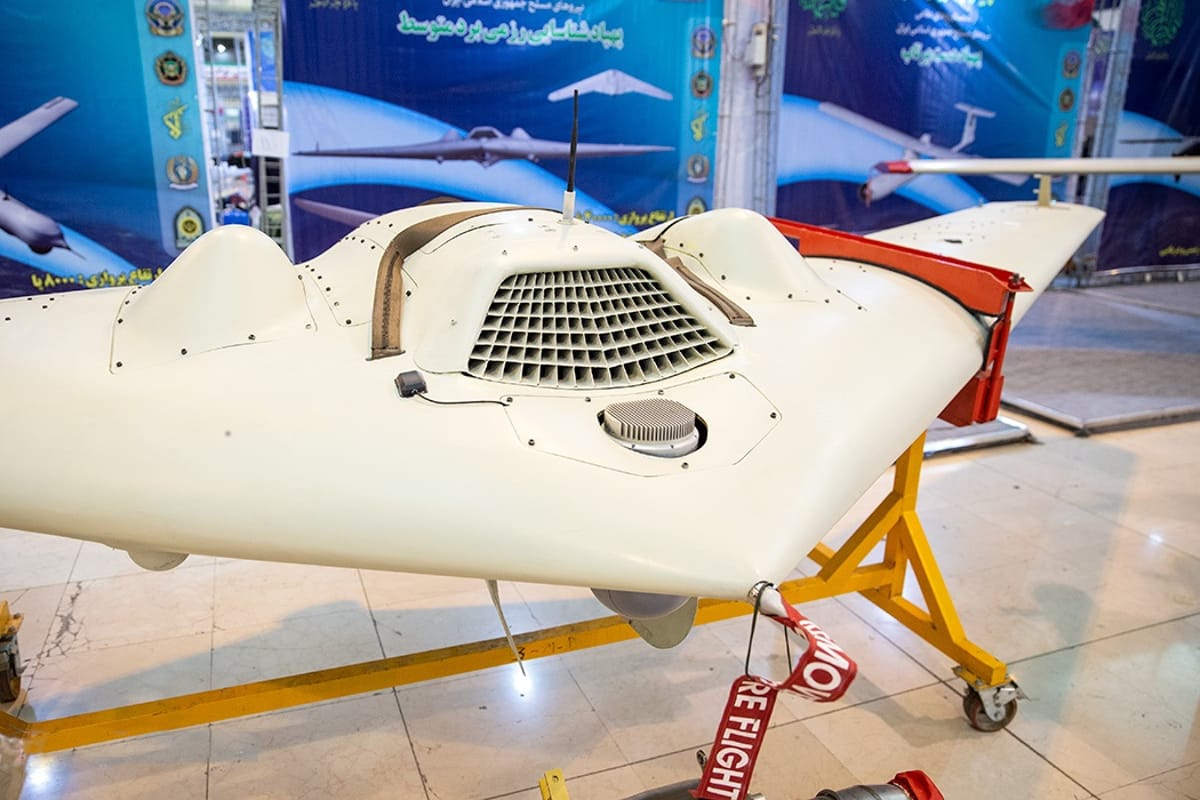
The Wall Street Journal and CNN, citing satellite imagery and intelligence sources, report that Tehran utilized waves of suicide drones, specifically the low-cost Shahed models, to overwhelm and strike high-value detection systems. This cost-imposition strategy uses drones valued at roughly $20,000 to disable systems worth hundreds of millions.
Confirmed and Reported Targets
The scale of the sensor-layer degradation is significant, spanning several key U.S. and allied installations:
* Qatar (Al-Udeid Air Base): Direct damage to the AN/FPS-132 Early Warning Radar at Umm Dahal. This massive, fixed-face installation is a cornerstone of the U.S. Space Force’s global network, valued at approximately $1.1 billion.
* Jordan (Muwaffaq Salti Air Base): Satellite imagery confirms the destruction of an AN/TPY-2 radar, the eyes of the elite THAAD (Terminal High Altitude Area Defense) system. The radar alone is valued at $300 million to $500 million.
* Bahrain (NSA Bahrain): Suicide drones successfully struck the U.S. Navy’s 5th Fleet headquarters, destroying two AN/GSC-52B SATCOM terminals used for strategic military communications.
* UAE and Saudi Arabia: Reports indicate strikes on radar infrastructure at Al Ruwais (UAE) and Prince Sultan Air Base (Saudi Arabia), where THAAD and Patriot batteries are stationed.
The Blinding Effect
While the Pentagon asserts that operational readiness remains intact due to redundant systems like satellite-based infrared sensors, military experts warn of a dangerous surveillance gap. Without these ground-based eyes, the window for detecting and intercepting incoming ballistic missiles, including those launched toward Israel, could be drastically reduced. The loss of even one AN/TPY-2 radar means a THAAD battery cannot independently track its targets, shifting the defensive burden onto shorter-range Patriot systems that are already facing interceptor shortages.