Northern Border Crisis

Lebanon Ceasefire on Brink of Collapse as Hezbollah Violations Mount

Israeli security officials warn agreement could collapse without American diplomatic intervention • Hezbollah commits 16 violations in single week despite Trump's three-week extension | Internal Lebanese divisions complicate negotiations (Middle East)

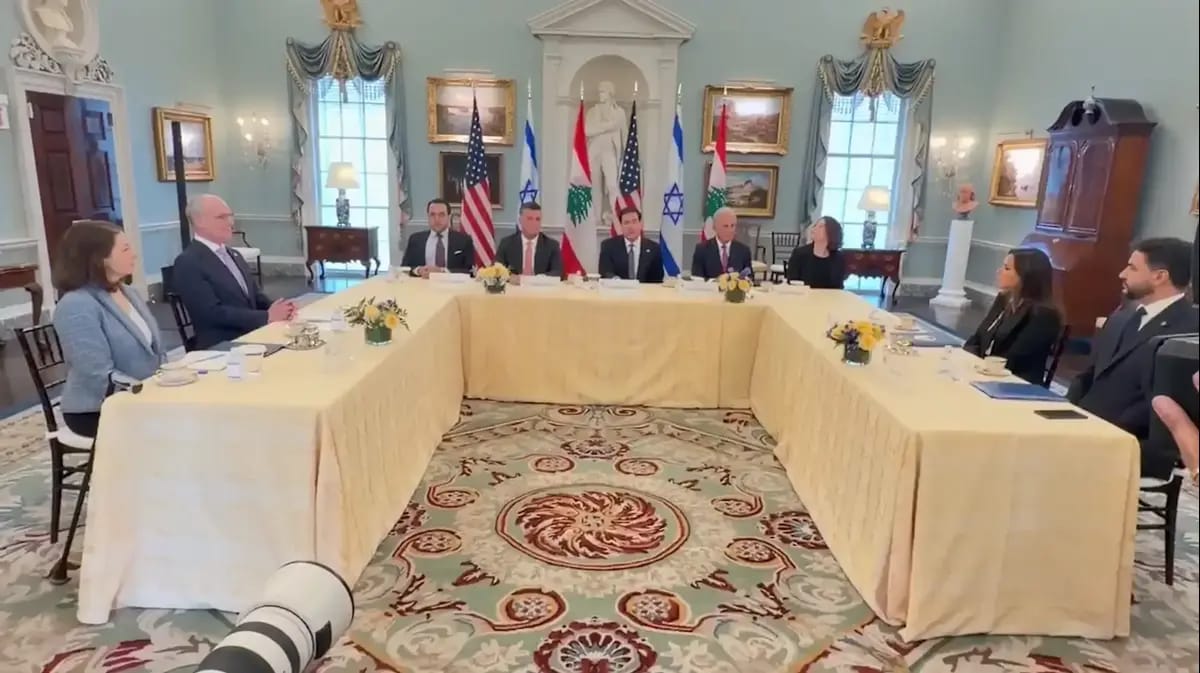
Lebanon-Israel-US peace talks in Washington
Lebanon-Israel-US peace talks in Washington (Photo: Shmulik Almany, Israeli Embassy in Washington)

One week after President Donald Trump announced a three-week extension to the Lebanon ceasefire, Israeli security officials conveyed a stark warning on Saturday evening: the fragile understanding between Israel and Lebanon stands on the precipice of total collapse. Senior defense sources told Kan News that without immediate American diplomatic pressure on the Lebanese government, the entire framework negotiated in Washington could disintegrate.

The assessment comes as Hezbollah has committed no fewer than 16 violations of the ceasefire agreement within a single seven-day period, demonstrating what Israeli officials characterize as systematic disregard for the terms reached between the two nations. The violations have ranged from rocket launches toward Israeli communities to drone incursions targeting IDF forces operating within the security buffer zone in southern Lebanon.

"The reality on the ground is complicated," stated one senior security official, speaking on condition of anonymity. "Without political pressure from the Americans on the Lebanese government, this agreement is going to explode."
Tactical Violations Escalate

Israeli defense officials have categorized Hezbollah's breaches as "tactical violations," primarily consisting of rocket fire and unmanned aerial vehicle launches directed at IDF positions near the border fence and within Lebanese territory. The Iranian-backed terror organization has exploited military structures in the Bint Jbeil area to stage these attacks, continuing a pattern that predated the current ceasefire arrangement.

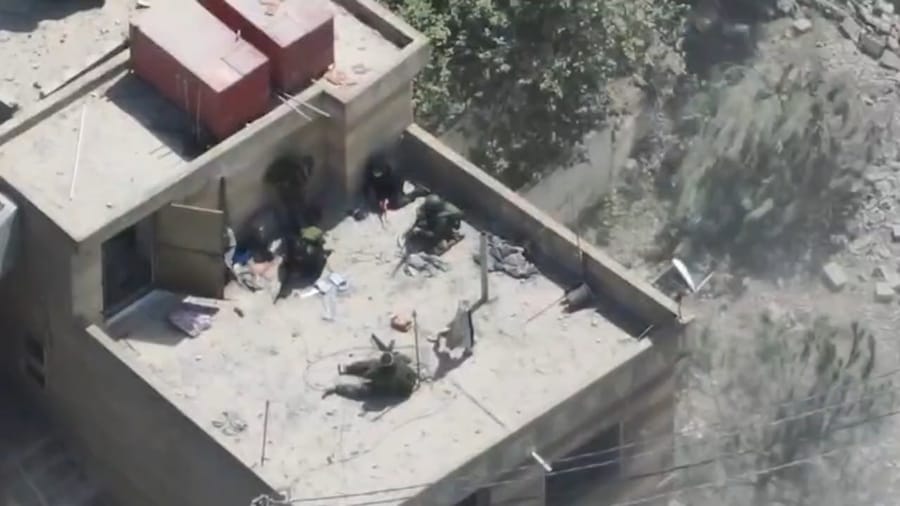
In response, the IDF has conducted targeted strikes against Hezbollah operatives and rocket launching positions. Israeli officials emphasized that these counterstrikes represent defensive measures aimed at protecting Israeli forces deployed in the security zone, rather than offensive operations that would constitute ceasefire violations on Israel's part. The Paratroopers Brigade eliminated six armed terrorists in one such operation over the weekend.

The central Israeli demand now focuses on compelling the Lebanese Armed Forces to actively confront Hezbollah presence in areas beyond the Israeli security buffer. Jerusalem has conveyed to Washington that Lebanese military inaction in these zones enables Hezbollah to maintain operational capabilities that directly threaten both Israeli forces and civilians in northern communities.

Lebanon's Internal Sectarian Divide

While Israeli officials grapple with Hezbollah's violations, a parallel struggle unfolds within Lebanon itself over the future of negotiations with Israel. The country's complex sectarian landscape has produced sharply divergent responses to the ongoing diplomatic process, with Christian and Sunni communities expressing considerably more openness than their Shiite counterparts.

The Sunni religious authority has publicly endorsed the Lebanese leadership's engagement with Israel, viewing the talks as essential given Lebanon's current circumstances. Christian political factions, particularly those opposed to Hezbollah's dominance, have demonstrated even stronger support for normalizing relations with the Jewish state.

A source within a Christian party that opposes Hezbollah told Kan News that the Christian community represents the strongest constituency favoring diplomatic ties with Israel. The source emphasized that Israel's swift response to the incident involving a statue of Jesus destroyed by an IDF soldier in southern Lebanon sent a crucial message to Lebanese Christians about Israeli intentions and respect for their community.

IDF Paratroopers Eliminate Six Hezbollah Terrorists in Southern Lebanon (Photo: IDF Spokesperson)

"Christians are the most supportive of establishing relations with Israel," the party official stated. "We cannot allow Hezbollah excuses to drive a wedge into this process."

Hezbollah and its Shiite base, predictably, constitute the primary opposition bloc to any accommodation with Israel. However, the key figure in Lebanon's internal calculus may be Nabih Berri, the Speaker of Parliament and Hezbollah's longtime political ally. Berri occupies a unique position as both a Shiite leader and someone with established relationships across Lebanon's political spectrum.

Multiple regional powers, including Saudi Arabia and the United States, have reportedly attempted to leverage Berri's influence to isolate Hezbollah politically and prevent the organization from inflaming Lebanon's internal tensions. The success or failure of these efforts could prove decisive in determining whether the ceasefire framework survives or collapses entirely.

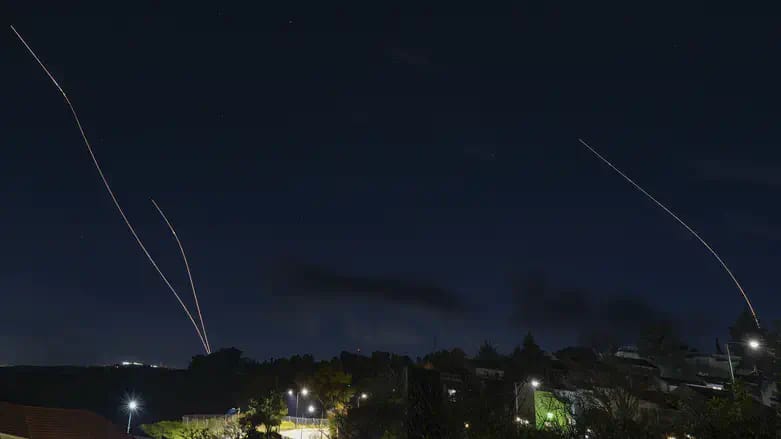
Rockets intercepted over Israel
Rockets intercepted over Israel (Photo: Eyal Margolin / Flash 90)

Syrian Border Complications

Adding another layer of complexity to the regional security picture, Saudi media reported that the Syrian regime has deployed hundreds of soldiers to the Lebanese border over the past two weeks.

According to the reports, Hezbollah seeks to compensate for weapons losses sustained during Israeli strikes by transferring rockets, machine guns, and mines that remained in Syria following the collapse of the Assad regime. The Syrian military presence aims to interdict these smuggling operations, though the effectiveness of Damascus's border control remains uncertain given the regime's weakened state.

Israeli officials have not yet confirmed whether their messages demanding American pressure on Lebanon have reached Lebanese government circles. The uncertainty surrounding diplomatic communications adds to the precarious nature of the current situation, with both sides operating under time constraints imposed by the extended ceasefire deadline.

As the three-week extension period begins, the fundamental question remains whether American diplomatic intervention can compel Lebanese authorities to rein in Hezbollah's activities—or whether the ceasefire framework will join the long list of failed agreements that have characterized Lebanon's turbulent relationship with its southern neighbor.

Ready for more?

UPDATE: Netanyahu just ordered the IDF to strike Hezbollah targets forcefully.

Reporter Doron Kadosh made this observation:

Anyone who publishes a notice in advance about their intention to attack is likely not truly trying to surprise the other side. If Israel intended to carry out an operation, such as the assassination of a senior Hezbollah official, it would have maintained the element of surprise.
When the Prime Minister’s Office issues such a statement, it causes senior Hezbollah officials to go underground and increase their security measures, and Hezbollah terrorists to evacuate and empty out headquarters. Therefore, one can only guess that the expected strikes will be against infrastructure alone.
Ready for more?

Join our newsletter to receive updates on new articles and exclusive content.

We respect your privacy and will never share your information.