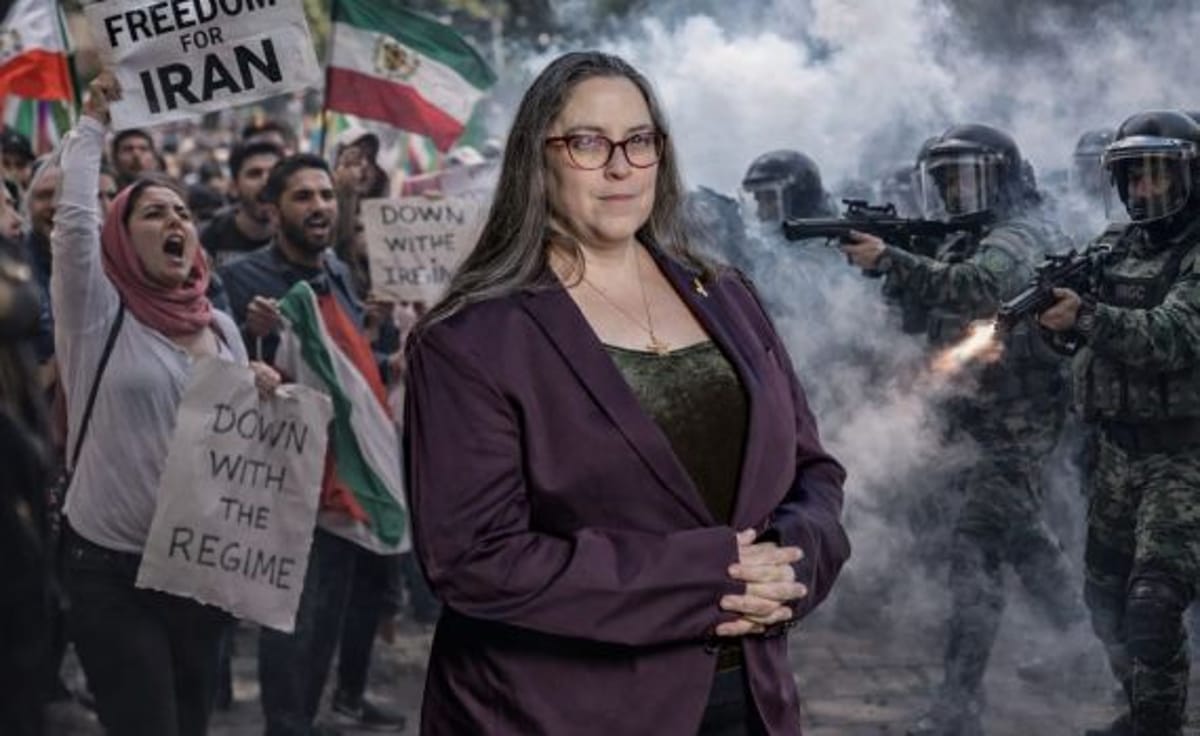
As Iran's crackdown on recent protests enters its bloodiest chapter, a leading Israeli expert on the Islamic Republic says the opposition movement remains alive despite tens of thousands of casualties in what she describes as an unprecedented massacre.
Dr. Tamar Eilam Gindin, a Persian-speaking Iran specialist at the University of Haifa's Ezri Center, told Srugim News that while street protests have ceased for now, "the spirit hasn't died."
"What usually happens at the end of protests is a feeling of 'we didn't succeed' and despair that 'it's lost.' But this time, whether because there was leadership or because there was an escalation, or maybe because of the violent suppression, the scope of which is only now unfolding, the spirit hasn't died," Gindin said.
"There's still a fighting spirit, but right now they're not going out to the streets because going to the streets now is like going to a shooting gallery," she added.
Critical Dates Ahead
Gindin identified three significant dates in the coming month that could reignite demonstrations: February 1, marking Ayatollah Khomeini's 1979 return from exile; February 11, the anniversary of the Islamic Revolution's victory; and days later, the 40th day of mourning following the January 8 bloodshed, a particularly volatile moment in Islamic tradition.
"When there's a political killing, which we've seen a lot of recently, the funeral and the 40th day are usually explosive. And now we have tens of thousands of '40th days' on the same day," she explained.
Unprecedented Violence
Details emerging from Iran reveal shocking levels of brutality. Gindin described how the regime deployed battlefield weapons against unarmed protesters and used foreign Shiite militias from Iraq, Afghanistan, Pakistan and Sudan to suppress Iranian citizens.
"Protesters on the street testify that many, maybe even most, of the security forces arriving wounded at hospitals aren't Iranian at all," she said. "The Islamic Republic used battlefield weapons on protesters, not urban policing weapons."
Medical personnel are being arrested for treating wounded protesters, while injured demonstrators avoid hospitals fearing arrest. According to Gindin, security forces are conducting "confirmation killings" on the wounded, including those not critically injured.
Scale of the Massacre
Comparing the death toll to Syria's Assad regime, Gindin noted that while similar numbers occurred there, "I don't know if in such a short timeframe, just a few nights, there were so many killed."
She cited Iranian state broadcasting itself acknowledging that "most of these deaths were on Thursday-Friday night," and described a forensic institute in Tehran so overwhelmed that body bags covered the floors after its four hangars filled to capacity.
The full scope of casualties remains difficult to verify as Iran shut down internet and communications infrastructure, creating an information blackout that is only now beginning to lift.
Dr. Gindin, who also serves as an Iran analyst for international media outlets and authored historical novels about ancient Persia, said the regime's use of foreign militias and battlefield tactics against its own population marks a turning point in the Islamic Republic's 45-year history.