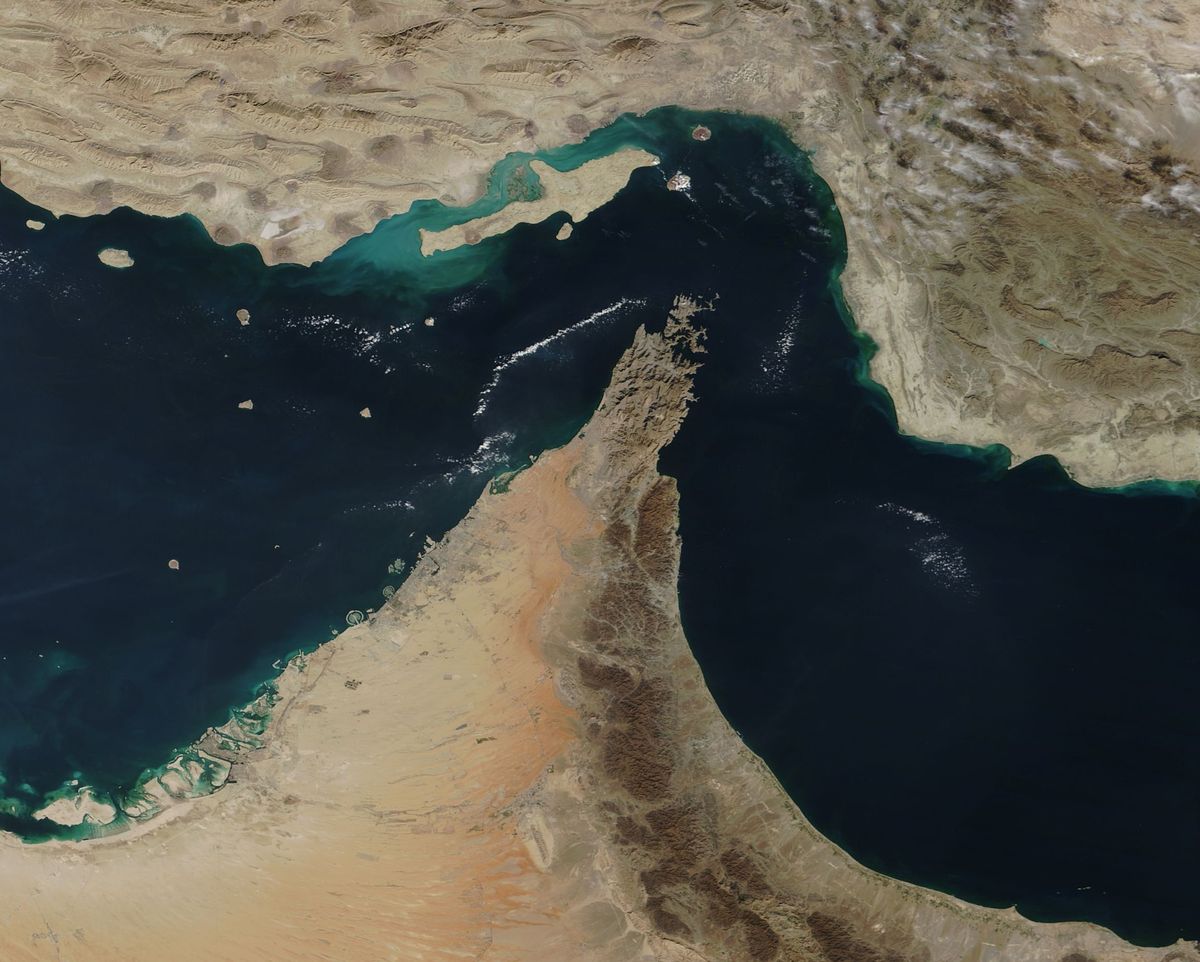
Iran’s powerful Khatam al-Anbiya Central Headquarters declared that the situation in the Strait of Hormuz “will not return to what it was,” asserting that Tehran alone will now decide transit rules and that vessels linked to the United States and its allies have “no right of passage” without Iranian permission.
In a sharply worded statement, the headquarters spokesman said Iran has “reset transit rules” in the narrow waterway through which roughly one-fifth of global oil trade passes. “What happens will be what we decide,” the spokesman said. “The law is clear: you and those tied to you have no right of passage. Permission is ours.”
He added: “The more you try to avoid prolonging the war, the stronger our resistance becomes. You are reaching your own conclusions and agreeing to negotiations yourselves. Look at our people on the battlefield, there is only determination and resolve to fight.”
The remarks, issued hours after Iran formally rejected a U.S. 15-point cease-fire proposal, represent Tehran’s firmest public stance yet on the strategic chokepoint. Iranian officials have simultaneously demanded that any truce include explicit international recognition of Tehran’s sovereignty and “natural legal right” to control the strait.
Tehran has used the strait to exert selective pressure, routing vetted vessels through a narrow corridor near Larak Island while warning “hostile” traffic to stay away.
Khatam al-Anbiya, the Islamic Revolutionary Guard Corps’ engineering and construction arm, oversees much of Iran’s military infrastructure and has played a central role in recent maritime operations. Its latest comments leave little room for compromise on one of the conflict’s most critical flashpoints.