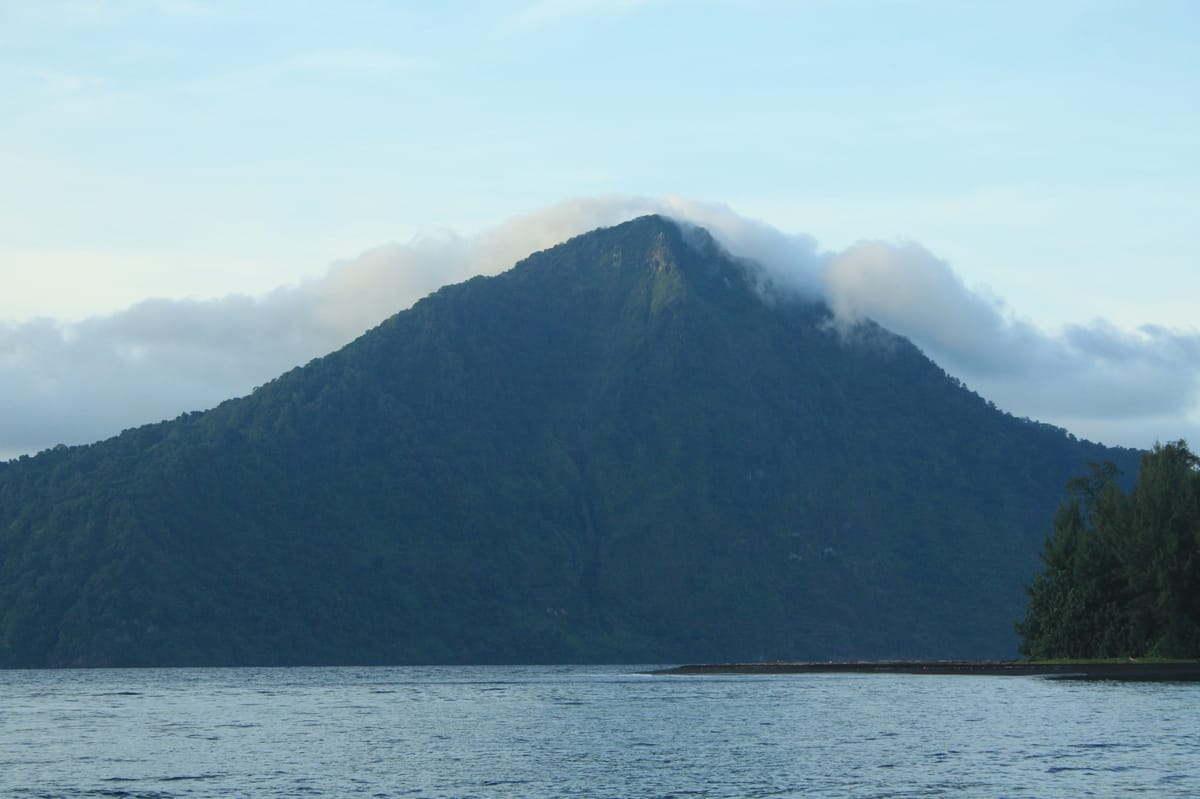
While international attention and U.S. strike planning have centered on Kharg Island, Iran’s primary oil-export hub, military and maritime analysts say a lesser-known outpost, Larak Island, now holds greater immediate operational significance inside the Strait of Hormuz.
Larak, a small island located in the narrowest section of the strait, hosts active Islamic Revolutionary Guard Corps naval bases, port infrastructure and ship-screening facilities that give Tehran day-to-day control over a critical slice of global energy shipping. Iranian forces have turned the waters immediately north of the island into a de-facto “safe corridor” for vetted vessels. There, IRGC personnel conduct visual inspections, verify ownership and cargo details, and grant or deny passage, functions that effectively operate as a permission-based toll booth and real-time targeting hub.
Since mid-March, at least nine tankers and commercial carriers have been routed through this corridor, according to maritime tracking data. Approved ships have reportedly paid fees as high as $2 million per transit, paid in cash, yuan or cryptocurrency, according to people familiar with the arrangements.
Kharg Island remains the bigger long-term economic pressure point. More than 90% of Iran’s crude-oil exports flow through its terminals, and U.S. forces destroyed dozens of military targets there earlier this month while deliberately sparing the oil-export infrastructure itself. But Larak’s location inside the strait gives the IRGC line-of-sight dominance over the shipping lanes in real time, allowing selective enforcement without a full closure that would spike global oil prices.
The development comes as the U.S.-led Operation Epic Fury enters its fourth week. In addition to ongoing A-10 Thunderbolt II strikes on Iranian-backed militia positions in Iraq, American forces have stepped up maritime interdiction missions aimed at IRGC fast-attack boats and mine-laying vessels. U.S. officials have described the continued use of the low-and-slow A-10 in contested waters as evidence that Iran’s coastal defenses have been sufficiently degraded.
Iranian officials have not publicly commented on Larak’s role. Tehran has instead declared the main international shipping channel largely off-limits to “hostile” traffic while insisting it is not attempting a complete blockade.
Maritime-security firms and open-source analysts tracking the strait describe Larak as the practical lever Iran is using to exert pressure on global shipping without triggering the kind of all-out confrontation that would shut down oil flows entirely. Lloyd’s List Intelligence and other commercial tracking services have noted the shift in routing patterns toward the Larak corridor in recent days.
The contrast between the two islands highlights the dual nature of Iran’s strategy: Kharg as the economic prize, Larak as the tactical choke point. For now, the one that matters most on the water is Larak.