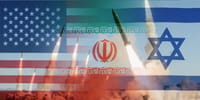
Former head of the Mossad Harpoon economic warfare division Dr. Udi Levi issued warnings regarding shifting US foreign policy toward Iran and expanding security threats posed by Turkey. Speaking in an interview with radio station 103fm, Levi detailed how economic pressure on Tehran could force military action, while criticizing Israel's focus on kinetic operations over economic and cyber warfare.
Levi highlighted a significant shift in US strategy under the administration, moving from conventional military operations to comprehensive economic warfare. "There is a very fundamental strategic change in the concept of war recently," Levi stated. "Moving from kinetic war, conventional war, to a very extensive economic campaign. I would have thought we should have started it long ago, but I think the great importance is that this decision is made because of the very significant insight that it is impossible to win this war using only conventional tools."
However, Levi emphasized that sanctions effectiveness depends entirely on strict global enforcement. "Economic war did not really exist, the main problem was enforcement and there is no enforcement," Levi explained. "Is the United States actually going to enforce what it declared this time or not? If it is not going to enforce, then we will see the Iranians continue to mock and laugh."
Effective enforcement requires heavy pressure on international actors, including Britain, which holds vast financial assets belonging to the Islamic Revolutionary Guard Corps. Enforcement must also target Turkey, China, Russia, and Asian nations where Tehran established new financial channels, alongside monitoring cryptocurrency networks.
To bypass threats surrounding the Strait of Hormuz, Gulf states are quietly establishing alternative supply routes. "Both Saudi Arabia and the United Arab Emirates are quietly opening new channels to transport their oil, including using Asia as a crude oil storage warehouse," Levi revealed. "Land transport, new pipelines for oil transit, and storage are being developed so that instead of oil being stored in Gulf warehouses, it will be stored in Japan."
Addressing potential Iranian responses before upcoming US midterm elections, Levi predicted that severe domestic economic strain will push Tehran to initiate attacks. "They will not let him reach the midterm elections, because for the Iranians, they cannot remain under this situation for long," Levi stated. "They will initiate an attack. My assessment is that they will begin striking Gulf countries, oil reserves, internet cables, and critical US infrastructure, including inside Europe. They will initiate an attack so that countries will again apply heavy pressure on the United States to sit and negotiate. It is their only way."
Levi also warned against the growing threat from Ankara, comparing Turkey to Qatar while highlighting its NATO status. "Turkey is a Qatar model number two, let us have no misunderstandings here," Levi warned. "Turkey is more dangerous because it is part of NATO. We need to understand, it has become the most significant logistical rear for terrorist organizations and crime organizations, which is very dangerous. They assist terrorist organizations, they assist the Iranians, and they assist the Qataris."
Despite diplomatic complexities surrounding NATO allies, Levi argued that Israel possesses economic and cyber tools to counter Ankara. "Turkey is very vulnerable economically," Levi noted. "In the economic world, sanctions are a very small range, and Israel has huge advantages in cyber and crypto capabilities. You can cause massive damage that conveys larger messages than bombing an airport."
In conclusion, Levi called on Israel to reinvest in soft warfare strategies, including legal, economic, cyber, and informational operations. "Soft warfare includes consciousness, legal, economic, and cyber domains, which are super strategic," Levi stated. "We suffer extraordinarily from this as a nation. We are not there, we are entirely focused on the kinetic military world."