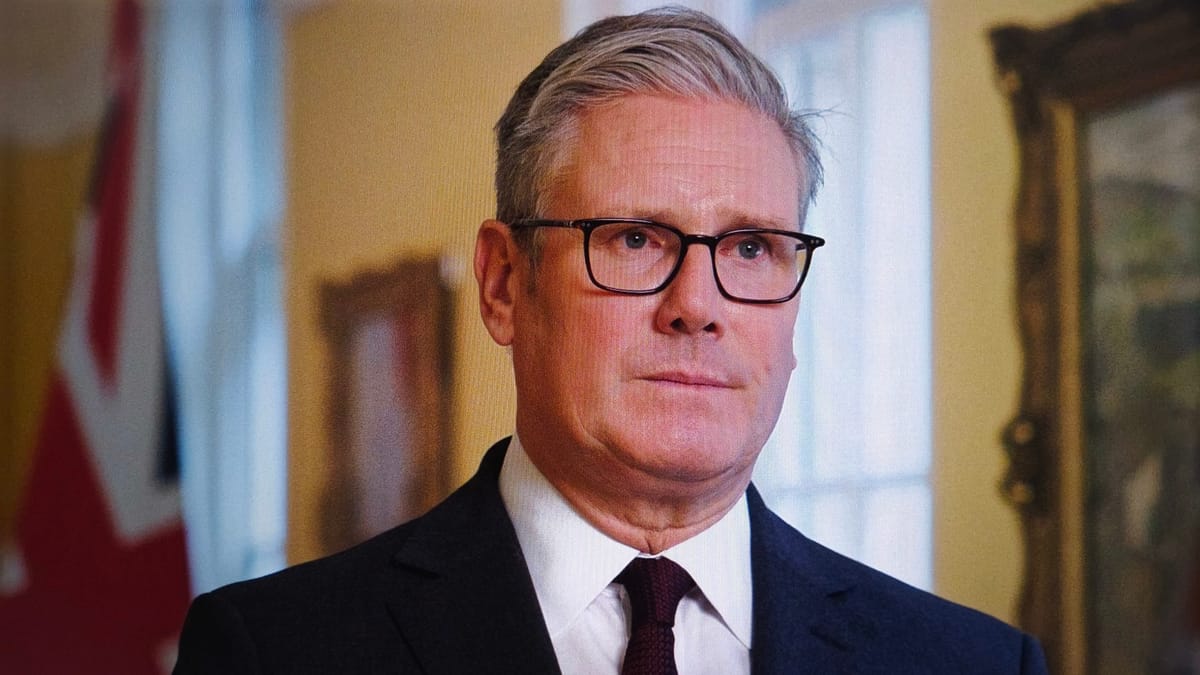
Keir Starmer's Labour government is in the most perilous position of its short existence, battered by a historic local election defeat, an unresolved scandal over a disgraced ambassador's ties to Jeffrey Epstein, a surge in antisemitism described as a national emergency, and growing open revolt within his own parliamentary party. Less than two years after winning a landslide general election, the British Prime Minister is fighting for his political survival.
The Election Catastrophe
The immediate trigger for the current crisis was the local elections held across Britain on May 8. The results were, by almost any measure, historic in their severity. Labour won just over 1,000 of the seats that were contested, losing more than 1,100 seats it had previously held. The right-wing populist Reform UK party, meanwhile, gained more than 1,400 seats.
Labour shed hundreds of local councillors across England, facing humiliation as it lost control of key authorities in its traditional heartlands, squeezed on all sides by Reform, the populist left-wing Green Party, and a loose coalition of anti-establishment independents angered over Gaza.
The damage extended beyond England. In Wales, Labour lost power for the first time in more than a century, with Plaid Cymru coming first and Reform second. Welsh First Minister Eluned Morgan lost her own seat and resigned, saying: "The people of Wales rejected Welsh Labour."
Reform recorded victories across the country, taking over Essex county council in the south, Havering, its first London local authority, and the northern English city of Sunderland. Nigel Farage, Reform's leader and a close ally of Donald Trump, declared it "a truly historic shift in British politics" and wrote in a newspaper column that the results signalled the "end of the old establishment's two-party system."
Starmer acknowledged the scale of the disaster but refused to step down. "These are really tough results, I'm not going to sugar-coat it," he said, vowing the results would not weaken his resolve, and describing his government as "a 10-year project of renewal."
Rebellion from Within
His own party is not persuaded. Labour MP Clive Lewis wrote on social media: "The Prime Minister needs to go. That is not negotiable." Other Labour MPs followed, with Louise Haigh saying Starmer "cannot lead us into another election" without "urgent change," and Connor Naismith stating that "with regret, it is clear to me that we need new leadership."
Most dramatically, Angela Rayner — a powerful Labour figure and Starmer's former deputy — posted publicly that Labour needed to take "immediate action to cut costs for households and put money back into the everyday economy," writing: "What we are doing isn't working, and it needs to change. This may be our last chance."
Discussion of potential successors has begun circulating openly, with names including Health Secretary Wes Streeting and Greater Manchester Mayor Andy Burnham mentioned as possible future leadership contenders.
The Epstein-Mandelson Scandal
Hovering over all of this is a protracted political crisis that began months earlier. Starmer appointed veteran Labour politician Peter Mandelson as Britain's ambassador to the United States in early 2025 — a decision that would unravel spectacularly.
Documents released by the US Department of Justice showed Mandelson appeared to have leaked sensitive British government data to Jeffrey Epstein. British police arrested Mandelson in February on suspicion of misconduct in public office. It subsequently emerged that Mandelson had failed the in-depth security vetting conducted before his appointment — yet officials at the Foreign Office used a rare authority to override that recommendation, since Starmer had already publicly announced the appointment.
Starmer fired Mandelson in September 2025, but the fallout has never stopped. Appearing before parliament, Starmer admitted: "I should not have appointed Peter Mandelson. I take responsibility for that decision, and I apologize again to the victims of the paedophile Jeffrey Epstein, who were clearly failed by my decision."
A senior civil servant then testified that Starmer's own office had applied "constant pressure" on bureaucrats to grant Mandelson the security clearance he needed. The Prime Minister insists he was never told Mandelson had failed vetting, a claim that has satisfied almost nobody.
Antisemitism Emergency
Against this backdrop, Starmer convened an emergency summit at Downing Street on May 5, bringing together representatives from business, health, culture, higher education, and policing to discuss a surge in antisemitic attacks on Jewish communities in Britain, including the stabbing of two men in London. Investigators are examining whether a foreign state could be behind some of the incidents. The opposition Conservative Party has declared antisemitism a "national emergency."
The Deeper Problem: Economy and Broken Promises
Beneath the immediate crises lies a more fundamental disconnect between Starmer's government and the voters who elected it. One of the most damaging early decisions was stripping millions of pensioners of the winter fuel payment — a universal benefit worth £200 to £300 per household — restricting it only to those on pension credit in order to save £1.4 billion. Polling evidence identified the move as one of the most unpopular measures of the government's tenure, and both Starmer and Chancellor Rachel Reeves saw their approval ratings plummet. Starmer has since signalled a partial reversal, though critics say it came far too late and without sufficient clarity.
What Comes Next
Starmer has ruled out resigning and says he will lead Labour into the next general election, which must be held by May 2029. The local election results have made clear that Britain now has at least five major political forces, Labour, Reform, the Conservatives, the Greens, and the Liberal Democrats, all competing for a fragmented electorate.
Whether Starmer survives long enough to fight that election is now genuinely uncertain. A formal leadership challenge requires a significant number of Labour MPs to trigger it, and while the public dissent is growing louder, it has not yet reached that threshold.
For now, a weakened prime minister remains in Downing Street, insisting he will not walk away, while much of his party, and much of the country, appears to wish he would.