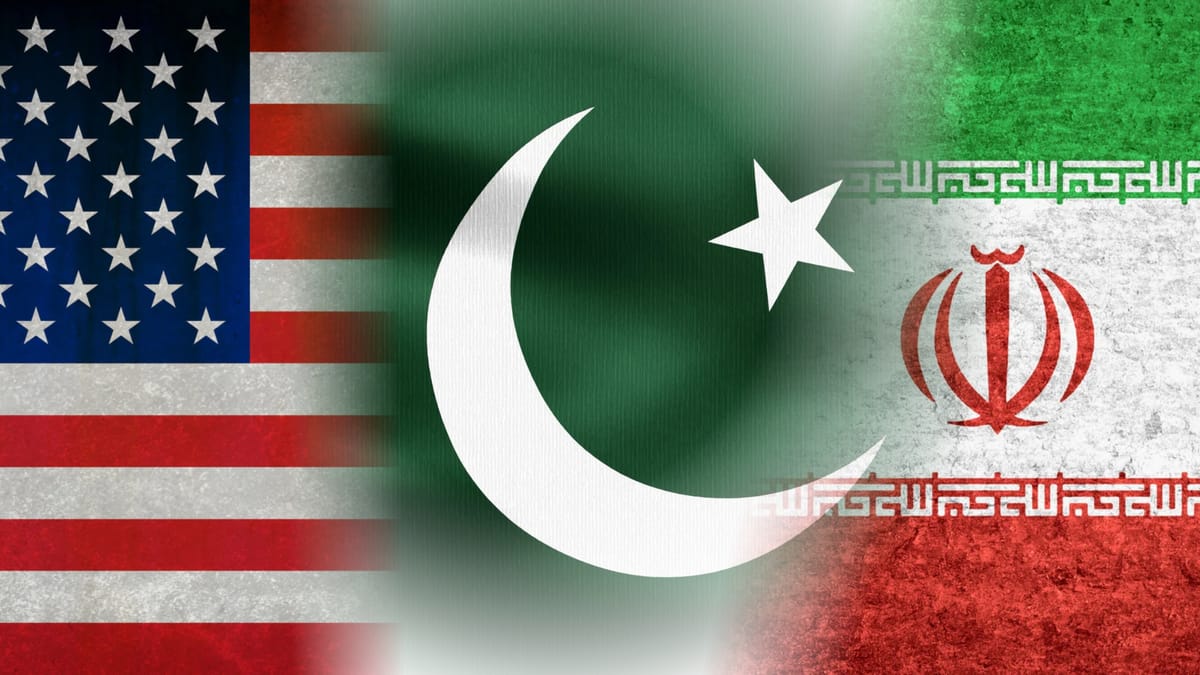
Pakistan is facing one of the sharpest challenges to its diplomatic standing since it stepped into the role of peace broker in the US-Iran conflict, after a CBS News investigation prompted a swift and pointed denial from Islamabad and a wave of concern on Capitol Hill.
According to US officials who spoke to CBS News on condition of anonymity, days after President Trump announced a ceasefire with Iran in early April, Tehran sent multiple aircraft to Pakistan Air Force Base Nur Khan, a strategically important military installation located near Rawalpindi. Among the hardware was an Iranian Air Force RC-130, a reconnaissance and intelligence-gathering variant of the Lockheed C-130 Hercules tactical transport aircraft.
The report characterized the arrangement as an apparent effort by Iran to shield portions of its remaining aviation fleet from possible American strikes, even as Pakistan was publicly positioning itself as a neutral conduit between Washington and Tehran.
Pakistan's government categorically denied the claims. In an official statement, Islamabad said that following the ceasefire and during the initial round of the Islamabad Talks, aircraft from both Iran and the United States arrived in Pakistan to facilitate the movement of diplomatic personnel, security teams, and administrative staff.
The statement added that some aircraft and support personnel remained temporarily in anticipation of subsequent rounds of talks, and that Iranian Foreign Minister visits to Islamabad were facilitated through these existing logistical arrangements. Pakistan insisted the aircraft "bear no linkage whatsoever to any military contingency," calling assertions to the contrary "speculative, misleading, and entirely detached from the factual context."
A senior Pakistani official had already pushed back against the specific claim involving Nur Khan, telling CBS News: "Nur Khan base is right in the heart of [the] city. A large fleet of aircraft parked there can't be hidden from [the] public eye."
Washington's Reaction
The report landed with considerable force in Washington. Senators on both sides of the aisle expressed concerns about Pakistan's neutrality as a mediator, with Senator Lindsey Graham, a Republican close to Trump, stating on X that if the reporting were accurate, it "would require a complete reevaluation of the role Pakistan is playing as mediator between Iran, the United States and other parties."
The concerns extend beyond the aircraft controversy. A CNN report indicated that some people close to Trump have raised questions about whether Pakistan has been accurately conveying the president's "displeasure" with the state of the peace process, with some officials believing Pakistan had been presenting a more optimistic picture of Iran's position to the US than the reality warranted.
A Fragile Ceasefire, a Complicated Mediator
The backdrop to this dispute is a ceasefire that, by most accounts, is hanging by a thread. The conflict between the US and Iran began on February 28, and Pakistan brokered a conditional pause on April 8. Talks were held in Islamabad on April 11, but both sides reported that no agreement was reached — with Trump saying that "most points were agreed to, but the only point that really mattered, nuclear, was not," while describing Iran as "unyielding."
Since then, Iran has put forward terms for ending the conflict that include demands for US war reparations, recognition of Iranian sovereignty over the Strait of Hormuz, and the removal of American sanctions, a proposal Trump publicly dismissed as "totally unacceptable." Small-scale clashes around the Strait of Hormuz have continued, underscoring just how precarious the pause remains.
Pakistan's Strategic Tightrope
Analysts have long noted that Pakistan's position in this crisis is structurally complicated. According to data from the Stockholm International Peace Research Institute cited in the CBS report, China supplied roughly 80% of Pakistan's major arms imports between 2020 and 2024, giving Beijing considerable leverage over Islamabad, even as Pakistan cultivated its image as an honest broker with Washington. China, meanwhile, has publicly celebrated Pakistan's role in facilitating indirect communications between Tehran and Washington.
Pakistan maintains it has acted as "an impartial, constructive, and responsible facilitator" and that it has extended only routine logistical and administrative support while maintaining "full transparency and regular communication with all relevant parties."
The timing of this controversy is particularly delicate. Trump is preparing to travel to Beijing this week for talks with President Xi Jinping, where the Iran conflict is expected to feature prominently alongside disputes over trade and Taiwan. Whether the questions swirling around Pakistan's role complicate those conversations (or provide Beijing with additional leverage) remains to be seen.
For now, Islamabad is left defending not just the aircraft on its tarmac, but the integrity of the diplomatic role it has staked its international reputation on.