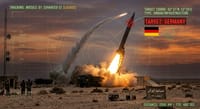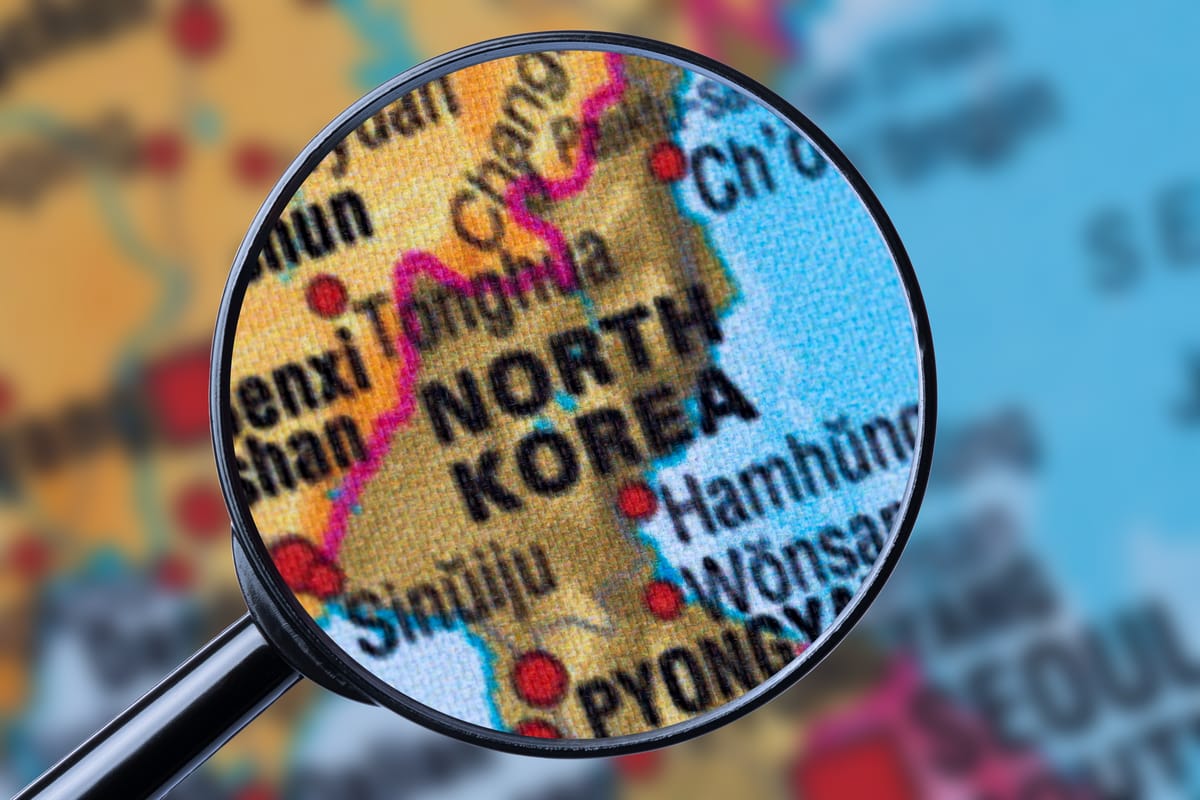
North Korea unleashed a barrage of short-range ballistic missiles into the Sea of Japan early this morning, shattering a five-month lull in tests and injecting fresh volatility into the Korean Peninsula just days before U.S. President Donald Trump touches down in South Korea for the Asia-Pacific Economic Cooperation (APEC) summit.
The launches, detected at approximately 8:10 a.m. local time from a site south of Pyongyang, flew roughly 350 kilometers northeast before splashing down in open waters, prompting immediate condemnations from Seoul, Tokyo, and Washington as a "calculated act of intimidation."
South Korea's Joint Chiefs of Staff (JCS) confirmed the projectiles as multiple short-range ballistic missiles (SRBMs), the regime's first such display since May 8, when Pyongyang tested systems simulating nuclear counterstrikes against U.S. and South Korean forces.
No immediate alerts were issued by Japan's Coast Guard or Defense Ministry, signaling the missiles' shorter-range profile and lack of overflight threat.
The U.S. Indo-Pacific Command, monitoring closely, reiterated its "ironclad" commitment to allies, while Seoul's National Security Council convened an emergency session, decrying the move as a violation of UN Security Council resolutions.
The timing could not be more charged. The salvo arrives as South Korea's newly inaugurated President Lee Jae-myung, who assumed office in June 2025 on a platform of renewed inter-Korean dialogue, grapples with his first major provocation from the North.
Lee's administration has signaled openness to engagement, contrasting the hardline stance of his predecessor, yet Pyongyang's missile diplomacy appears aimed at undercutting those overtures while spotlighting its arsenal ahead of global scrutiny.
Analysts, including those at the Harvard University Asia Center, describe it as Kim Jong Un's "strategic saber-rattling" to project strength and extract concessions, potentially forcing his way into the APEC spotlight.
Trump's impending visit, slated for October 29-30, with a bilateral summit alongside Lee in Gyeongju, amplifies the drama.
The U.S. leader, fresh off threats of escalated tariffs amid U.S.-China frictions, is set to rub shoulders with Chinese President Xi Jinping on the summit's sidelines, their first in-person talks since Trump's January 2025 inauguration, alongside APEC CEO events, though not the main leaders' forum on October 31-November 1.
Whispers of a Trump-Kim rendezvous persist, fueled by Seoul's Unification Minister Chung Dong-young, who noted "considerable possibility" if Trump opts in, a nod to their 2018-2019 summits that briefly thawed tensions but yielded no lasting denuclearization.
Pyongyang's state media has yet to comment, but the launch caps a year of escalating boasts: Kim unveiled the Hwasong-20 ICBM, touted as capable of multiple warheads to pierce U.S. defenses, during an October 10 parade marking the Workers' Party's 80th anniversary.
Experts warn this could presage tests of longer-range systems, including hypersonic glide vehicles or solid-fuel IRBMs like the Hwasong-16B, as North Korea races toward its 2026 goals of "exponential" nuclear expansion.