Get our mobile app
Download on the App StoreGet it on Google Play

The briefcase that could end the world

The "nuclear football" briefcase explained

While the US president worries about midterm elections, Iran worries more about the black briefcase that shadows him everywhere, the one that could order a strike in minutes

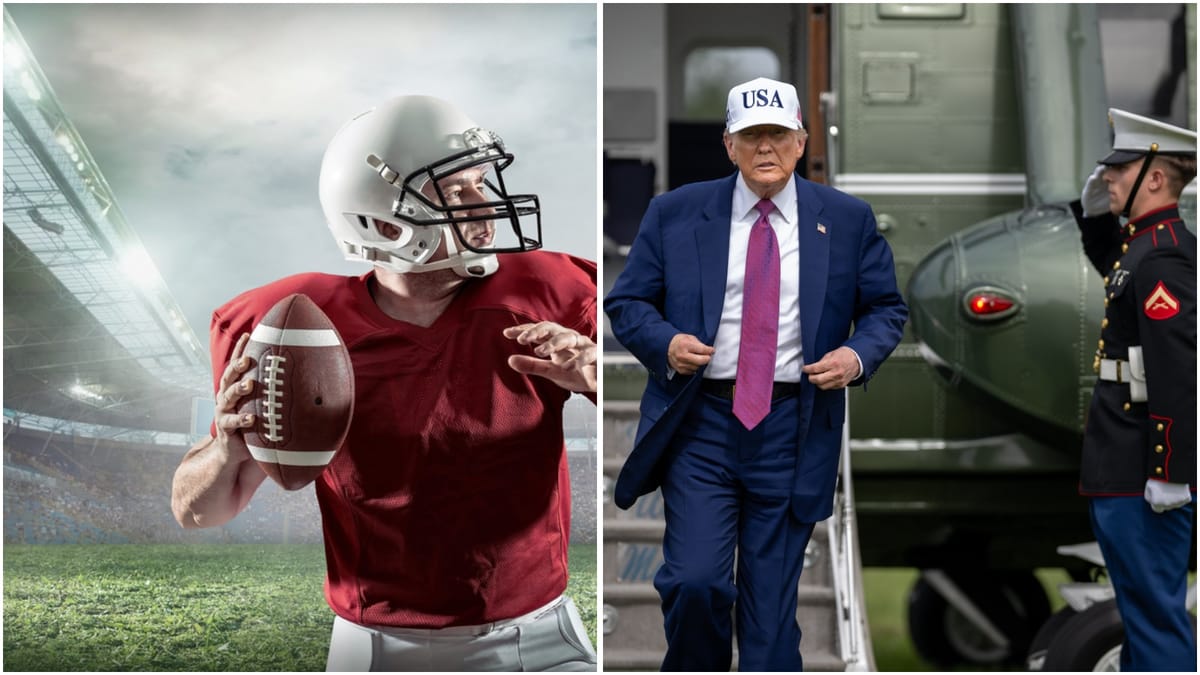
President Donald Trump and the football / Photo: Shutterstock

The US midterm elections are keeping President Donald Trump busy, but not busy enough to stop him broadcasting business as usual and threatening immediate strikes on Iran. His special aides, known as "the shadow," continue their quiet routine, which is in fact their most important mission: watching over the secured black briefcase known to security officials and viewers of outlandish films and series as "the nuclear football."

This intriguing device gives the commander-in-chief of the United States the authority and ability to order the launch of lethal nuclear weapons from any point on the globe, at any moment he sees fit. And in the hands of the current president, Trump, it's no wonder the Iranians aren't sleeping soundly.

Iranian missiles and interceptors / AI illustration
Iranian missiles and interceptors / AI illustration (אילוסטרציה AI)

A brief history of "the football" (not the game)

The system began to take shape in the final years of President Dwight D. Eisenhower's term in the late 1950s, initially as an emergency document folder with a code name known only to the president and his closest advisers. The formal format familiar today was shaped by President John F. Kennedy (JFK) following the Cuban Missile Crisis in 1962. Kennedy was troubled by the need to verify his identity remotely during a crisis and to know exactly what strike options were available to him in real time. As a result, the secured briefcase was created, accompanying US presidents continuously since 1963.

The reason for the nickname "football" is not certain, but the theories are that it was agreed upon during the Kennedy administration because of the development of a surprise nuclear strike plan called "Dropkick", in which a football is dropped onto the field to score a touchdown. Another explanation is that the briefcase changes hands during shift changes of the Secret Service agents attached to the president, and this is another term from the game of football called a "hand-off", the action of passing the ball from player to player. Because of these concepts, the briefcase earned the nickname "the nuclear football," or simply "the football," even though its official name is the Presidential Emergency Satchel.

Security forces and breach of security perimeter / Illustration: Chaim Goldberg/Flash90/Courtesy
Security forces and breach of security perimeter / Illustration: Chaim Goldberg/Flash90/Courtesy (אילוסטרציה / צילום: חיים גולדברג/ פלאש 90/ יח"צ)

"The briefcase" has been opened

The information revealed here may cause concern among anxious readers, due to the fact unknown to many that over the years American presidents have opened the briefcase called "the football" many times. But this was done only for briefing purposes, drills and document updates, and never for the purpose of issuing a real-time strike order.

The military aides to the US president are authorized to open the secured briefcase when necessary to update the secret war plans and communication channels according to the strict protocols of the American Secret Service.

Contrary to what has been depicted more than once or twice in American and foreign popular culture, the nuclear briefcase of the President of the United States has never been stolen, and missiles that destroy nations cannot be launched from it at the entire world with the press of a single red button. Those childish depictions can be left to B-grade action films and below.

In addition, every elected president receives a comprehensive briefing on the contents of the briefcase. President Jimmy Carter, who was formerly a nuclear submarine commander, opened and examined the plans closely, made it his mission to simplify them after finding them too complicated, and ordered the creation of a more accessible and faster structure in their place. His aides even described the new options book as similar to a "breakfast menu," where you choose a dish from column A or column B, except that instead of a difference in price there might be a geographic difference in the shape of the Earth, and ordering the meal could turn into the world's last supper.


White House security / Photo: Sri Briz/Shutterstock
White House security / Photo: Sri Briz/Shutterstock ((צילום: סרי בריז/שאטרסטוק)

A threat without activation

Despite the dramatic aura and extensive exposure it has received, "the nuclear briefcase" has never been used to carry out an actual strike, but mainly as a deterrent factor.

The only president in history who authorized the use of nuclear weapons was Harry Truman in dropping the bombs on Hiroshima and Nagasaki in 1945, many years before the term "the nuclear football" was invented and entered into the official operational protocols of the White House for the benefit of the important resident who lives there.

Ready for more?

Join our newsletter to receive updates on new articles and exclusive content.

We respect your privacy and will never share your information.

Enjoyed this article?

Yes
No
Follow Us:

Unmissable content


Loading comments...

Also of Interest