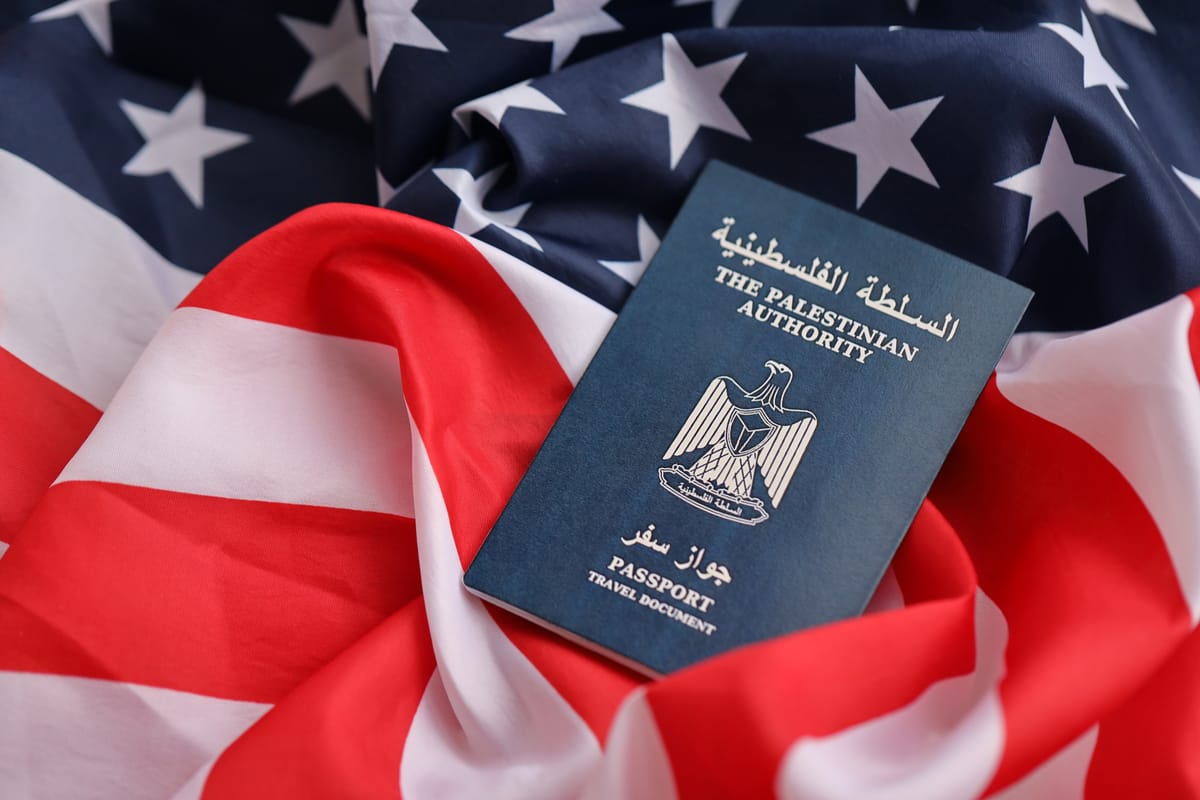
The Trump administration has been quietly exploring limited steps to upgrade its relationship with the Palestinian Authority, driven not by ideology but by the cold arithmetic of postwar Gaza reconstruction, according to three officials familiar with the matter, one American, one Palestinian, and one Mideast intelligence source, as reported by The Times of Israel.
The discussions, ongoing for months, center on a potential Memorandum of Understanding in which the PA would commit to a set of verifiable benchmarks: reforming its welfare and education systems, combating incitement, halting its campaign to internationalize the conflict against Israel, and withdrawing legal cases from international forums including the ICC. In return, Washington would express readiness to lift sanctions once those reforms are verifiably completed.
The PA, for its part, is pushing for the MoU to explicitly reference the potential reopening of the PLO diplomatic mission in Washington, effectively the Palestinian embassy, which Trump shuttered during his first term after Ramallah boycotted his "Peace to Prosperity" plan and pursued ICC cases against Israel.
But the momentum has slowed, and according to officials, the administration is now weighing a more modest approach: an exchange of letters rather than a formal joint MoU, a less binding and less politically exposed vehicle.
Why Now — and Why It's Stalling
The driver here is practical, not ideological. Trump's 20-point postwar vision for Gaza includes a "Board of Peace," an international reconstruction body with a technocratic Palestinian committee at its core. Getting that body functional requires someone to actually govern Gaza, and the uncomfortable reality confronting Washington is that the PA, however weak, however unpopular, however compromised, remains the only internationally recognized Palestinian governing body capable of filling that role.
Saudi Arabia is adding its own pressure. Riyadh has made PA reforms a condition of any normalization framework with Israel, and with Abraham Accords expansion central to Trump's regional legacy, keeping Riyadh satisfied matters.
Israel seems to be dragging its feet. Finance Minister Bezalel Smotrich has been an aggressive obstacle, blocking the transfer of Palestinian clearance revenues, funds Israel collects on the PA's behalf, currently estimated at over $5 billion withheld, and opposing any diplomatic elevation of the PA on ideological grounds. Smotrich's position: a strengthened PA is a strategic threat, not a reconstruction tool.
Washington is also contending with unresolved disputes over the PA's "pay-for-slay" system, payments to the families of Palestinians killed or imprisoned for attacks on Israelis. The Trump administration, like previous ones, has demanded these payments end as a precondition for normalized ties. Israel and some U.S. assessments say the payments continue under rebranded programs. The PA disputes this characterization, but the dispute itself is enough to freeze progress internally.
What This Is (and What It Isn't)
Officials are emphatic that this is not a policy reversal or an ideological softening toward Palestinian statehood. Trump's first term record speaks for itself: the embassy move to Jerusalem, U.S. recognition of Israeli sovereignty over the Golan Heights, the Abraham Accords, deep cuts to UNRWA and PA funding. None of that is being walked back.
What this is, according to those familiar with the discussions, is transactional leverage applied to a weakened PA in service of broader regional goals. Ramallah is broke, isolated, and desperate. The war in Gaza has gutted whatever political standing PA President Mahmoud Abbas had left among Palestinians. Washington is not rewarding the PA, it is, potentially, using that desperation to extract reforms that have eluded every previous administration.
Whether that gamble works depends entirely on whether the PA can actually deliver verifiable reforms, whether Smotrich's opposition can be managed or overridden, and whether the administration's attention, currently consumed by the Iran MoU, World Cup security, and Abraham Accords expansion, can sustain focus on a track this politically thorny.
Israeli elections expected later in 2026 could further scramble the calculus.
For now, the discussions continue. Nothing has been signed, nothing has been announced, and U.S. enthusiasm, by the accounts of those involved, is measurably cooler than it was several months ago.